Catholic Plots Against Elizabeth I & the Spy Network (OCR GCSE History B (Schools History Project)): Revision Note
Exam code: J411

Summary
Elizabeth's position as an unmarried, childless and Protestant Queen was a dangerous one. This was made even more dangerous because the heir to the throne was Catholic Mary, Queen of Scots. Elizabeth's position as Queen was vulnerable. The Pope and Catholic Spain encouraged plots against Elizabeth. The failure of these plots was largely due to the extensive and ruthless spy network built up by Elizabeth's Secretaries of State.
Catholic links abroad
Elizabeth's Religious Settlement (opens in a new tab) was not acceptable to many Catholic priests and they moved abroad
After Pope Pius V excommunicated Elizabeth in 1570, many Catholics began to see Elizabeth as the enemy
English Catholics were told that Elizabeth was not their rightful Queen and that:
They should ignore her laws
They should work to overthrow her
From the mid-1570s, Catholic priests began to return in secret to England from mainland Europe
Some, known as seminary priests, went to help English Catholics by holding mass and hearing confessions
Others, known as Jesuit priests, went to convert people to the Catholic faith
The arrival of these priests was seen as a threat by Elizabeth and her ministers
How did Elizabeth deal with Catholic threats against the throne?
Catholic priests were seen as a serious threat by Elizabeth because:
Elizabeth was unmarried and childless
The next in line to inherit the English Throne was the Catholic Mary, Queen of Scots
All it would take for England to become a Catholic country again was Elizabeth's death
Catholic priests were ruthlessly hunted down, tortured and executed when captured
Wealthy Catholics built secret 'priest holes' in their homes where people could hide for days
In 1585, Elizabeth passed the Act against Priests, which made aiding or sheltering a Catholic priest an offence punishable by death
Catholic plots against Elizabeth
These harsh punishments did not stop several Catholic plots to murder Elizabeth from being launched
The Ridolfi Plot
Roberto Ridolfi was an Italian banker who was also one of the pope's spies in England
He helped hatch and organise a plot against Elizabeth
Ridolfi communicated with supporters of the plot
Phillip II
Spain was the richest and most powerful country in the world
Phillip wanted to return England to the Catholic religion
Thomas Howard, the Duke of Norfolk
A Protestant noble, who saw an opportunity to increase his position
Mary, Queen of Scots
The focus of the plan was to make her queen
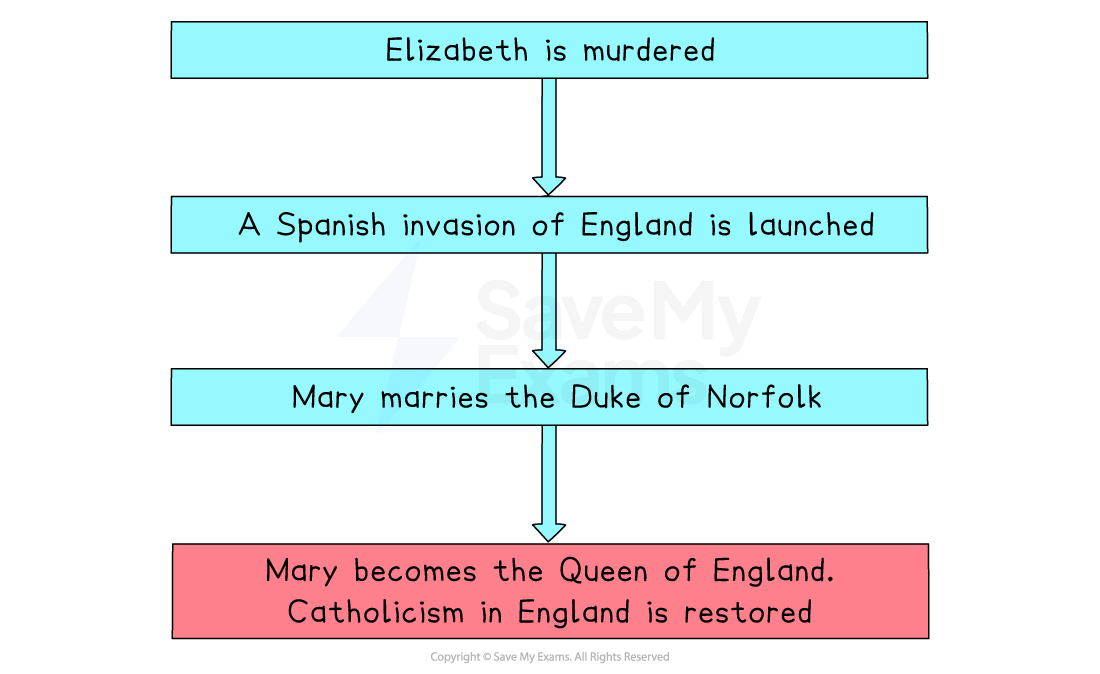
What happened in the Ridolfi Plot?
In March 1571, Ridolfi travelled to the Spanish Netherlands
He met with the Pope and Philip II
Ridolfi gave them a signed letter from the Duke of Norfolk.
The letter stated that Norfolk was a Catholic and would lead a rebellion against Elizabeth with Philip’s support
The meeting was a success for Ridolfi
He secured Philip’s support
Philip II agreed to send 10,000 soldiers to England when the Duke of Norfolk required them
Elizabeth's Secretary of State, Sir William Cecil, uncovered Ridolfi’s plot in the Autumn of 1571
Norfolk’s servants betrayed the plan when under interrogation
Cecil also had evidence in the form of coded letters in the Duke of Norfolk’s house
The Duke of Norfolk was arrested in September 1571
Ridolfi’s plan was never carried out
Cecil foiled the plan before it began
Ridolfi was not in England when Cecil discovered the plot
He never returned to England, so he did not face the repercussions of his actions
Consequences of the Ridolfi Plot
In January 1572, the government put the Duke of Norfolk on trial for high treason
He was found guilty and executed in June 1572
The plot reinforced that Spain was a threat to England
Elizabeth pursued a better relationship with France to try to protect England from Spain
Elizabeth still refused to punish Mary, Queen of Scots
Mary had been Elizabeth's prisoner since she had been forced to flee Scotland
She remained the heir to the Throne
The Throckmorton Plot
Francis Throckmorton was a young English Catholic
He acted as the messenger between Mary, Queen of Scots and the French and Spanish ambassadors
The plot also involved Mary's cousin, the French Duke of Guise
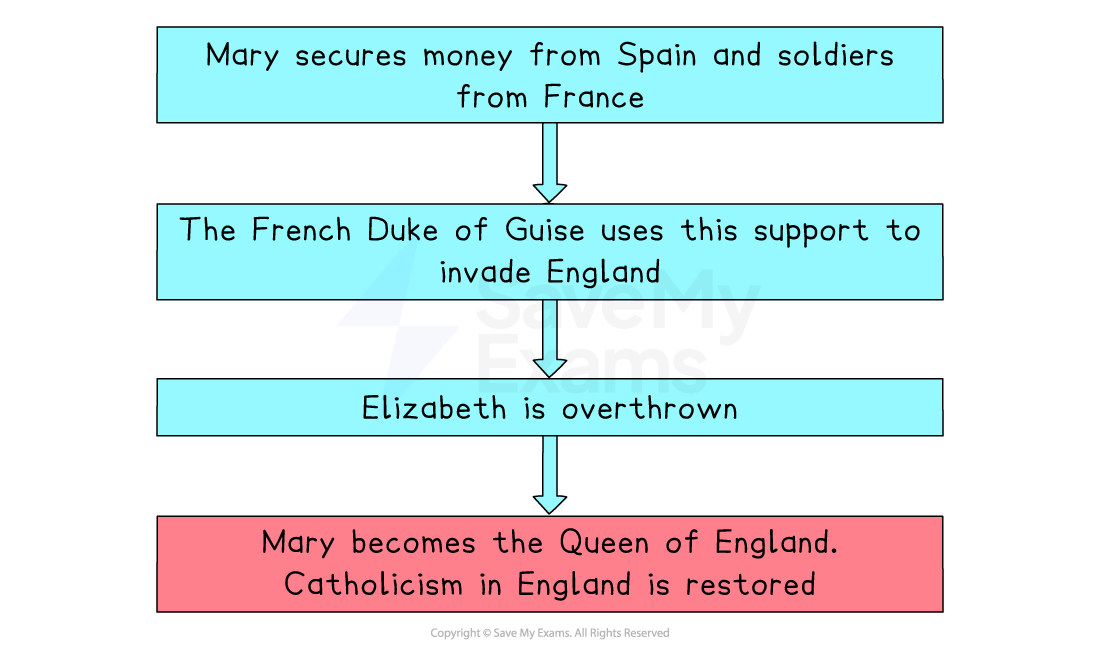
What happened in the Throckmorton Plot?
The government placed Throckmorton under surveillance in April 1583
Throckmorton’s regular visits to Mendoza aroused the government’s suspicions
In June 1583, Walsingham, Elizabeth's Secretary of State, searched Throckmorton’s house
The papers at Throckmorton's house showed communication with multiple Catholic nobles in England
Throckmorton had been researching which harbours were suitable for an invasion force to land
Walsingham arrested Throckmorton in November 1583
Throckmorton stated the plot had gone no further than the planning stage
He claimed this was because he was waiting for the money promised by Philip II of Spain
Consequences of the Throckmorton Plot
Throckmorton was charged with treason and executed in May 1584
Around 11,000 Catholics were arrested or kept under surveillance in the aftermath of the plot
Relations with Spain got even worse
The Spanish Ambassador was expelled from England
Mary, Queen of Scots, faced no punishment
It was not until she was implicated in the Babington Plot (opens in a new tab) that Elizabeth took any action against Mary
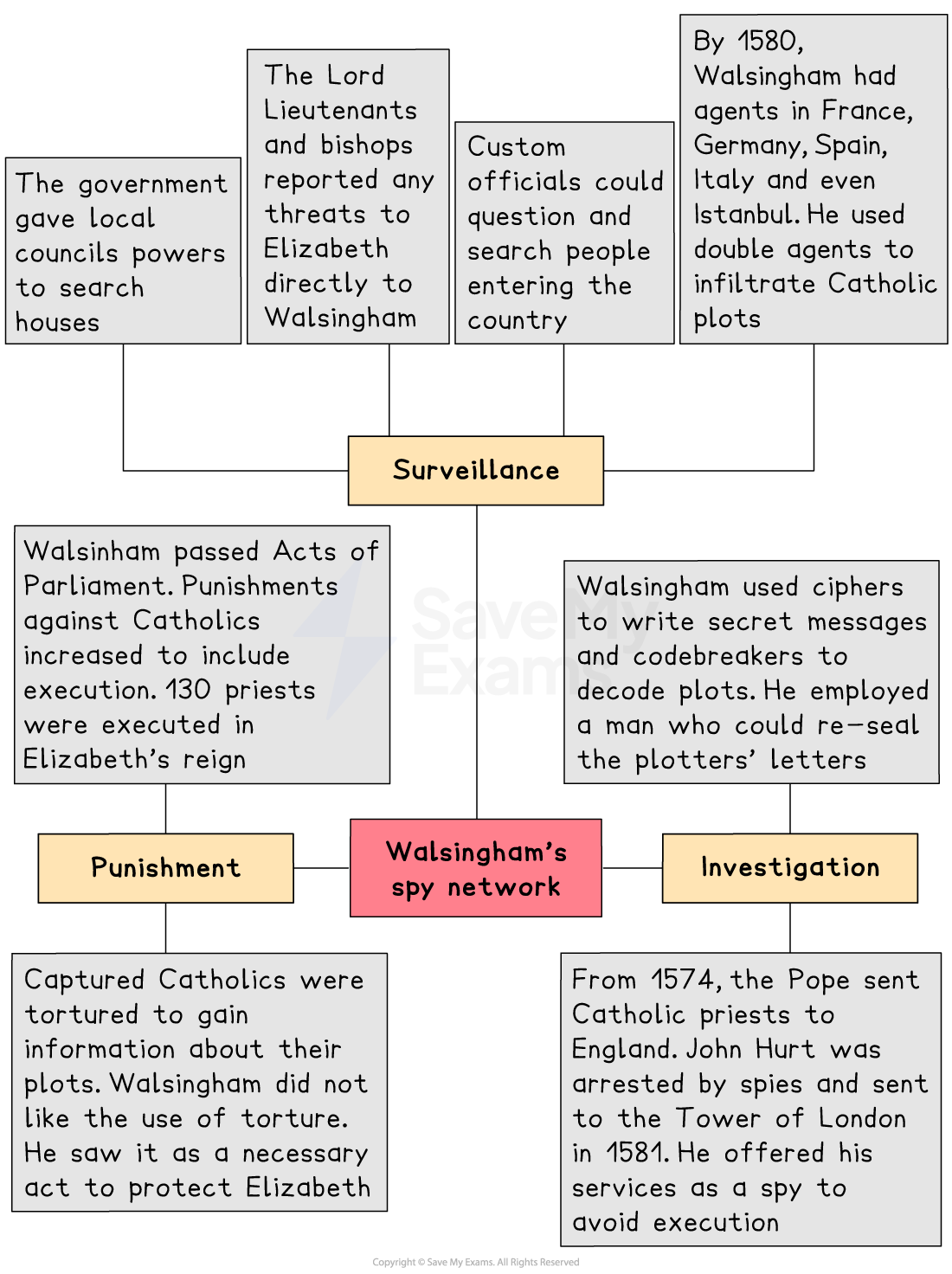
The Elizabethan spy network
The threat to Elizabeth from Catholics at both home and abroad led to an extensive network of spies being built
To begin with, this was controlled by Sir William Cecil as Elizabeth's Secretary of State
It was then taken over and expanded by Sir Francis Walsingham when he became Secretary of State in 1573
Examiner Tips and Tricks
Question 7 on this paper will ask you to look at two interpretations of a certain aspect of Elizabethan history. It will then ask you how far they differ and what might explain the difference. Make sure you answer both parts of the question and identify possible reasons why they differ, as well as what they differ about.

Unlock more, it's free!
Join the 100,000+ Students that ❤️ Save My Exams
the (exam) results speak for themselves:

Was this revision note helpful?