Elizabeth I & Mary Queen of Scots (OCR GCSE History B (Schools History Project)): Revision Note
Exam code: J411

Summary
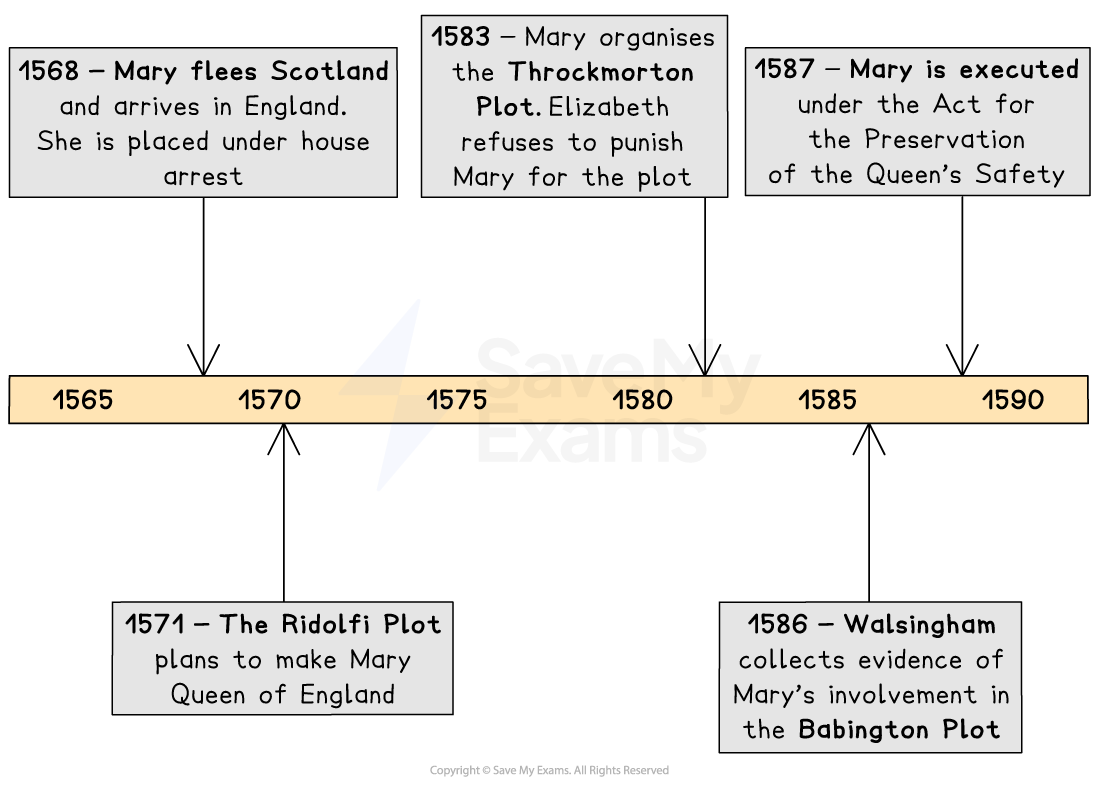
Mary, Queen of Scots, was a significant problem for Elizabeth. The fact that Mary was both a Catholic and heir to the English Throne proved a great incentive for Catholics both at home and abroad to plan to kill Elizabeth.
Mary was implicated in several plots against Elizabeth but it was her involvement in the Babington Plot that led to Mary's execution.
Who was Mary Queen of Scots?
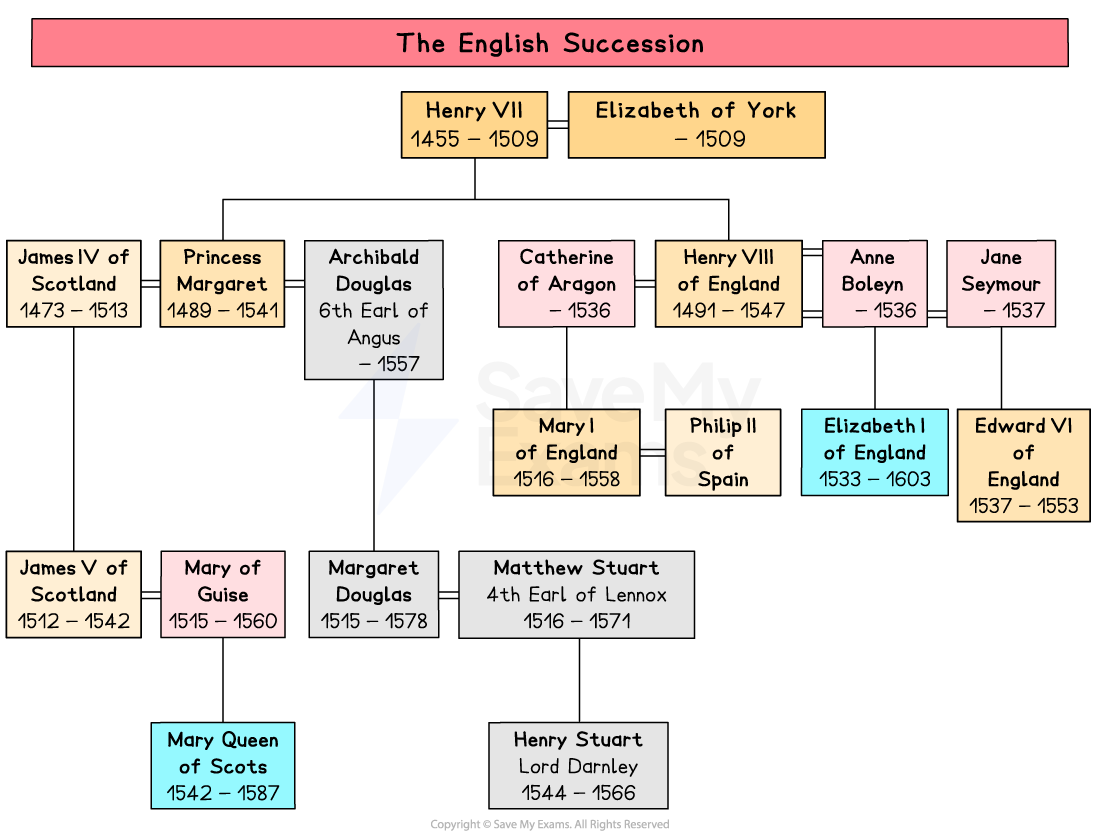
Mary, Queen of Scots, was Elizabeth's cousin
She was also a direct descendant of Henry VII, the first Tudor monarch
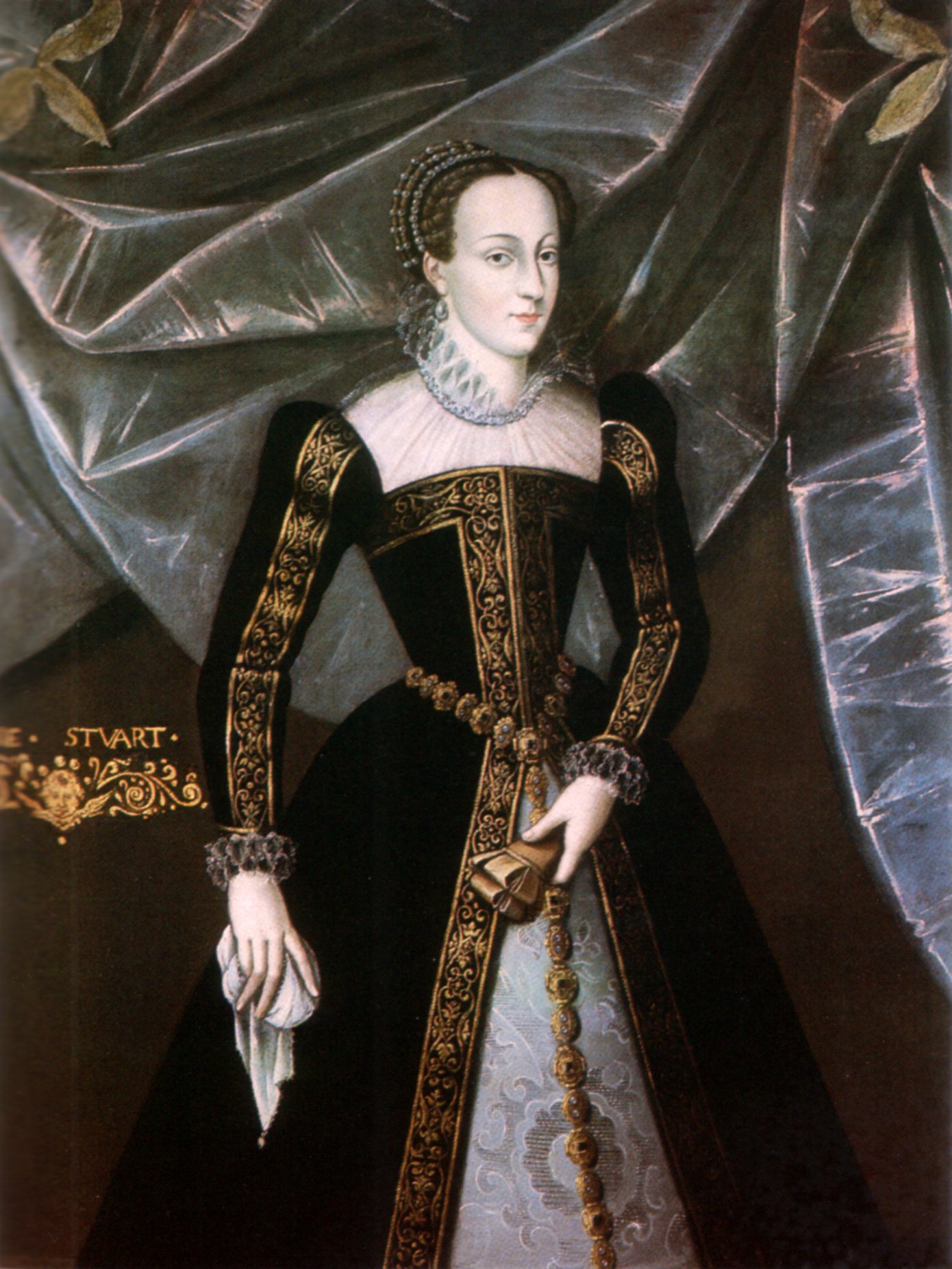
She had been crowned Queen of Scots aged just nine-months-old
Aged five, she moved to France in preparation for a marriage to the future French King
Mary was briefly the French Queen
After the death of her husband, Francis II, she returned to Scotland after 14 years away
Elizabeth I and the problem of Mary, Queen of Scots
When back in Scotland, Mary was in an unfortunate position
She was the Catholic Queen of a country where most of the powerful lords were Protestants
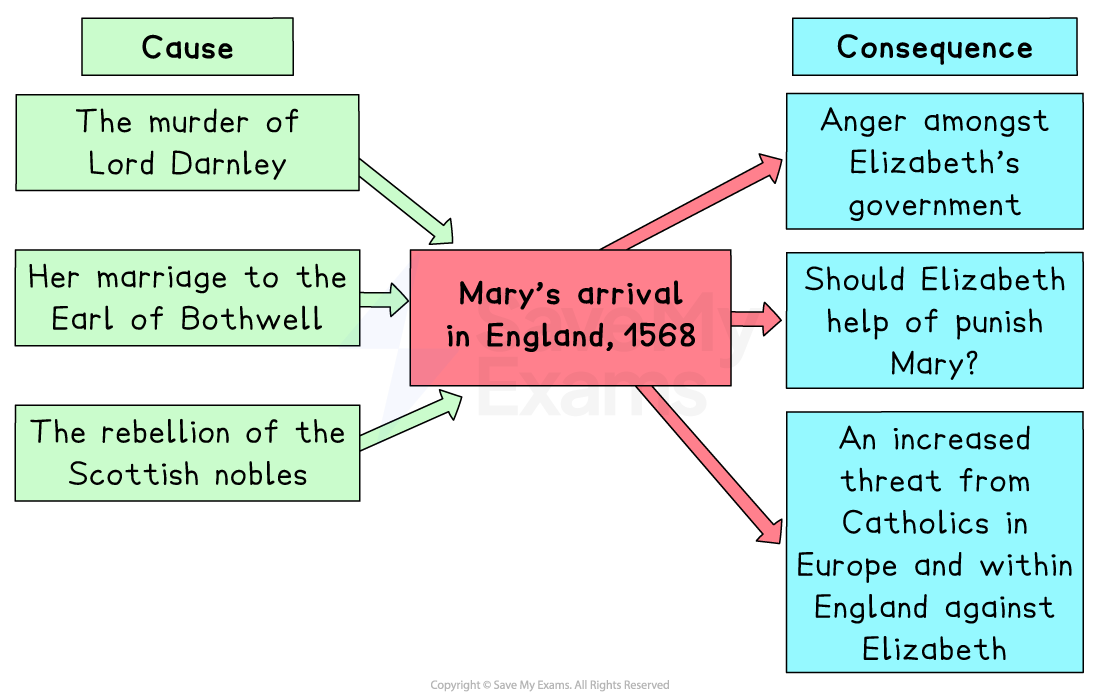
Scandal and the murder of her second husband, Lord Darnley, upset the Scottish nobles
After the death of her husband, Mary married the Earl of Bothwell
He was the main suspect in Darnley's murder
This proved too much for the Scottish lords
The nobles removed Mary from the Scottish Throne and replaced her with her infant son, James
Mary was imprisoned but managed to escape and fled to England
Mary hoped her cousin Elizabeth would take pity on her and support her in an attempt to reclaim the Scottish Crown
But Mary's arrival in England caused significant problems for Elizabeth
Support of English Catholics
From 1553 to 1557, England had been under the Catholic rule of Mary I
In 1558, the majority of England’s population was Catholic
Many English Catholics believed that Mary, Queen of Scots, was the rightful heir after Mary I’s death in 1558
Mary’s mother, Mary of Guise, was a member of a Catholic noble family from France
Her lineage gave Mary, Queen of Scots, a powerful connection to France, whose power was rising in the 16th century
This connection to France would increase England’s strength and reputation in Europe
Mary, Queen of Scots, also had the support of Philip II of Spain
Philip wanted a Catholic monarch to rule England
He believed England should remain a Catholic ally of Spain after the death of his wife, Mary I
After Elizabeth rejected Philip II’s offer of marriage, Philip wanted Elizabeth deposed
Mary, Queen of Scots, was the logical successor to the throne if Elizabeth were removed
This all combined to make the murder of Elizabeth seem to be a solution for some English Catholics
The execution of Mary Queen of Scots
The Ridolfi Plot (opens in a new tab) of 1571 and the Throckmorton Plot (opens in a new tab) of 1583 both involved plans to overthrow Elizabeth I and replace her with Mary Queen of Scots
On both occasions, Elizabeth refused to punish Mary for her part in the plots
This changed with the uncovering of the Babington Plot
The Babington Plot
Anthony Babington was a servant of the Earl of Shrewsbury whose role involved delivering notes to Mary
He became involved in a plot to replace Elizabeth on the Throne with Mary
This became known as the Babington Plot
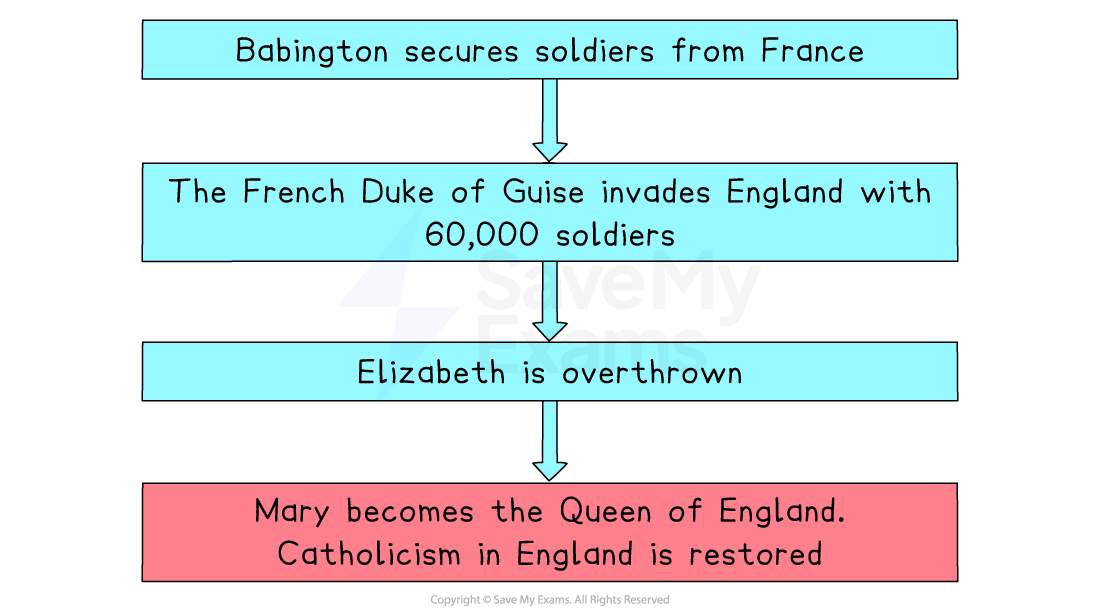
What happened in the Babington Plot?
In July 1586, Babington wrote to Mary explaining his plot
Walsingham, Elizabeth’s spymaster, monitored Mary closely after the Throckmorton Plot (opens in a new tab)
Walsingham wanted to catch Mary in the act of plotting
This would give Elizabeth the evidence needed to punish Mary
His spy network was intercepting Mary’s outgoing and incoming letters
Walsingham cracked the cipher that Babington and Mary used in their letters
He used the cipher to decode the letters
Walsingham placed spies within Mary’s household
They persuaded Mary that it was safe to communicate in secret letters
Mary placed the letters in beer barrels
Walsingham allowed Babington’s plot to develop
He wanted enough evidence to incriminate Mary in treason
He was waiting for Mary to send a letter that showed her full involvement in Babington’s plan
He wanted to know the names of every Catholic accomplice in the plot
On 17th July 1586, Walsingham uncovered the evidence needed to prove Mary’s guilt
Mary wrote a letter to Babington that has become known as the ‘Gallows Letter’
Historians call it the ‘Gallows Letter’ because it directly led to Mary's execution
Mary wrote to Babington that: “Then shall it be time to set the six gentlemen to work”
The ‘six gentlemen’ were the men Babington chose to assassinate Elizabeth
Babington learnt that the government had uncovered the plot
The government went to arrest Babington
Babington and two of his accomplices attempted to flee
Walsingham presented the evidence of Mary’s scheming to Elizabeth
Why was Mary, Queen of Scots, executed?
Elizabeth’s Privy Council declared Mary guilty of high treason in October 1586
There had been three major Catholic plots against Elizabeth’s life between 1571 and 1586.
Mary was the focus of all three plots
The government finally had the evidence needed to prove Mary’s wrongdoing
Despite the evidence, Elizabeth hesitated in signing the death warrant
Elizabeth distracted her councillors with matters other than the execution of Mary
The Privy Council begged Elizabeth to sign the warrant in February 1587
The execution of Mary happened on 8th February 1587
The consequences of Mary, Queen of Scots' execution
Although Mary's death brought an end to Catholic plots to kill Elizabeth, it caused relations between England and Spain to become even worse
Examiner Tips and Tricks
Including subject-specific language like high treason, lineage and cipher help to give your answers authority. It also helps you to explain things more quickly, which saves precious time in exams!

Unlock more, it's free!
Join the 100,000+ Students that ❤️ Save My Exams
the (exam) results speak for themselves:

Was this revision note helpful?
