The Growth of Big Business, Cities & Mass Migration (OCR GCSE History B (Schools History Project)): Revision Note
Exam code: J411

Summary
American industries boomed between 1877 and 1900, but also came under the control of increasingly wealthy and powerful corporations. The number of cities in America increased rapidly, which meant there was a huge demand for coal, iron and other minerals. It was this demand that drove the boom in the US economy.
Chicago grew into a major world city and the biggest meat processing centre in the world during this time. However, overstocking on the plains led to changes in the cattle industry.
The wealth and number of opportunities in America led to a large increase in the number of immigrants who moved from Europe to the US during this time. This led the national government to become involved and open the Ellis Island Immigration Centre.
Anti-immigrant feeling became widespread in the US, both against the new arrivals from Europe and immigrants from China on the West Coast.
How did business grow in the USA?
The years between 1877 and 1900 saw the US economy recover from the recession caused by the American Civil War
It also saw large corporations emerge
They started to dominate and take over entire industries
The number of manufacturing firms in the US reduced from 5300 to 334 between 1850 and 1900
These corporations became incredibly rich and powerful
Many of these corporations were built around the mining and production of minerals such as coal, iron, tin, copper and lead
Between 1870 and 1900, the number of US cities with populations over 100,000 increased from 14 to 38
The population of Chicago increased from 300,000 in 1870 to 1.5 million in 1900
All of these cities needed coal, iron and other metals
So did the thousands of miles of railroads that connected them all
The demand for these minerals drove the US economy between 1877 and 1900
Chicago meat industry
From the 1860s onwards, Chicago became the centre of America's meat processing industry
By the 1890s, Chicago processed more meat than any other city in the world
Millions of cows that had been raised on the open range of the plains were transported to Chicago by train every year
Mass production techniques were used, and each worker performed a single task as animals moved along a line
This greatly increased efficiency and therefore profits
The Chicago meat industry became dominated by major corporations such as Armour and Company and Swift and Company
They became extremely wealthy and influential
Cattle ranchers in the winter of 1886-7
The winter of 1886-7 became known as the 'Great Die Up' in the US cattle industry
For years, the plains had been overstocked
This meant there was not enough grass to feed the number of cattle that had been put on the plains
This led to weak cattle and poor-quality beef
The winter of 1886-1887 saw temperatures fall to -55°C
The weak cattle could not feed through the deep snow
Thousands of cattle died (around 15% of all open-range cattle)
Many cattle ranchers went bankrupt
Small ranches relied on bank loans to survive
After 1887, small ranches became the model for the cattle industry
Smaller herds of cattle:
Were easier to find in the winter
Required less water in times of drought
Were easier to guard from cattle rustlers
Were of higher quality because many smaller cattle ranchers bought pure-blood breeds
Keeping this pure breeding required fencing off ranches with barbed wire
Were more profitable because high-quality meat could be sold for more
Ellis Island & immigration
The opportunities available in the booming and expanded United States attracted migrants from all over the world
Through most of the 1800s, the US government had allowed individual state governments to make their own decisions about migration
By 1890, people were arriving by steamship in such large numbers that the US government decided it had to act
They opened the Ellis Island Immigration Centre just outside New York
Here, immigrants were given a medical examination and were taken to the hospital on the island if judged to be too unwell
If healthy migrants passed the legal examination, they were taken to New York City by ferry
From New York, the new arrivals spread out throughout the US to build new lives and follow the 'American Dream'
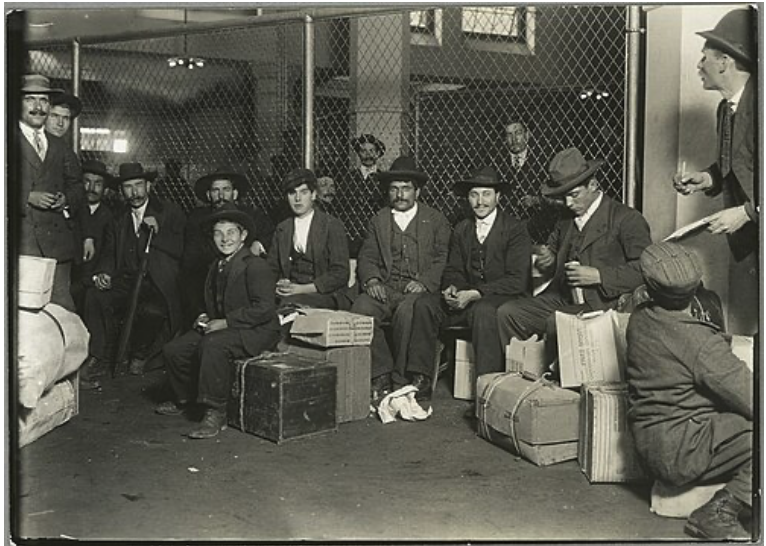
Anti-immigrant Feeling
Many of the new arrivals came from eastern, southern and central Europe
Most did not speak English and most were Catholic or Jewish
The established Euro-Americans were mostly Protestant and English-speaking
Many resented the arrival of large numbers of people who were different from them in so many ways and who were willing to work any job for any wage
The American Protective Association was created in 1887 to 'protect' Protestant Americans
On the west coast, Chinese immigrants faced even worse discrimination
They made up 10 per cent of the population of San Francisco but were only allowed to live within certain areas known as 'Chinatown'
The US government passed the Chinese Exclusion Act in 1882, which specifically limited the number of immigrants from China that could enter the United States
Worked Example
Name one reason why there were changes to the cattle industry after 1887.
[1 mark]
Answer
One reason why there were changes to the cattle industry after 1887 was because of overstocking - this means more cattle were placed on the plains than could be fed by the grass on them.

Unlock more, it's free!
Join the 100,000+ Students that ❤️ Save My Exams
the (exam) results speak for themselves:

Was this revision note helpful?
