Government Policy & Westward Expansion (OCR GCSE History B (Schools History Project)): Revision Note
Exam code: J411

Summary
The Civil War divided the northern and southern states of America, but it also provided the opportunity to join the East and the West.
The southern states had blocked attempts to build a railroad joining the states in the east with those in the west. When the southern states seceded from the Union, Congress was able to pass acts that led to both the construction of a transcontinental railway and hundreds of thousands of people moving west and building farms on the plains.
These acts were the Homestead Act and the Pacific Railroad Act, both of which were passed in 1862.
Impact of the Civil War on National Unity
In the decades leading up to the Civil War, there was a great division between the northern states and the southern states over many issues, including the future of the US
The northern states wanted to expand west and create new states filled with small, family-owned farms known as homesteads
The southern states wanted to expand west and create states filled with enormous plantations worked by enslaved people
Both north and south could see how the building of a railroad or railway that stretched from the east coast to the west coast would help speed the process of expansion up
However, neither side could agree on the route the railroad should take
The northern states wanted it to run from their states
The southern states believed it should run from theirs
The outbreak of the Civil War in 1861 split the nation in two
It also allowed President Abraham Lincoln to build a railroad that linked the east and west coasts and to settle the Great Plains with thousands of homesteads
Examiner Tips and Tricks
The creation of a transcontinental railway and the populating of the West with hundreds of thousands of Euro-American farmers are some of the most important consequences of the American Civil War. Be sure to include these in any questions that ask about the impact of the Civil War - not just the emancipation of enslaved people and the Reconstruction program.
Lincoln's motives
Once the southern states seceded from the Union in 1861, they were unable to block any attempts to build a railroad or populate the plains
Lincoln moved quickly to do both:
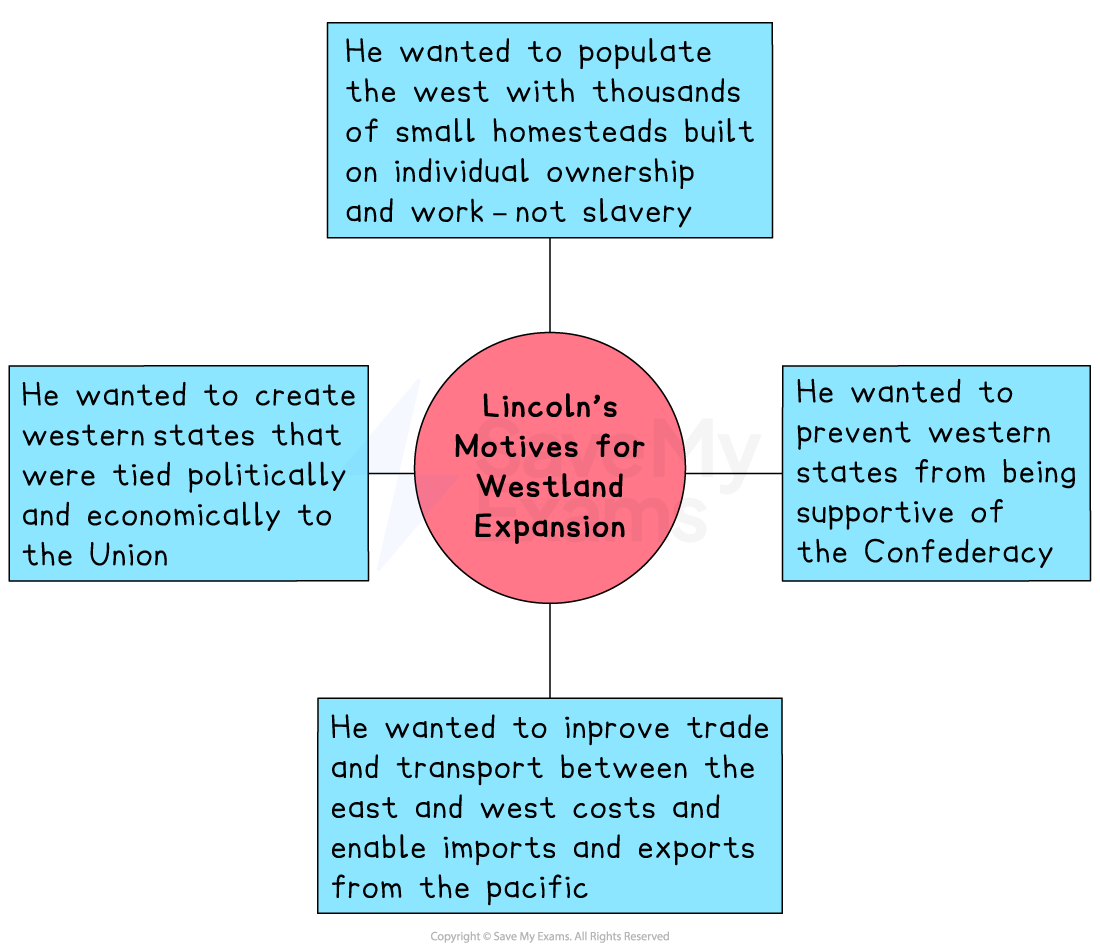
Lincoln aimed to create a cohesive, integrated and connected nation that stretched from the Atlantic to the Pacific Ocean
The Homestead Act, 1862
Lincoln believed that offering cheap land to settlers could encourage people to move westward
He believed this would help establish a strong presence in the West for the Union rather than the Confederacy or Mexico
It would also improve the food supply
The Homestead Act had specific terms that rewarded the cultivation of the land
What was a homestead?
Homesteads were 160 acres, enough for a house and land to support the family
It cost just $10 to claim a homestead plot or 'file a claim'
Who could become a homesteader?
Almost all people were eligible to file a claim for a homestead
These included:
Heads of families
Single men over the age of 21
Men younger than 21 who were ex-soldiers
Former enslaved people and women
The only people specifically forbidden from being able to file claims were indigenous peoples
The Pacific Railroad Act, 1862
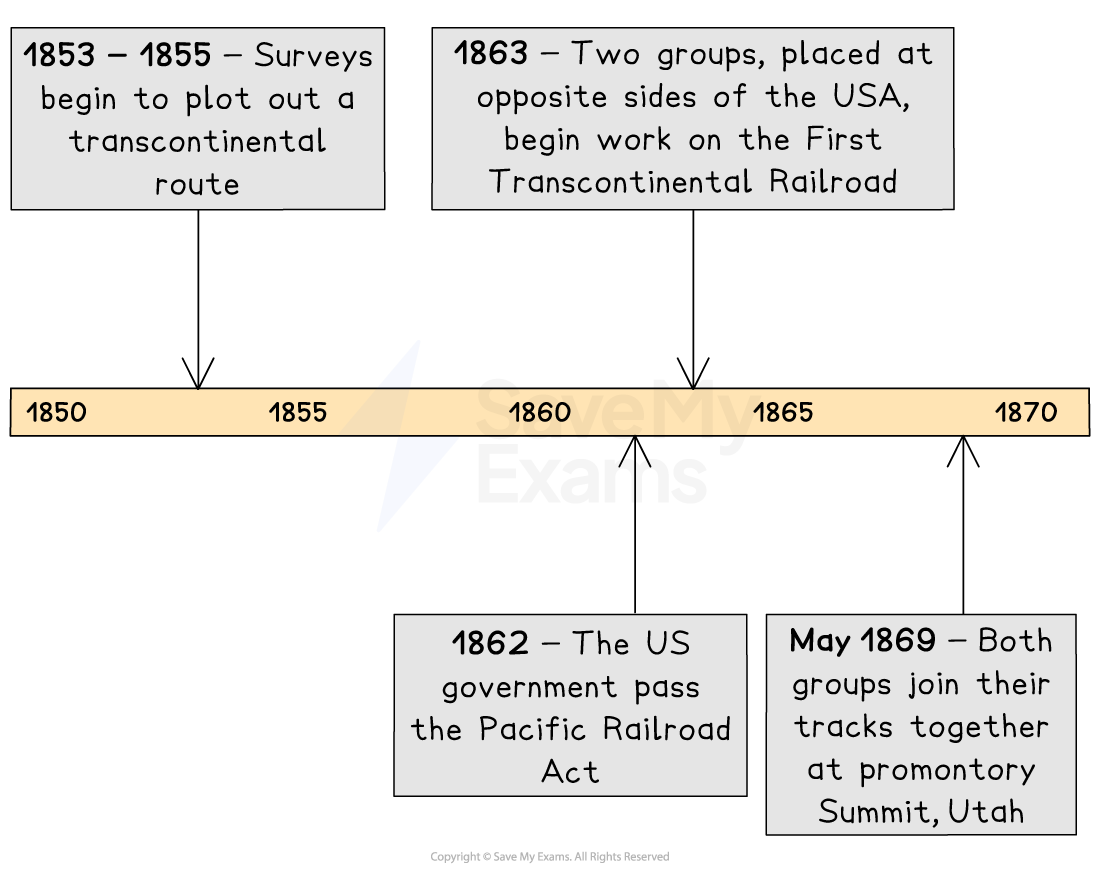
The Pacific Railroad Act aimed to:
Construct a transcontinental railroad between the East and the West
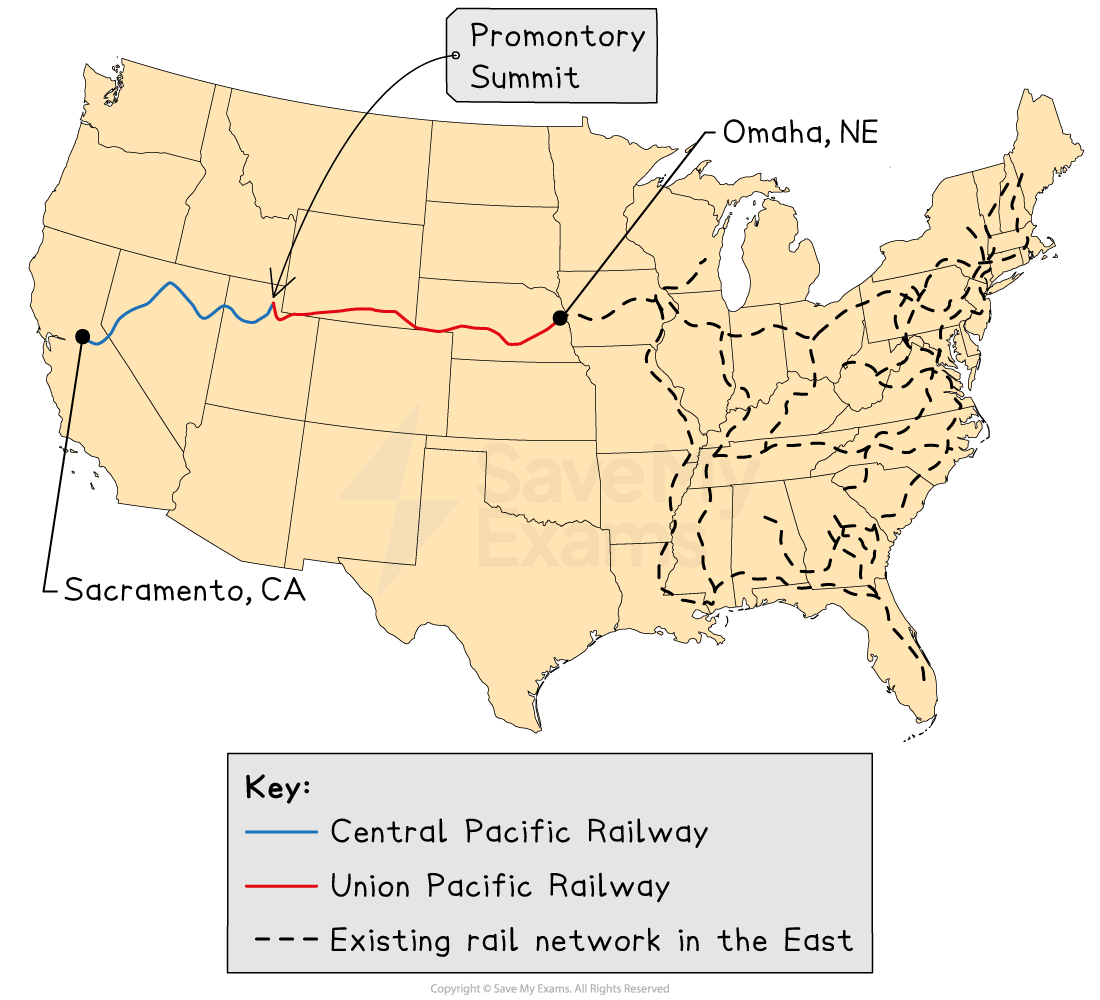
The North had an extensive rail network, but it only reached as far west as Missouri
The railroad would have to navigate through the Appalachian Mountains and the Rocky Mountains
In 1862, the US government chose a route that connected California to Omaha, Nebraska
The US government committed to:
'Extinguish' the land rights that the Indigenous people had on the proposed route
Giving each railway company $16,000 for every mile of track
Granting public land for the railway companies to sell
Creating the first transcontinental electric telegraph to run along the railroad
Construction of the First Transcontinental Railroad began in 1863
The Union Pacific Railway started from East to West
The Central Pacific Railway was constructed from West to East
They aimed to join the two railroads together
On 10th May 1869, the two railroads connected at Promontory Summit, Utah
Worked Example
Name one example of a type of person who was eligible to file a claim for a homestead under the Homestead Act of 1862.
[1 mark]
Answer
One example of a type of person who was eligible to file a claim for a homestead under the Homestead Act of 1862 was single men over the age of 21 - unless they were from an Indigenous tribe.

Unlock more, it's free!
Join the 100,000+ Students that ❤️ Save My Exams
the (exam) results speak for themselves:

Was this revision note helpful?
