Homesteaders: Living & Farming on the Plains (OCR GCSE History B (Schools History Project)): Revision Note
Exam code: J411

Summary
For many Americans and Europeans, the chance to own their own farm seemed like a wonderful opportunity. The Homestead Act of 1862 seemed to make that dream a reality. It meant ordinary people could own 160 acres of land if they paid a small fee and farmed it for five years. The railroad companies also did a wonderful job of selling this dream to thousands of people.
However, the reality of life on a homestead was quite different from the dream. Carving a farm out of the wilderness and raising a family in what were often very isolated locations was extremely challenging. For nearly half of all homesteaders, the challenge was too great. They abandoned their dreams and their farms.
Living on the Plains
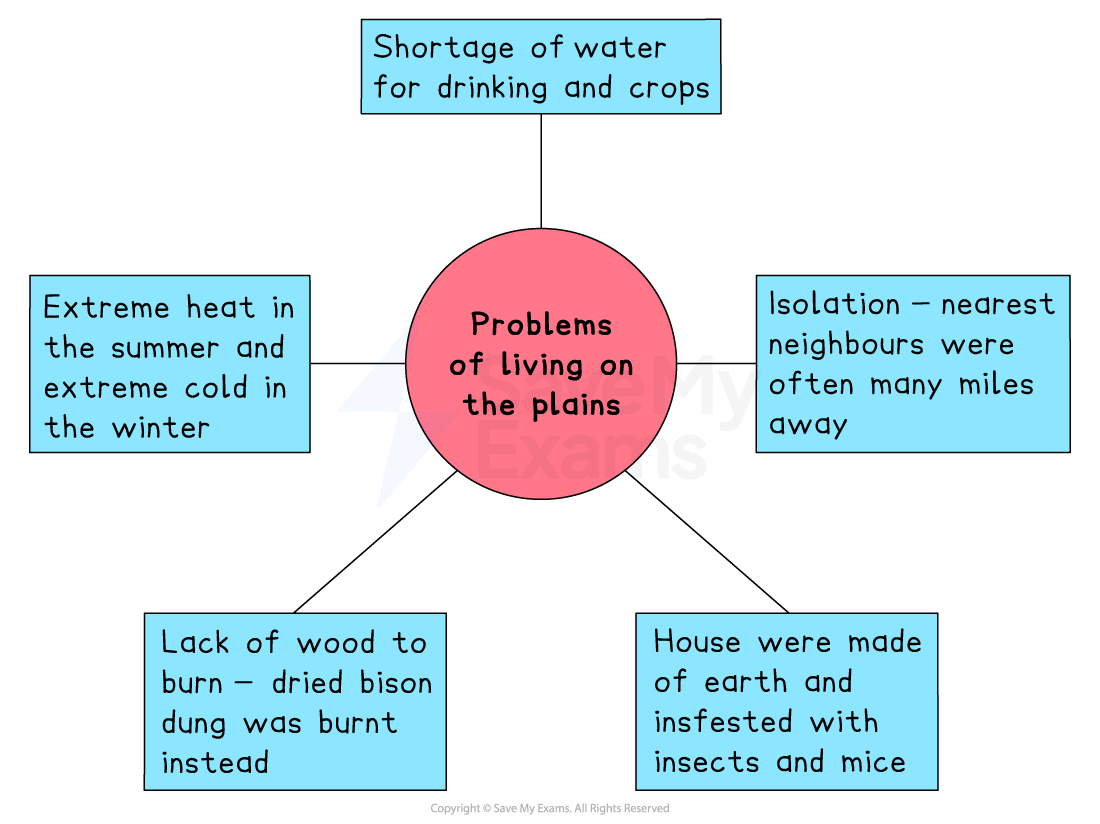
Life on the plains posed many difficulties, including:
Water shortages
Isolation
Extreme heat
Lack of wood
Animal and insect infestations
Farming on the Plains
Building farms on land that had never been cultivated was difficult
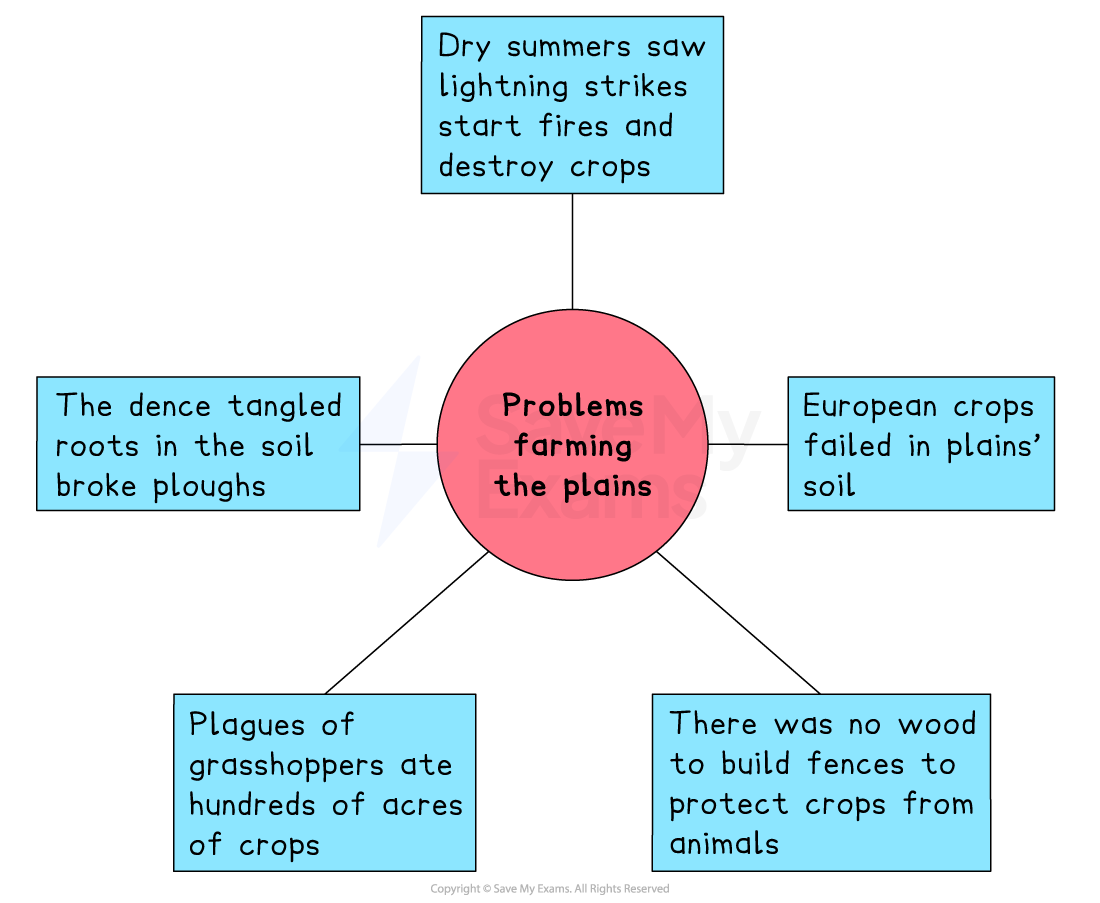
Other farming challenges included:
Grasshopper plagues
Crop failure
Dense roots in the soil
Climate
Solutions to living on and farming the Plains
Many of the problems faced by homesteaders were eventually overcome either by new technology or new techniques
The problem of a lack of water was solved for many by the invention of high-powered drills and wind pumps
The drill was able to find water at great depths
The wind-powered pumps ensured water was pumped from deep underground both night and day
The sod-buster plough was strong enough to deal with the toughest of grass roots on the plains
Barbed wire was invented in 1874 and provided a cheap and effective way of fencing off and protecting crops
Turkey Red Wheat was introduced, which flourished on the plains
None of these inventions or developments would have been enough to succeed without the hard work and determination of the homesteaders
Worked Example
Name one example of why nearly half of all homesteaders gave up their farms.
[1 mark]
Answer
One example of why nearly half of all homesteaders gave up their farms was grasshoppers, which devastated crops on the plains.

Unlock more, it's free!
Join the 100,000+ Students that ❤️ Save My Exams
the (exam) results speak for themselves:

Was this revision note helpful?
