The California Gold Rush (OCR GCSE History B (Schools History Project)): Revision Note
Exam code: J411

Summary
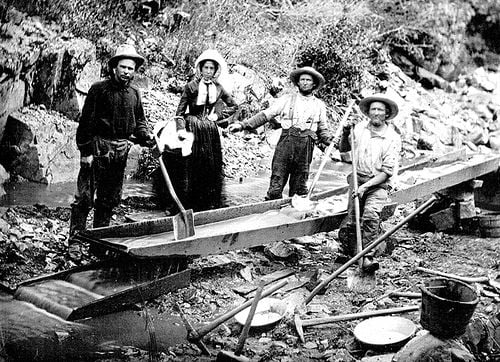
The discovery of gold in California in 1848 sparked a mass migration known as the California Gold Rush. Prospectors from all over the world travelled to the West. They hoped to find their fortune in the goldfields. The idea of wealth and a new beginning drove many individuals and families to journey westward. Many people would never achieve great wealth.
The Nature of the California Gold Rush, 1848-1849
Gold had been discovered in Sierra Nevada, California, in 1848
In April 1849, 100,000 people migrated to California to find gold
Many travelled to the West via the Oregon Trail
These migrants were called "49ers"
California's economy and population boomed
Gold prospectors needed food, equipment, drink and entertainment
This encouraged more people to travel to California to provide these services
California's population grew from 15,000 in 1848 to 300,000 by 1855
Some gold prospectors became very rich
Most migrants were unsuccessful and either:
Travelled back to the East
Settled in California
Examiner Tips and Tricks
Question two on this paper is worth nine marks. It will ask you to write a narrative account or summary of an event.
The focus of this question is 'what' happened rather than 'why' did it happen. Do not waste time or effort explaining the most important reasons why something happened in this question - save that for questions 3, 4 and 5.
The Impact of the California Gold Rush, 1848-1849
Positive Impacts | Negative Impacts |
|---|---|
California became a state in 1850 due to its large number of US citizens | The rapid migration to California led to problems with law and order among white settlers |
It encouraged more people to migrate west, as they could achieve success and freedom in California | The new migrants did not respect the Indigenous population. They murdered or enslaved Indigenous peoples |
California had rich farmland. The USA began to export food products across the world | Many gold prospectors did not find gold. They returned to the East poorer than they had been before |
The Gold Rush raised enough money to start the Transcontinental Railroad project | Indigenous peoples were driven out of their native lands |
The devastating environmental impact of the chemicals used to extract the gold, which killed wildlife and poisoned streams and rivers |
Worked Example
Name one negative impact of the California Gold Rush, 1848-49.
[1 mark]
Answer
One negative impact of the California Gold Rush 1848-49 was the murder and enslavement of Indigenous peoples who lived in California and were driven out of their lands.

Unlock more, it's free!
Join the 100,000+ Students that ❤️ Save My Exams
the (exam) results speak for themselves:

Was this revision note helpful?
