The Indigenous People of the Plains (OCR GCSE History B (Schools History Project)): Revision Note
Exam code: J411
Summary
The Indigenous tribes differed in their traditions and cultures.
One significant difference among the tribes of the Great Plains was their way of living. Some tribes, such as the Sioux and Cheyenne, were nomadic hunter-gatherers. They followed the seasonal migration patterns of bison herds. In contrast, other tribes like the Mandan and Hidatsa were more settled farmers. They lived in permanent earth lodges along the riverbanks. They grew crops like corn, beans and squash.
Another difference was the leadership structure within each tribe. Some tribes, like the Sioux, had a political system with multiple chiefs and councils. Others, like the Pawnee, had a more centralised leadership with a single chief or council of elders.
Cultural practices and traditions also varied among the tribes. Each tribe had its own unique ceremonies, rituals and spiritual beliefs. Indigenous people passed down these customs through generations. For example, the Lakota Sioux performed the Sun Dance to renew the connection between humans and the natural world. The Cheyenne practised the ceremonial smoking of the sacred pipe as a symbol of peace and unity.
European settlers ignored or misunderstood these differences. They attempted to apply Western concepts of government to the Indigenous tribes. This caused the European settlers to wrongly view the Indigenous people as "savages" or "uncivilised".
Indigenous (Native) Americans of the Plains
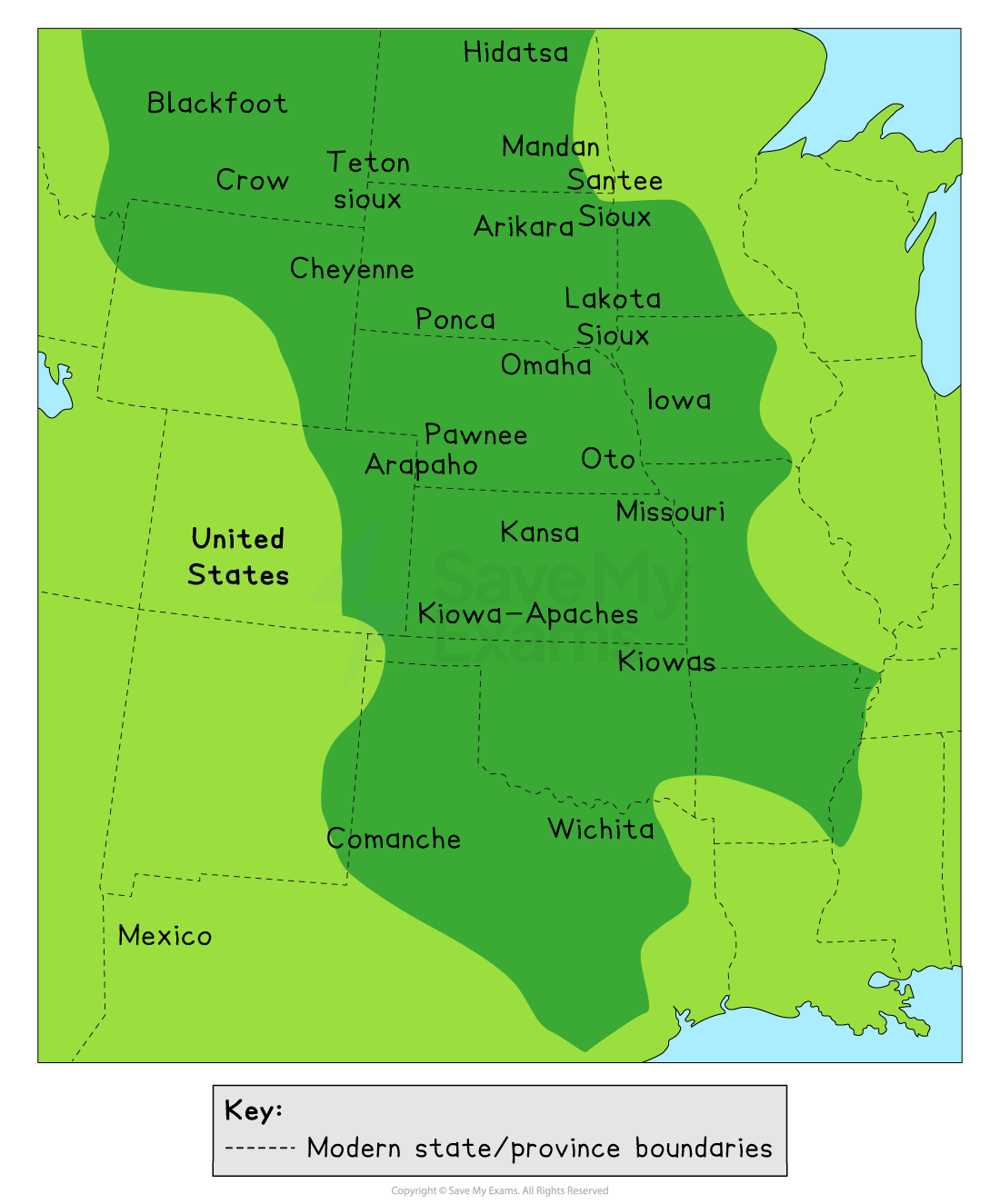
Hundreds of tribes lived on the Great Plains
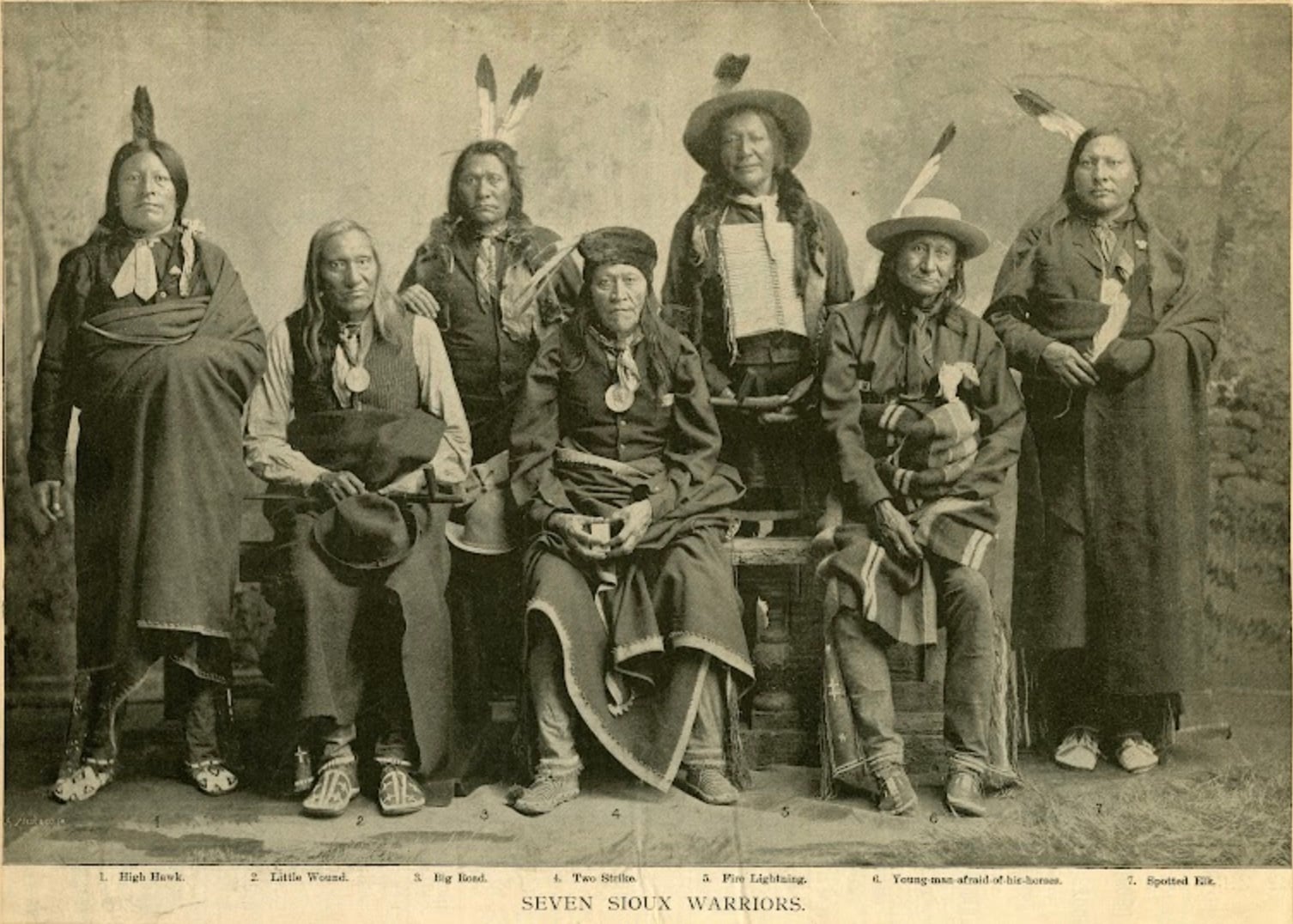
The Sioux Nation was the largest tribe on the Great Plains
The Sioux were split up into different groups, like the Santee Sioux
Some tribes were fierce enemies, like the Pawnee and the Sioux
Tribes made alliances with each other
They would often break their alliances due to the interference of European settlers
Tribal Structures
Each tribe had a slightly different way of structuring its society, depending on:
The size of the tribe
The tribal leader
The tribe’s unique set of values and beliefs
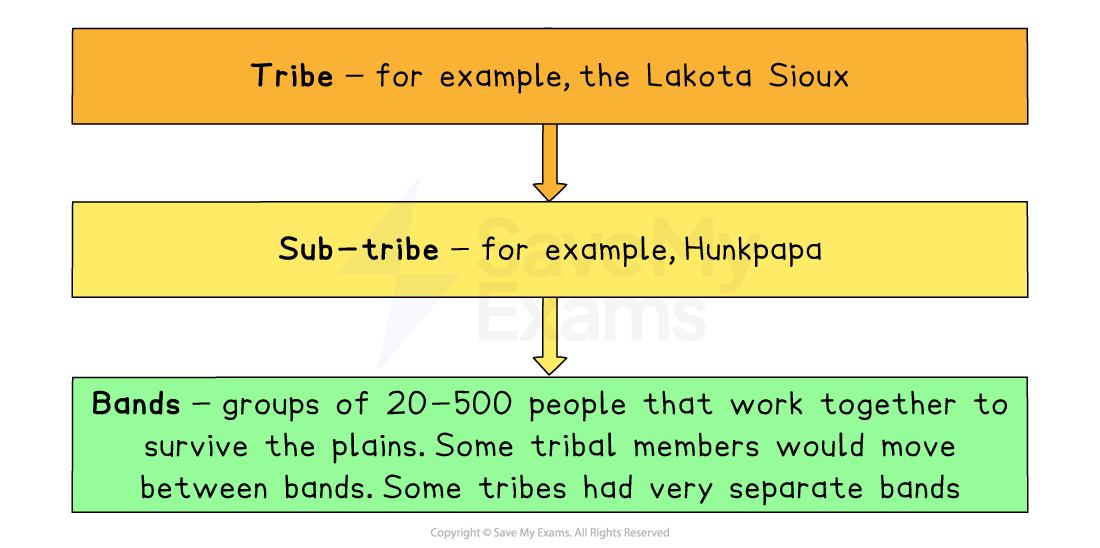
Tribal Structure of the Sioux
Chiefs in the Great Plains
The leaders of the Indigenous people in America were called chiefs
Chiefs were:
Always men
Spiritual leaders
Negotiated with other tribes and Europeans
Each band had a band chief
They were chosen to protect the band from danger
Tribal councils
Band chiefs and elders formed tribal councils
Councils could have a range of responsibilities, for example:
Declaring war
Negotiating peace treaties
Listening to the advice of the spiritual chief
Every member of the council had equal power
Every decision made had to have the agreement of all members
Warrior brotherhoods
Each tribe had several warrior brotherhoods
Young men created armed groups to fight and protect their community from other tribes
Warrior brotherhoods had a strong belief in their tribe’s values and customs
Warrior brotherhoods fought with other tribes to prove their bravery and skills
Tribal chiefs chose key members from each warrior brotherhood to:
Form a guard unit for the whole tribe
Organise the yearly bison hunt
Hunt for food to feed elderly and ill tribal members
Why did the tribal system cause issues with Euro-American colonists?
Tribes having multiple chiefs confused people from European backgrounds
They were used to dealing with one leader, such as a president or a king, and were unsure who to negotiate with
Chiefs also frequently changed and were rarely made chiefs for life
This meant the next chief could ignore any agreements made by the previous chief
Chiefs rarely had the authority to speak for every member of their tribe
Many bands and warrior brotherhoods saw themselves as completely independent and would not obey the orders of chiefs
The culture of the Indigenous people
Wakan Tanka
The Sioux people believed in ‘Wakan Tanka'
This translates to the ‘Great Spirit’
They believed that Wakan Tanka:
Existed within every creature and plant
Guided the Sioux people on ‘vision quests’ through spirit animals
Communicated with Sioux people through ritual dances
Gave them luck through spiritual objects
The Wakan Tanka impacted the Sioux people's belief in the land
The Sioux worked with nature and did not try to control it
As a result, they believed that they did not own the land
Wakan Tanka gifted the land and all its resources to protect the Sioux people
Certain areas of land were sacred to tribes
For example, the Black Hills of Dakota were sacred to the Sioux
Holy men went to the Black Hills to seek guidance
Sioux dead were buried here
The Role of Women
Indigenous women were not seen as equal to Indigenous men
An example of this is that women could not become chiefs
Men could have more than one wife
Women did have a valued role in tribal society
They fed and clothed their families
They made products with buffalo hide and meat to trade with other tribes
The importance of the bison in the Plains
When Europeans first arrived in North America, they incorrectly identified the millions of bison that lived there as buffalo
In much the same way as the incorrect label of "indian" was applied to Indigenous people, the term continued to be used
Bison were vital for the lives of Indigenous people because:
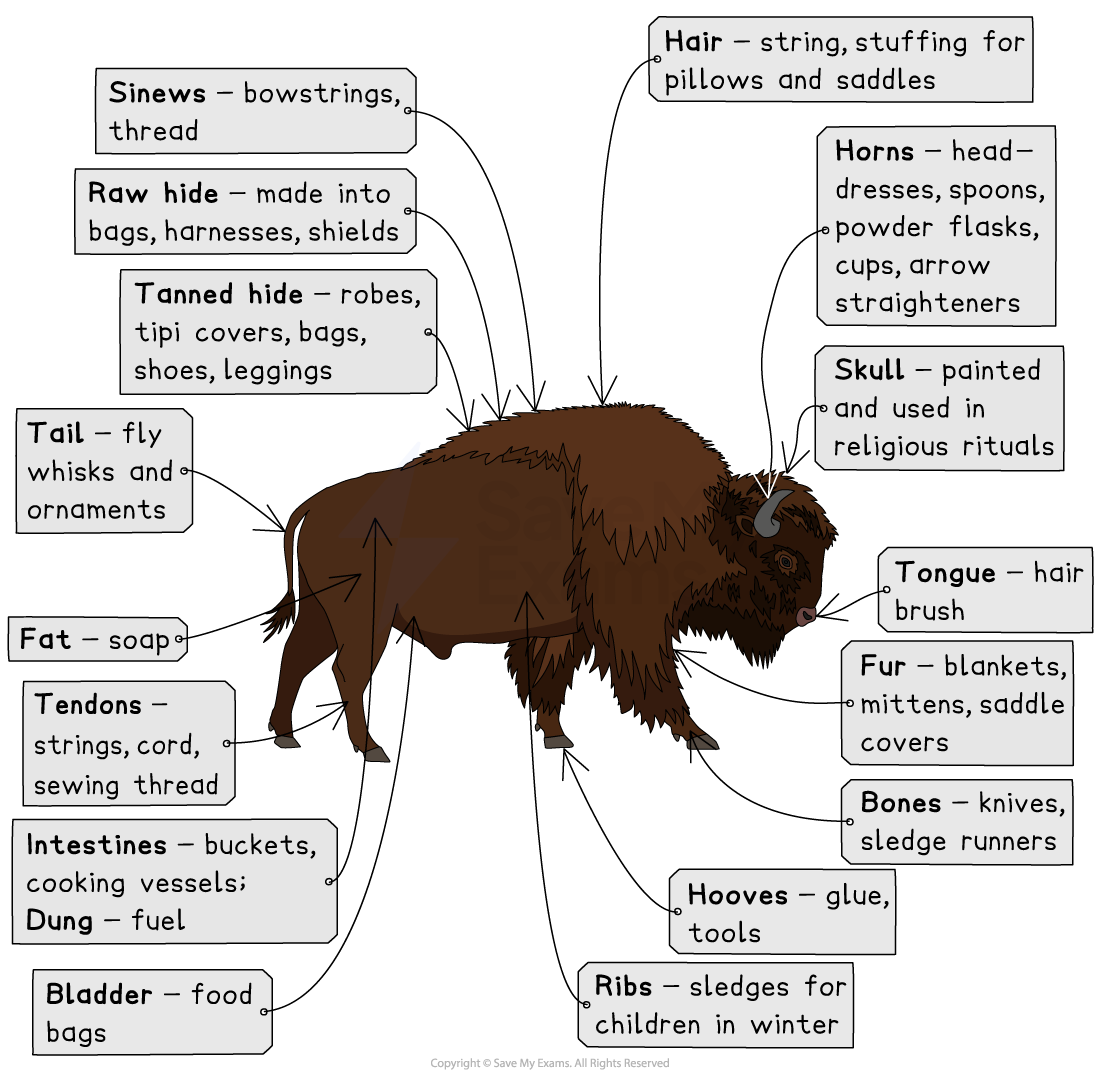
Every part of the bison was used by them
The Indigenous people deeply respected animals due to their beliefs in spirits
Some tribes were nomadic, following the migration of the buffalo
Many Indigenous people would live in tipis, which could be dismantled quickly and moved with them
The arrival of horses and guns onto the plains made the nomadic lifestyle possible
Horses had been brought to South America by the Spanish in the 1500s
Horses meant tribes could keep up with the bison herds as they migrated enormous distances
Later, the arrival of guns meant they could kill large numbers of them much more easily
Indigenous people developed skills in horse-riding to catch the bison
Examiner Tips and Tricks
You may see bison referred to as buffalo in textbooks or even exam papers and you will not lose marks for using the term buffalo.
However, in much the same way as Indigenous peoples of the Americas are no longer referred to as "Indians", historians have adopted the scientifically correct term of bison.
The Lakota Sioux
Horses and guns changed the lives and culture of the Lakota Sioux
Before horses were introduced to the plains, the Lakota Sioux had settled in the north of the Plains in the woodlands near the Great Lakes
They grew crops, foraged for food in the woods and hunted single bison on foot
When the Lakota Sioux first obtained horses, they continued to farm but would go on hunts mounted on horseback in the summer months
When they obtained guns from Euro-American traders, they gradually abandoned farming altogether and moved further south onto the plains
By the 1830s, the Lakota Sioux lived fully nomadic lives and depended entirely on hunting the bison herds with horses and guns
They became extremely skilled riders and fought with other tribes, such as the Mandan and the Crow, frequently stealing horses from each other
Worked Example
Give one example of one of the indigenous tribes that lived in the plains.
[1 mark]
Answer
One of the indigenous tribes that lived in the plains was the Lakota Sioux.

Unlock more, it's free!
Join the 100,000+ Students that ❤️ Save My Exams
the (exam) results speak for themselves:

Was this revision note helpful?
