The Pikes Peak Gold Rush (OCR GCSE History B (Schools History Project)): Revision Note
Exam code: J411

Summary
The California Gold Rush of 1849 is well-known. However, ten years later, an even bigger gold rush was triggered when gold was discovered in the Rocky Mountains.
This meant that, for the first time, US citizens began to view the plains as a destination rather than somewhere to pass through. This caused great anger and alarm for the Indigenous peoples who lived on the plains.
The Pikes Peak gold rush, 1858-1859
In July 1858, gold was discovered in the Rocky Mountains
Today, this is in Colorado, but in 1858, it was the Kansas Territory
The discovery sparked another gold rush
This was named after the nearby mountain, Pikes Peak
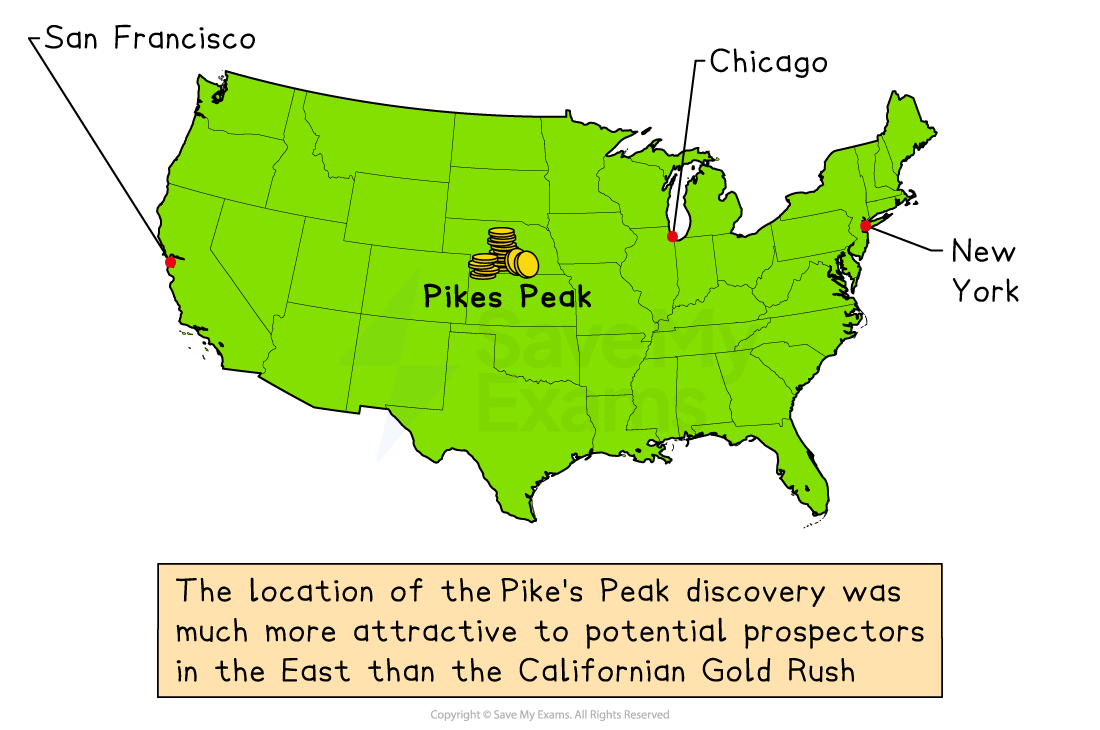
The Pikes Peak gold rush was different from the California gold rush in several ways:
The location of the discovery was not as far west
Pike's Peak was much closer to the cities in the East than California
By 1858, the railroads had been built
This meant prospectors could travel by train until they were just 600 miles away from the Rockies
Nearly twice as many people left the East for the Pikes Peak Gold Rush as had left for the California Gold Rush
By 1859, more than 100,000 people had arrived in the Rockies in search of gold
Examiner Tips and Tricks
Question 3 on this paper is worth 10 marks and will ask you to explain something. It might begin 'What caused...' or 'Why did...' and to answer this effectively, you have to use connectives. These are terms such as 'As a result...', 'This led to...' and 'Due to this...'
Terms such as these let the examiner know that you understand how and why events occurred and why one thing led to another.
The consequences of the Pikes Peak gold rush, 1858-1859
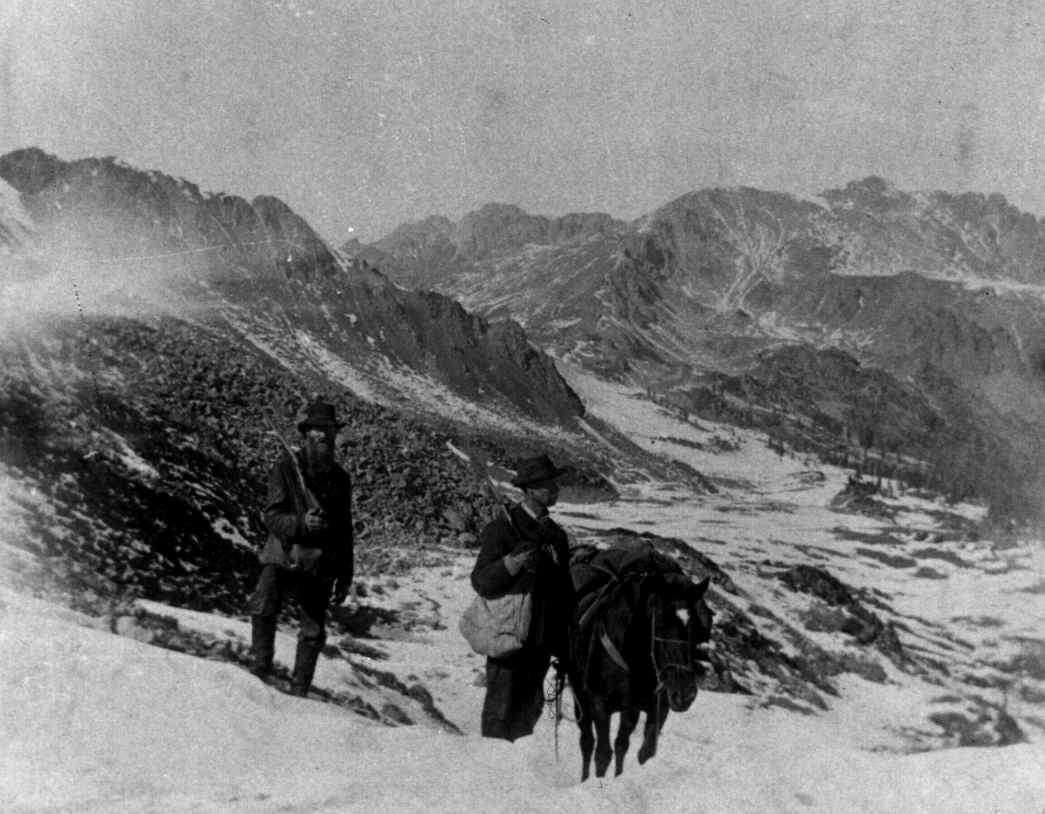
The arrival of so many prospectors led to the Kansas Territory becoming a state in 1861
The western half was renamed Colorado Territory
People began to settle in the state
As well as mining for gold, people also farmed so they could sell their produce to the miners
Towns such as Denver began to grow and flourish
More and more US citizens began to see the Plains as somewhere to move to, rather than just pass through
For the Indigenous peoples who lived on the plains, this was a negative development
The Fort Laramie Treaty of 1851 meant that tribes such as the Arapaho, Lakota Sioux and Crow had agreed to allow safe passage for Euro-American colonists
In 1853, other tribes that lived on the southern plains, such as the Comanche and the Cheyenne, had made similar agreements with the US government
The arrival of so many Euro-American miners, farmers and traders on the plains caused tensions with the Indigenous peoples to rise enormously
Worked Example
Name one reason why more people travelled to the Pikes Peak Gold Rush than to the California Gold Rush.
[1 mark]
Answer
One reason why more people travelled to the Pikes Peak Gold Rush than to the Californian Gold Rush was due to the closer proximity of Pikes Peak to the East Coast cities.

Unlock more, it's free!
Join the 100,000+ Students that ❤️ Save My Exams
the (exam) results speak for themselves:

Was this revision note helpful?
