Nazi Polices Towards Young People: Youth Groups (OCR GCSE History B (Schools History Project)): Revision Note
Exam code: J411

Summary
Hitler and the Nazi Party made many changes which affected Germany’s young people. Policies were targeted at both the establishment of youth groups and children’s education.
By 1933, boys and girls in Germany were only allowed to join one of the available Nazi youth groups. For male teenagers, membership in the Hitler Youth was focused on physical and military training. Hitler wanted to create an army for the future to ensure the protection of Nazi Germany.
Teenage girls were encouraged to join the League of German Maidens, where they would develop skills such as cooking and needlework. They were also expected to take part in physical activities, which was to ensure they would be capable mothers and produce healthy children.
Nazi aims and policies towards youth groups
Hitler and the Nazis wanted to create a Third Reich that would last a thousand years
Hitler knew that adults in Nazi Germany had mixed opinions of the Nazi Party
Adults were more difficult to influence and change than the young
Control of the youth and future generations would ensure that the Nazi Party would always be supported
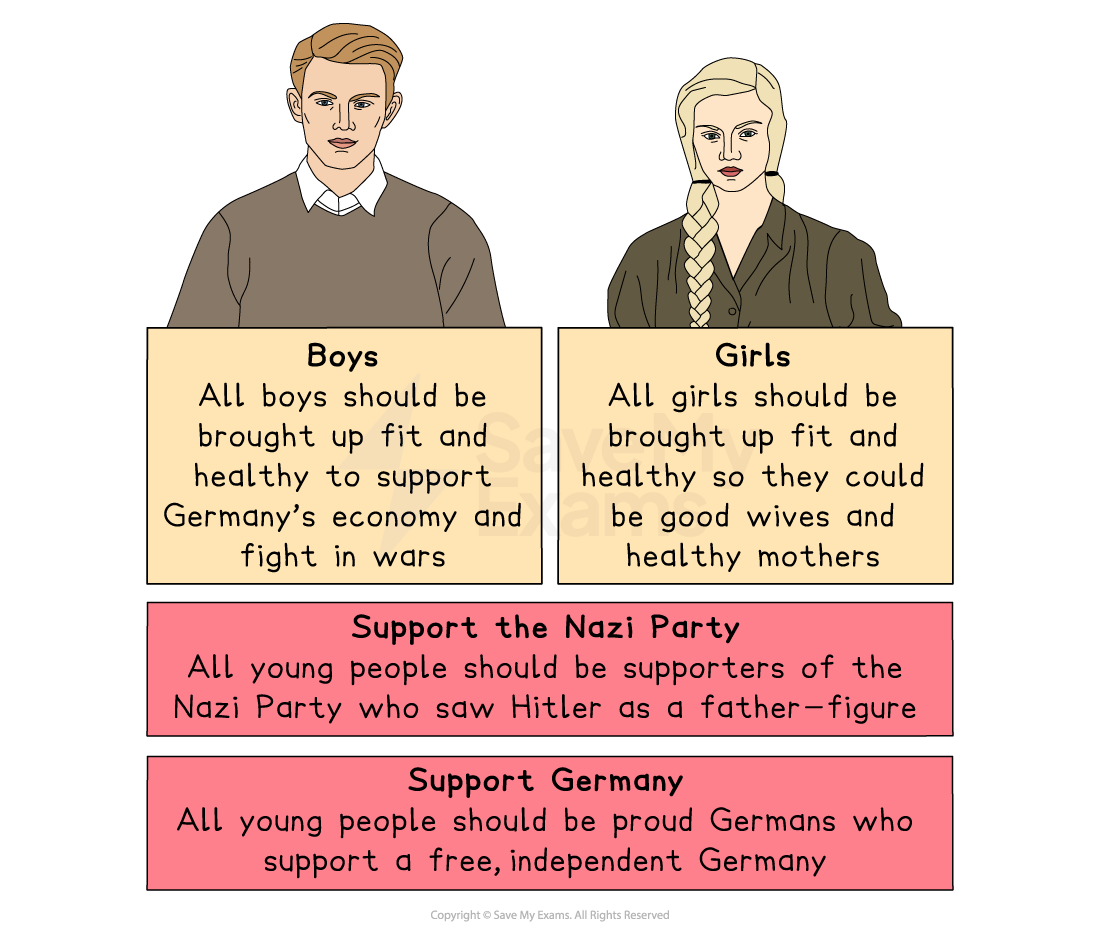
Nazi youth organisations
The Nazis made several changes during the 1930s to boost membership in Nazi youth groups:
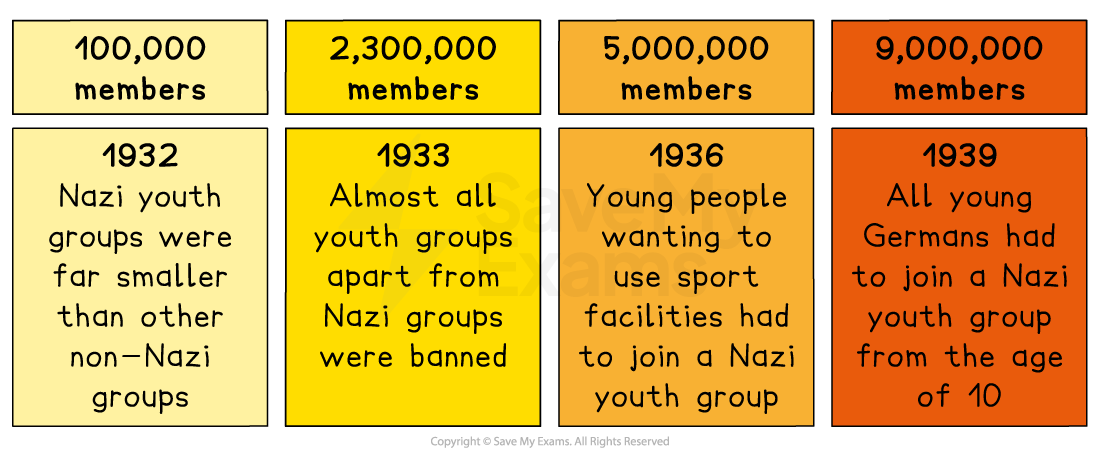
Nazi youth groups
Pimpfe: A group for boys aged between 6 and 10
German Young People: A group for boys aged between 10 and 14
Young Maidens: A group for girls aged between 10 and 14
Hitler Youth: A group for boys aged between 14 and 18
League of German Maidens: A group for girls aged between 14 and 18
The Hitler Youth
Baldur von Schirach was the Hitler Youth leader
Boys were eligible to join the Hitler Youth when they turned 14
At age 18, boys became members of the Nazi Party and worked or joined the armed forces
Training was split into four distinct areas:
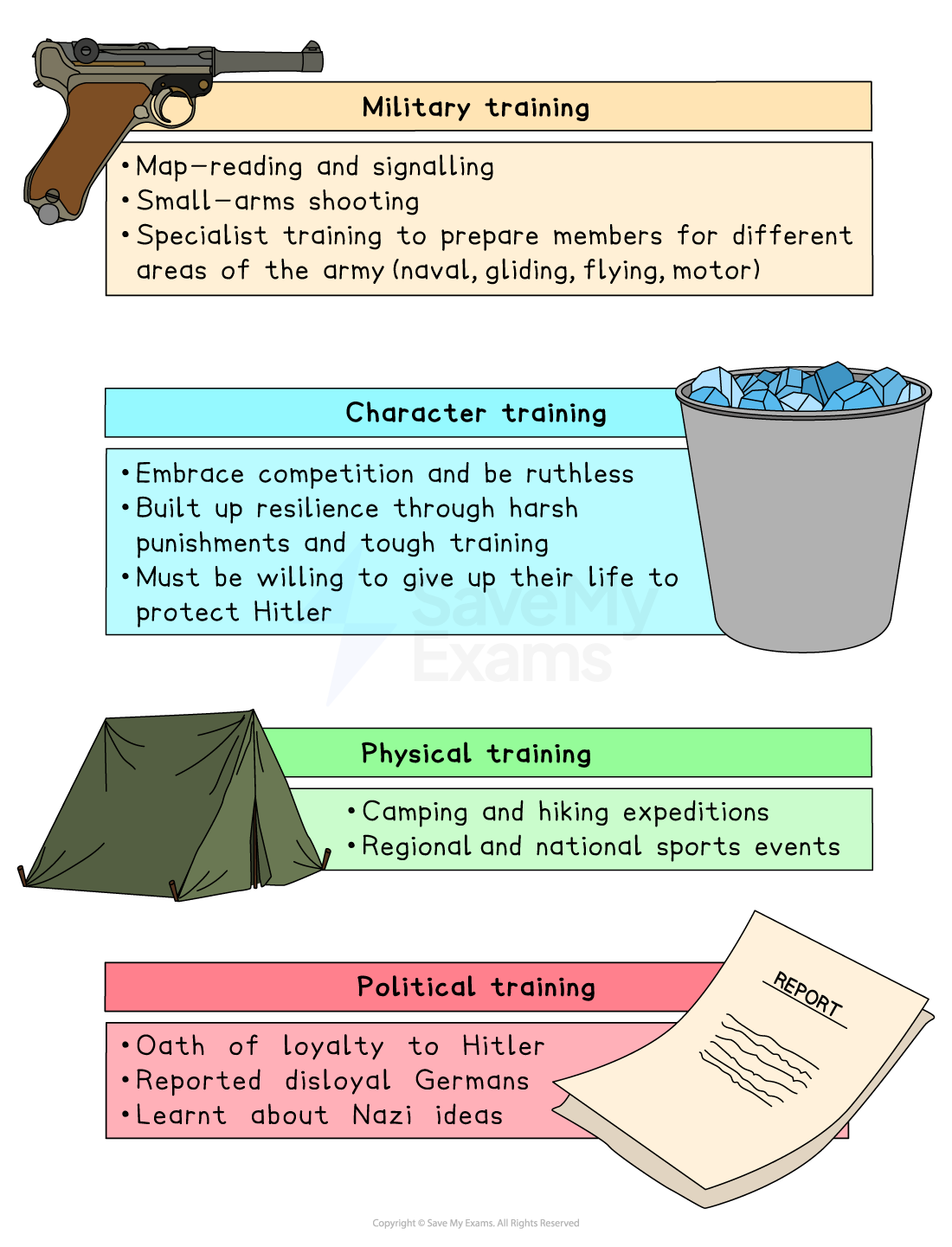
The League of German Maidens
The Bund Deutscher Mädel or League of German Maidens (BDM) was the female equivalent of the Hitler Youth
They shared some similarities with the Hitler Youth, but the emphasis was on training girls to be good wives and mothers:
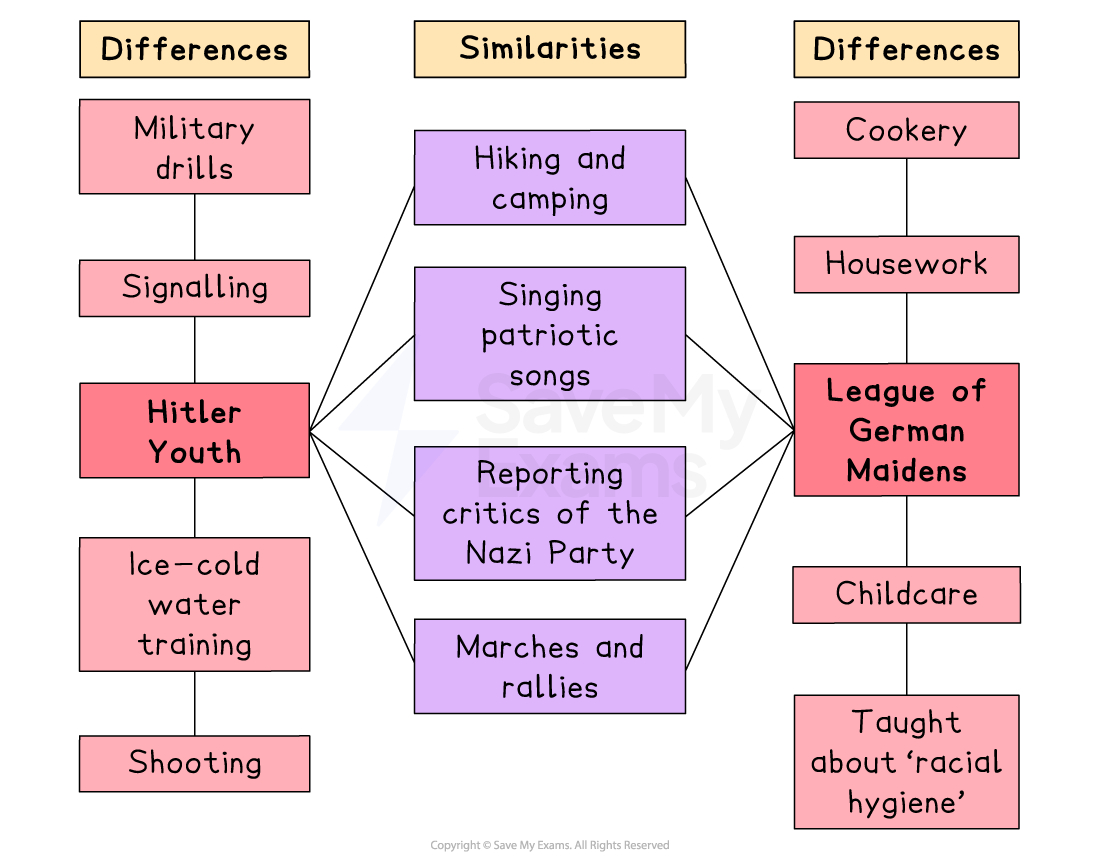
Activities focused on the ‘three Ks’
Kinder (children)
Kirche (church)
Küche (cooking)
A sub-group of the BDM called the ‘Faith and Beauty Society’ was created in 1938 for girls aged 17-21:
The Nazis were concerned that members of the BDM would forget their teachings when they left the group at the age of 18
The ‘Faith and Beauty Society’ served as a way for women to receive further education until they were old enough to join the National Socialist Women's League
How effective was the Nazi policy towards youth groups?
Membership of youth groups reached nine million by 1939
This did not mean that all members enjoyed being in a Nazi youth group

Nazi Youth organisations were extremely effective at preparing young boys for a life in the military
German soldiers performed consistently well throughout the Second World War, which may in part be due to the youth groups
Examiner Tips and Tricks
Create a set of flash cards for key terms for the Living Under Nazi Rule topic. Write terms like Gestapo, Gleichschaltung and Deutsche Arbeitsfront on one side and their definitions on the other. Carry them with you and keep checking until you can define every term quickly and easily.

Unlock more, it's free!
Join the 100,000+ Students that ❤️ Save My Exams
the (exam) results speak for themselves:

Was this revision note helpful?
