Nazi Racial Policy: The Growing Persecution of Jewish People (OCR GCSE History B (Schools History Project)): Revision Note
Exam code: J411

Summary
Germany in the 1930s was home to several minority groups, many of whom considered themselves to be German. However, the Nazis believed in a hierarchy of races with the Aryan race at the top. Nazi Party policy soon became directed towards the persecution of minorities, to ensure that they did not have children or impact on Hitler’s vision for Germany.
Jewish people faced increased discrimination and persecution throughout the 1930s in Germany. Beginning with the boycotts of 1933 and the Nazis' removal of German citizenship from thousands of Jewish people through the Nuremberg Laws of 1935. Following Kristallnacht in 1938, Jewish communities were attacked and forced into concentration camps.
While many German citizens disliked what was happening to Jewish communities and other minorities, the use of censorship and the police forces reduced open opposition to the policies.
Nazi racial beliefs
Hitler outlined his belief in a racial hierarchy in his book, Mein Kampf
Hitler stated that:
Aryans were the superior race - blonde, blue-eyed and athletic
Other white Western races were respected, but lower than the Aryans
Races of Eastern Europe, like Slavs, were seen as Untermenschen ('sub-humans')
Jewish people and Roma were considered unworthy of life
Slavs
Described as Untermenschen ('sub-human') in schools
Hitler and the Nazis considered Slavs to be of a different origin from Aryan Germans
The Nazis wanted to invade Slav countries like Russia to acquire Lebensraum (living space) for the German people
Roma
There were around 26,000 Roma in Germany in the early 1930s
The Nazis did not believe they worked enough or contributed enough taxes
They were not seen as 'racially pure'
To ‘clean up’ Berlin before the 1936 Olympics, Roma in Berlin were arrested and moved to the Berlin-Marzahn concentration camp
Homosexuals
The Nazis believed that homosexuals lowered moral standards, as they could not procreate or be part of a traditional family unit
Laws against homosexuals in Nazi Germany became more severe after 1935
Around 5,000 German homosexuals died in concentration camps
Around 400-800 men were threatened with voluntary castration
People with disabilities
The Nazis believed that people with disabilities were a burden on society
The Law for the Prevention of Hereditarily Diseased Offspring (1933) made it compulsory for people with varying disabilities to be sterilised
Around 5,000 babies and children with disabilities were killed as part of the T4 Programme
The persecution of Jews in the early 1930s
Anti-Semitic feelings had been common across Europe for centuries:
Some Christians blamed Jewish people for the execution of Jesus Christ
Jewish people were falsely blamed for starting the Black Death by poisoning water wells
Many people resented Jewish people for their success in business and finance
Anti-Semitism increased in Germany throughout the 1920s and 1930s:
Jewish people were blamed in part for the surrender of Germany during the First World War
Some of the politicians who signed the armistice were Jewish
A myth existed that communism was a Jewish plot to take over the world
Many Germans feared communism and, as a result, feared the Jewish community
Germany’s failings during hyperinflation and the Great Depression were often blamed on Jewish people
Many people - including Hitler - had been influenced by speakers like Karl Lueger, who spoke about the dangers of Jewish people
Jewish people became an easy scapegoat for many of Germany's problems
There were only 437,000 Jewish people in Germany by 1933, less than 1% of the population
When Hitler became the Chancellor in 1933, persecution against Jewish people began immediately
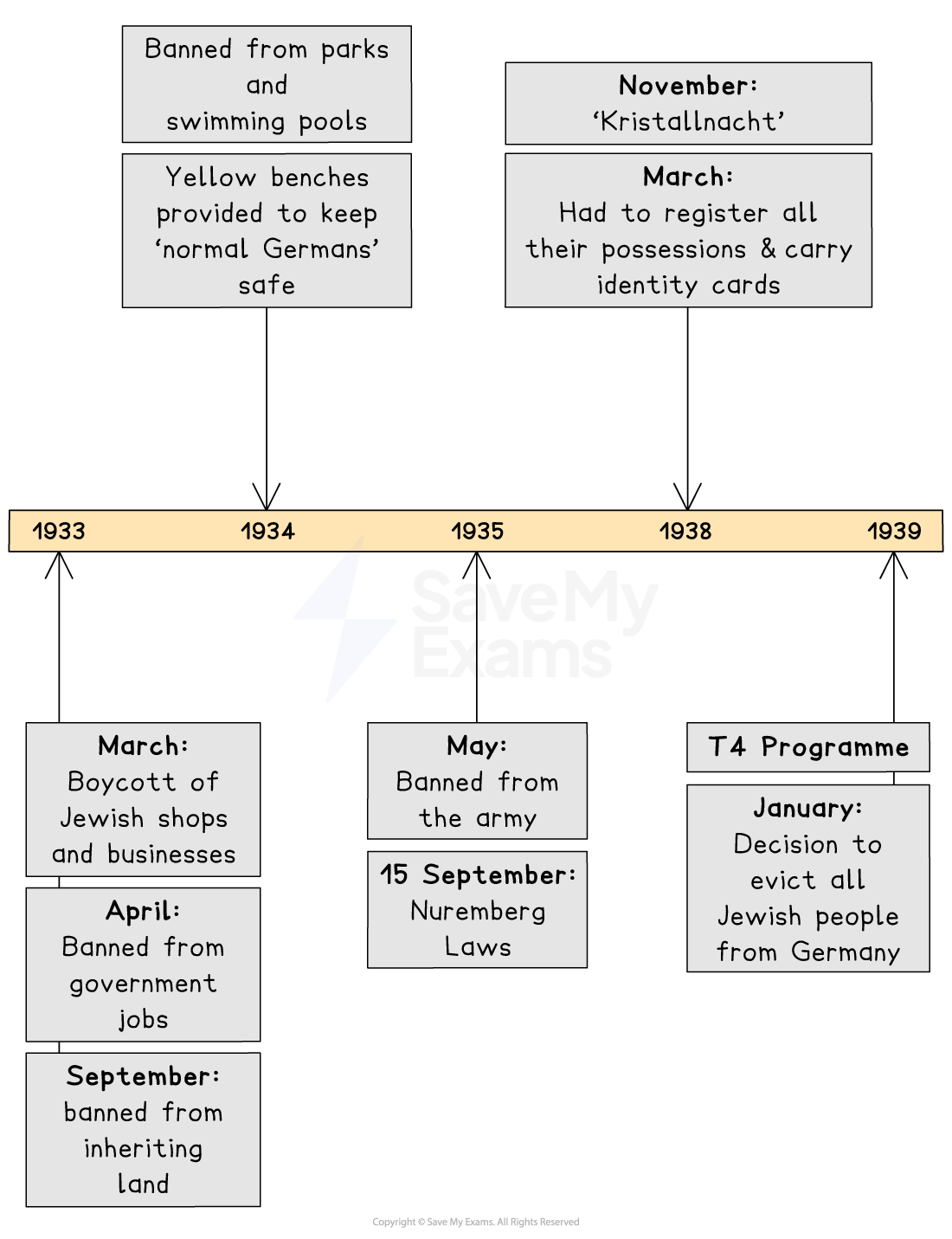
The Nazis used propaganda and censorship to target Jewish culture
Children were taught in schools how to identify Jewish people and that they were Lebensunwertes ('unworthy of life')
More restrictions on Jewish people followed:
From 1934, some councils banned them from parks and swimming pools
From 1935, Jewish people could not join the army
The Nuremberg Laws, 1935
The Nuremberg Laws of 1935 included two laws that drastically increased the persecution of all Jewish people in Germany
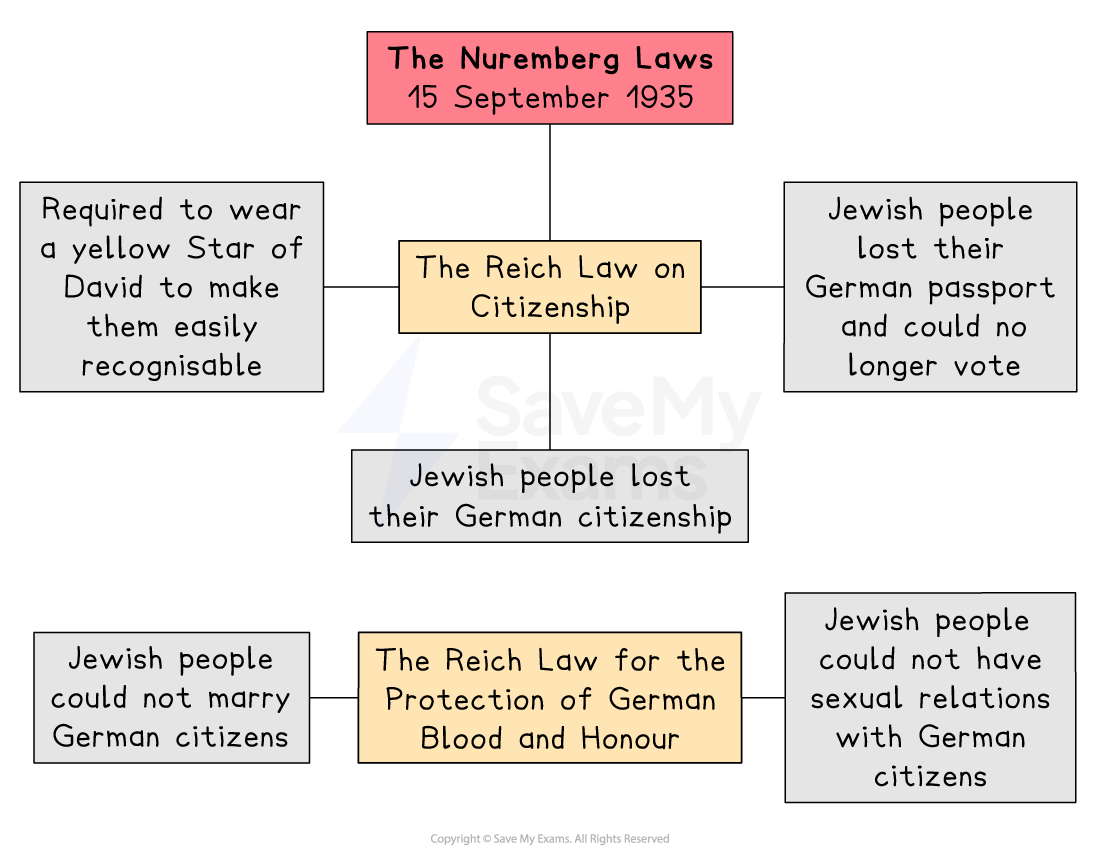
Anyone with three or four Jewish grandparents was considered Jewish, regardless of whether they practised Judaism
Many people who had converted to Christianity still faced persecution
From 1938, Jewish people had to register their possessions and also had to carry identity cards
'Kristallnacht'
Persecution of Jewish people became much worse in November 1938, following an event known as ‘Kristallnacht’ (Night of Broken Glass)
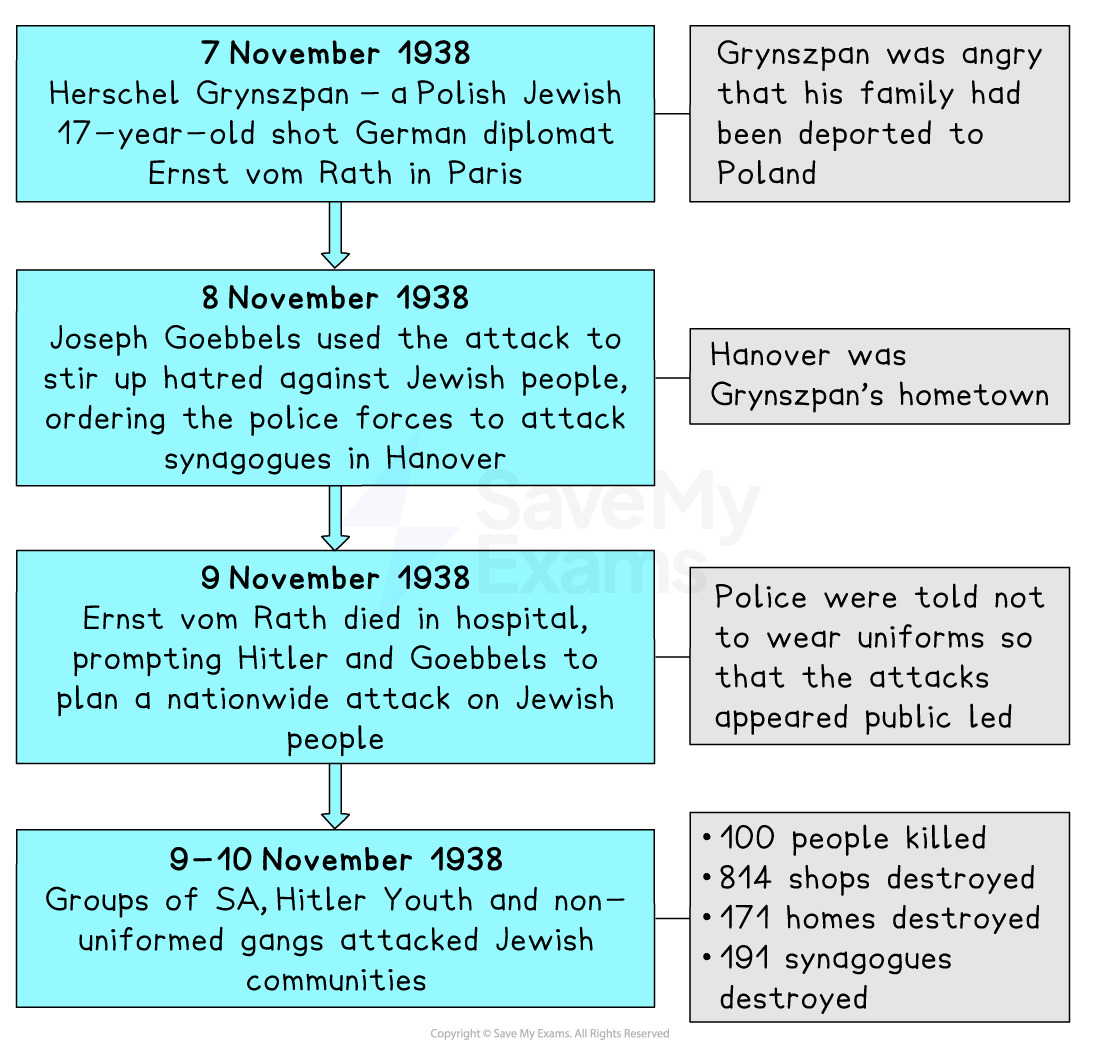
Jewish people were punished for ‘Kristallnacht’:
They had to pay a combined total of 1 billion marks to repair the damage
By 12 November, around 20,000 Jewish people had been sent to concentration camps like Dachau
Why is 'Kristallnacht' seen as a turning point?
'Kristallnacht' was the first time there had been a mass arrest and imprisonment of Jewish people
It was also clear that the state had played a role in the death and destruction that had taken place
There was a lack of reaction from the German people and the wider international community to 'Kristallnacht'
This was seen by Hitler as being permitted to continue to persecute Germany's Jewish people
Many Historians view Kristallnacht as the beginning of the Holocaust
Examiner Tips and Tricks
Question 6 on Paper 3 will ask what a source can tell us about a particular aspect of Life under Nazi rule.
To gain all 7 marks available to you in this question, you will have to draw an inference from details in the source and use your knowledge of the period to explain its wider historical context.

Unlock more, it's free!
Join the 100,000+ Students that ❤️ Save My Exams
the (exam) results speak for themselves:

Was this revision note helpful?
