The Impact of Nazi Policies on Women (OCR GCSE History B (Schools History Project)): Revision Note
Exam code: J411

Summary
During the 1920s, women in Germany had won many freedoms. They had the right to vote in elections and many had developed independent social lives and had careers in the professions.
The Nazis set about reversing these developments and returning women to being solely mothers and homemakers. This was partly motivated by their views on women but also by attempting to raise Germany's birth rate.
The Nazi policies towards women had mixed results both in terms of women leaving the workplace and increasing the birth rate.
The Nazi Party's view of women
The Nazis had very clear views and expectations of women
The mission of the woman is to be beautiful and bring children into the home
Joseph Goebbels
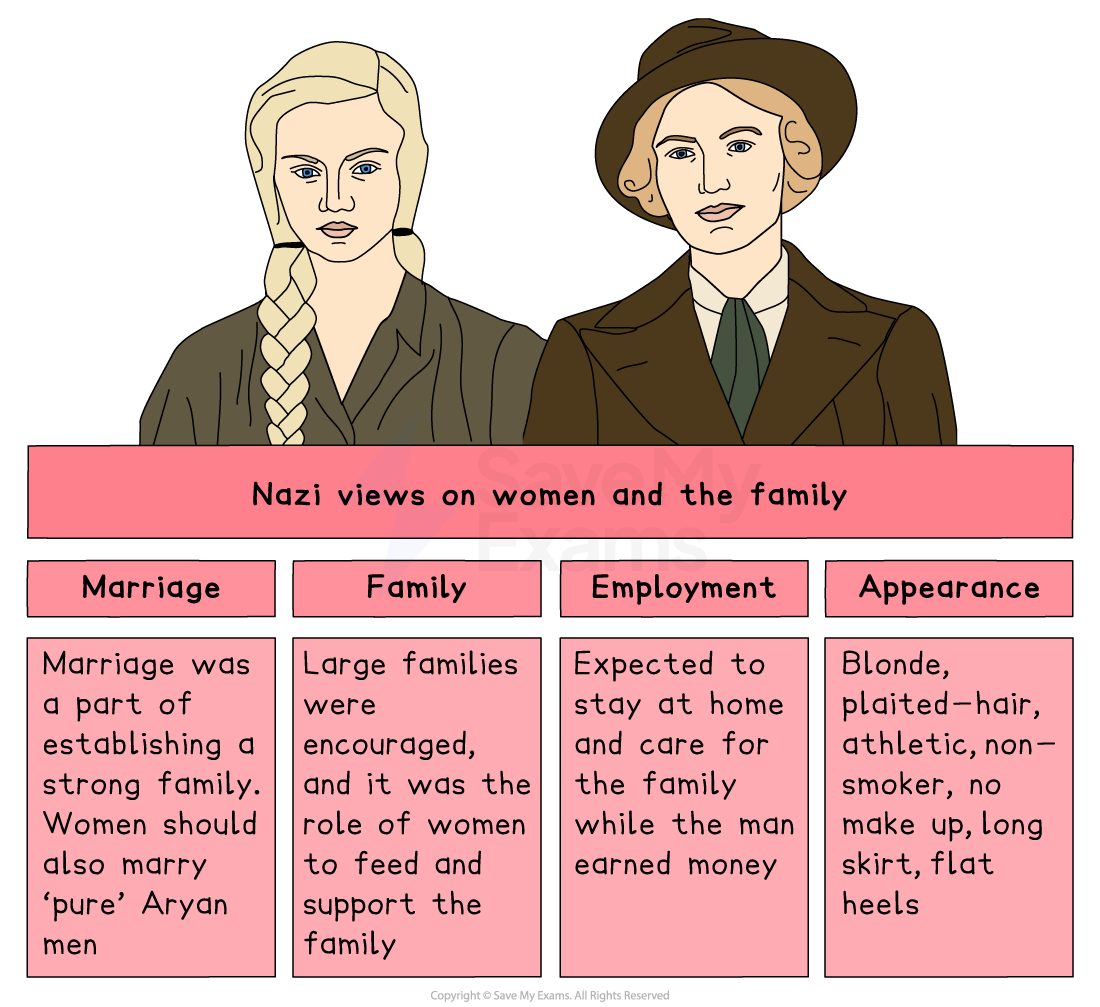
Women were told to concentrate on the ‘three Ks’:
Kinder (children)
Kirche (church)
Küche (cooking)
Nazi policies on women
Nazi policies towards women
The Nazis wanted to reverse the changes to women’s roles that had happened in the Weimar Republic
Gertrud Scholtz-Klink was appointed leader of the National Socialist Women's League and oversaw all policies related to women
The German Women’s Enterprise (DFW)
All women-related organisations had to join the German Women's Enterprise (DFW):
Organisations that failed to join were banned
Members were enrolled on courses about childcare, cooking and sewing
Several Nazi policies were introduced to increase the birth rate, which had fallen to one million births per year by 1933
1933 - The Law for the Encouragement of Marriage
Loans of 1,000 marks (equivalent to eight months’ wages) were available to women if two requirements were met:
Women had to get married
Women had to quit their jobs or stay unemployed
Mothers who gave birth to four children did not have to pay the loan back
Each child born to a woman reduced the loan by a quarter
1935 - The Lebensborn Programme
Started by SS leader, Heinrich Himmler
Paired SS men with single women to create ‘genetically pure’ children
Only women and men with a clear ‘Aryan’ ancestry were allowed to join
Special Lebensborn homes were created for women to rest after giving birth
1938 - Divorce Laws
Husbands could legally divorce their wives for failing or refusing to have children
Women who had abortions could also be divorced
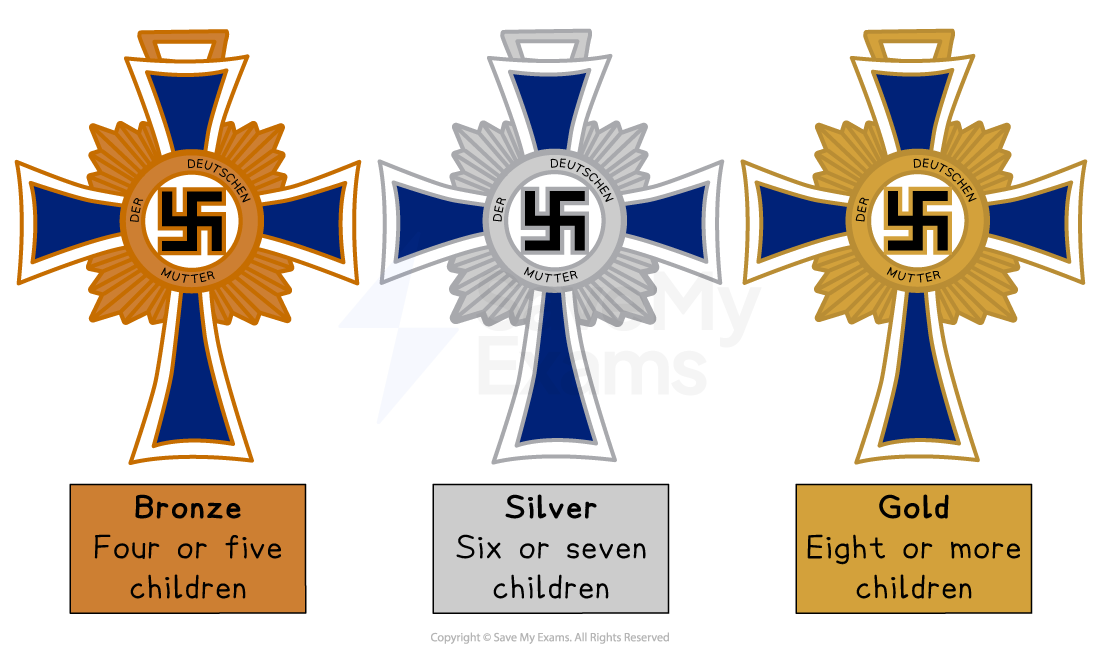
1939 - The Mother’s Cross
Awards presented on Mother’s Day in Germany were available to women who had four or more children
Mothers with gold medals were saluted in public by the Hitler Youth
Hitler was named the godfather of the tenth child in any family
The impact of Nazi policies on women
With the focus on women staying at home and caring for the family, the Nazis introduced laws to reduce the number of women at work:
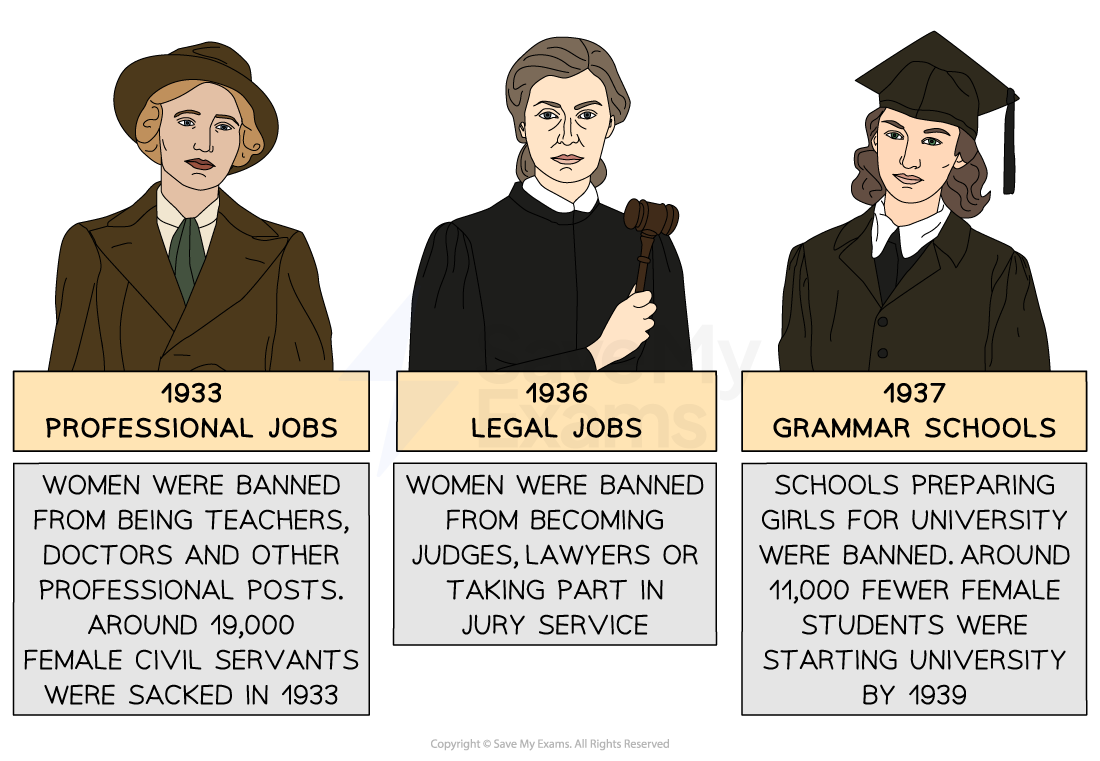
Nazi policies towards women initially intended them to be at home and support the family
At the outbreak of the Second World War, many women had to work in factories and other industries to replace men who had gone away to fight
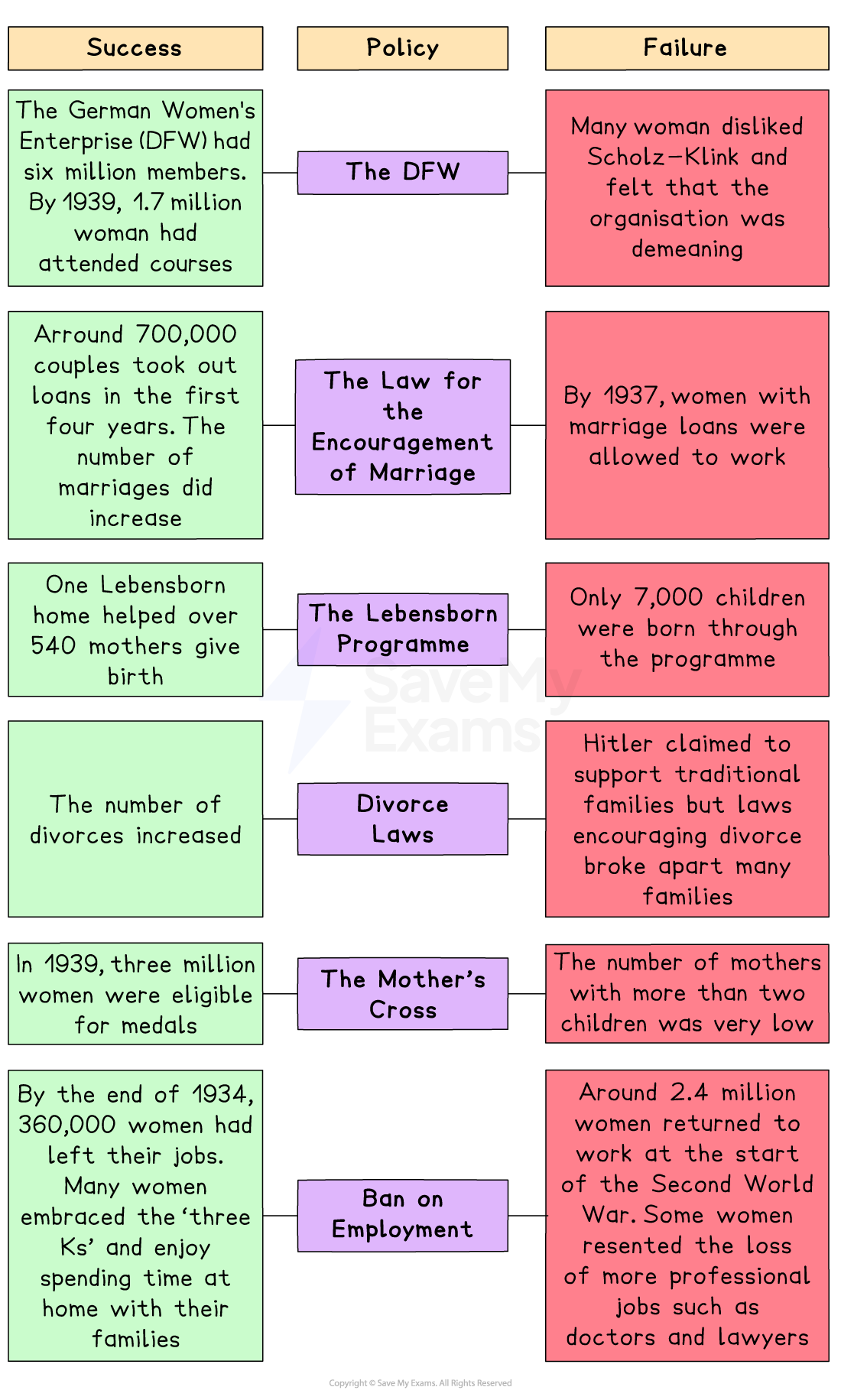
Nazi policies towards women had mixed success:
Examiner Tips and Tricks
The last question on this paper is worth 18 marks. You will be given a choice of two questions. Do not make the mistake of answering them both.
You will not get any marks for the second one and you do not have the time to waste.

Unlock more, it's free!
Join the 100,000+ Students that ❤️ Save My Exams
the (exam) results speak for themselves:

Was this revision note helpful?
