Nazi Propaganda (OCR GCSE History B (Schools History Project)): Revision Note
Exam code: J411

Summary
Many historians view the propaganda of Joseph Goebbels as key to the Nazis' ability to control the German people and prevent any effective opposition.
Propaganda took many forms, such as newspapers, radio and films, but always promoted the Nazi messages.
What is propaganda?
The SS, SD and Gestapo repressed and removed any opposition to the Nazi Party
But the Nazis also sought to influence people’s attitudes
Propaganda and censorship affected what people in Nazi Germany saw, heard and read
Propaganda in Nazi Germany
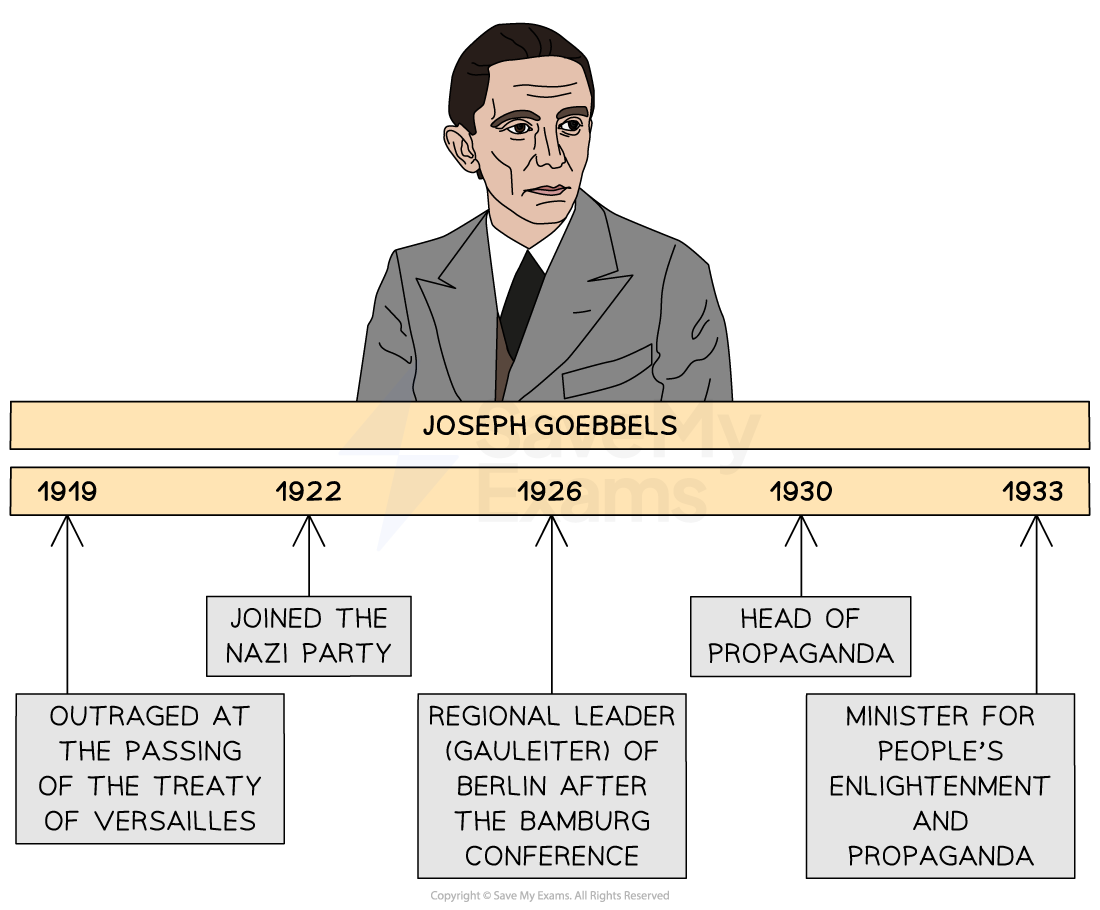
As Minister for People’s Enlightenment and Propaganda, Joseph Goebbels was responsible for ensuring that all areas of German life were controlled
Goebbels used a variety of methods to get the Nazi message across
Newspapers
Journalists were briefed on what they could and could not publish
Control of newspapers allowed the Nazis to spread their messages to the public
They controlled most newspapers by 1939, compared to 3% in 1933
Around 1,600 newspapers were closed down in 1935
Der Völkischer Beobachte (The People’s Observer) was the official newspaper of the Nazi Party and was published daily:
It reached 1.1 million people by 1941
Radio
Radios were an increasingly popular tool to communicate political messages
Goebbels had relied on the radio during the election years of 1932 and 1933
After 1933, Goebbels censored most radio stations
The stations were used to spread Nazi Party beliefs and messaging
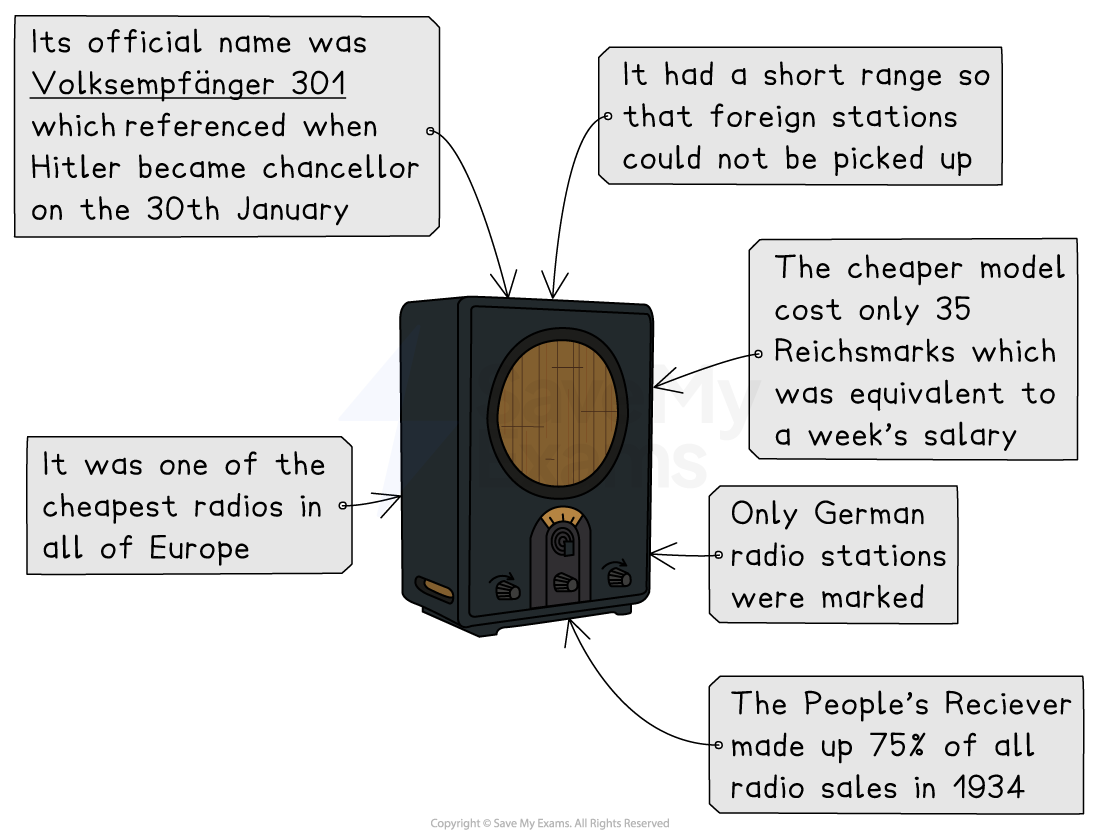
The introduction of the Volksempfänger (The People’s Receiver) in 1933 was hugely important for several reasons:
Nazi rallies
The Nazi Party used rallies throughout the 1920s and early 1930s
The declaration of Hitler as Führer in 1934 allowed him to merge the identity of the Nazi Party with that of Germany:
Rallies became more frequent and created a sense of unity
Used to advertise the strength of the German army
The rallies were held despite the military restrictions of the Treaty of Versailles
Nuremberg is a city in the centre of Germany
It was chosen to host annual rallies from 1933 to 38
Hitler’s favourite architect, Albert Speer, designed the grounds where the rally took place
The 1934 Nuremberg rally had 200,000 in attendance:
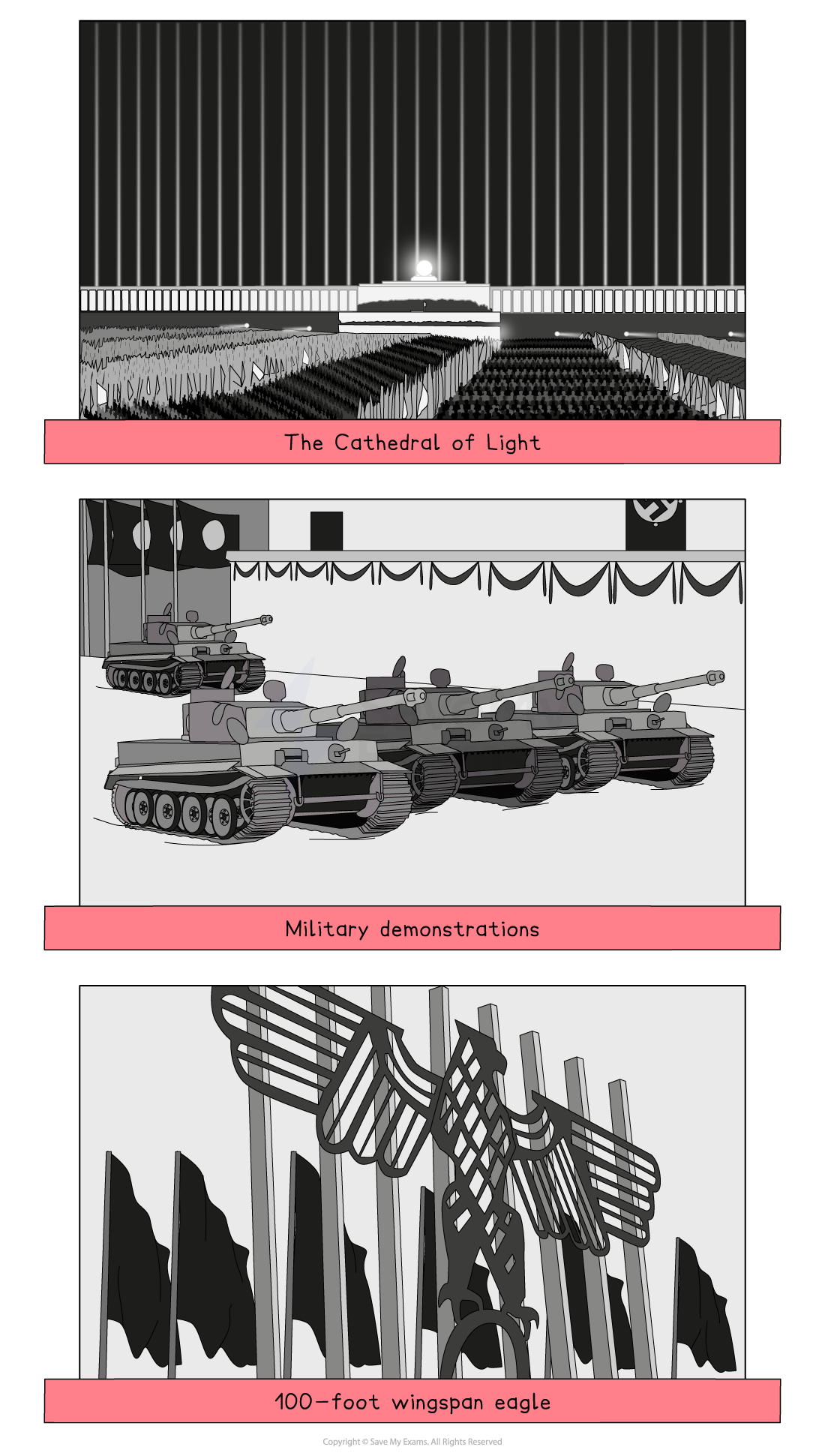
152 searchlights were used as pillars of light around the audience, known as the Cathedral of Light
Films like Triumph of the Will by Leni Riefenstahl presented the strength and power of the Nazi Party at the Nuremberg rallies
The 1936 Berlin Olympics
Hitler and Goebbels believed that success in sport was essential:
To “strengthen the character of the German people”
To promote the Nazi belief that Aryans were superior
The 1936 Berlin Olympics were an opportunity for Hitler to show the might of Nazi Germany:
NOTE: Please insert the Berlin Olympics diagram
Jesse Owens angered Hitler and the Nazis by winning four gold medals
He was the most successful athlete at the games
Owens was an African American and so according to Nazi teachings 'racially inferior'
Leni Riefenstahl directed the film Olympia, which was released in 1938
This film documents the events of the 1936 Berlin Olympics
How effective was propaganda in Nazi Germany?
Goebbels' approach to propaganda appears to have been very effective
The Nazi Party's approval ratings were very high throughout the 1930s
However, it is impossible to know how many people said that they approved of the Nazis out of fear
There was enthusiasm for the Nazis and what they were doing for Germany and much of this was down to propaganda
But people also feared what would happen to them if they did not appear to enthusiastically approve of the Nazis
Examiner Tips and Tricks
Make sure you fully understand the difference between propaganda and censorship. Propaganda can be seen as being like advertising for a government or country that is trying to persuade people. Censorship is the removal of all other viewpoints or perspectives.

Unlock more, it's free!
Join the 100,000+ Students that ❤️ Save My Exams
the (exam) results speak for themselves:

Was this revision note helpful?
