Opposition to Nazi Rule (OCR GCSE History B (Schools History Project)): Revision Note
Exam code: J411

Summary
Despite the terror and brutality of the SS and the Gestapo, there was still opposition to the Nazi Party. This opposition came from across German society. Some people were politically motivated, others were motivated by their religious beliefs. Some young people objected to the loss of their freedom and identity.
However, the Nazi police state meant that opposition was mostly ineffective and quickly dealt with.
Opposition from social democrats and communists
As soon as the Nazis came to power in 1933, the majority of the leading social democrats fled the country for their own safety
Those people who remained were hunted down and arrested by the Gestapo
Some social democrats worked in secret to produce anti-Nazi posters and leaflets
The Communists were enemies of the Nazis
Hitler had an enormous hatred of communism
Hitler wrongly believed communism was part of a Jewish plot to take over the world
As a result, they became major targets for the Gestapo after 1933
The Communists openly opposed the Nazis
They held large meetings and published their own newspapers
This led to communists being easily identified by the Nazis
Many were soon arrested and sent to Dachau and other concentration camps
Religious opposition
Hitler and the Nazis tried to control the Christian Churches in Germany
There was a written agreement (Concordat) between the Catholic Church and the Nazi Party
This stated that Hitler would not interfere with the running of the Catholic Church as long as the Church stayed out of politics
After the Concordat failed, the Nazis targeted Catholic priests and shut down Catholic schools
The Reich Church was created to ‘Nazify’ the Protestant Church
The German Faith Movement aimed to turn Nazism into a religion
However, there was still opposition within the two main Christian churches:
Catholic opposition
Around 400 priests were sent to the Dachau concentration camp for speaking out
Catholic services continued, but people were scared to oppose the Nazis
The Pope’s ‘With Burning Anxiety’ statement was read out in churches
Hitler ordered crucifixes to be removed from Catholic churches, which was met with fierce opposition:
Of the 43 crucifixes removed from schools in the Mühldorf district in Bavaria, 42 were returned by the police
The 1939 census of Germany showed that two million people still considered themselves to be Catholic
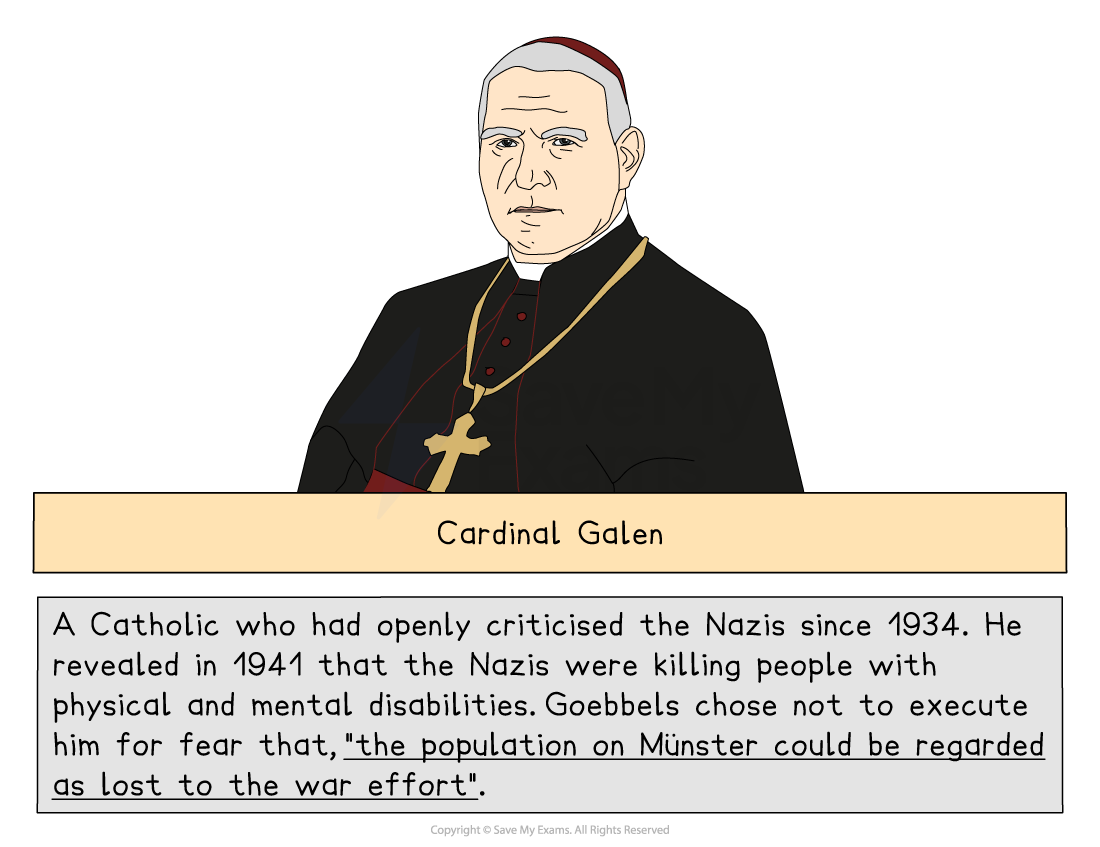
Some individuals, including Cardinal Galen, actively resisted the Nazis
Protestant opposition
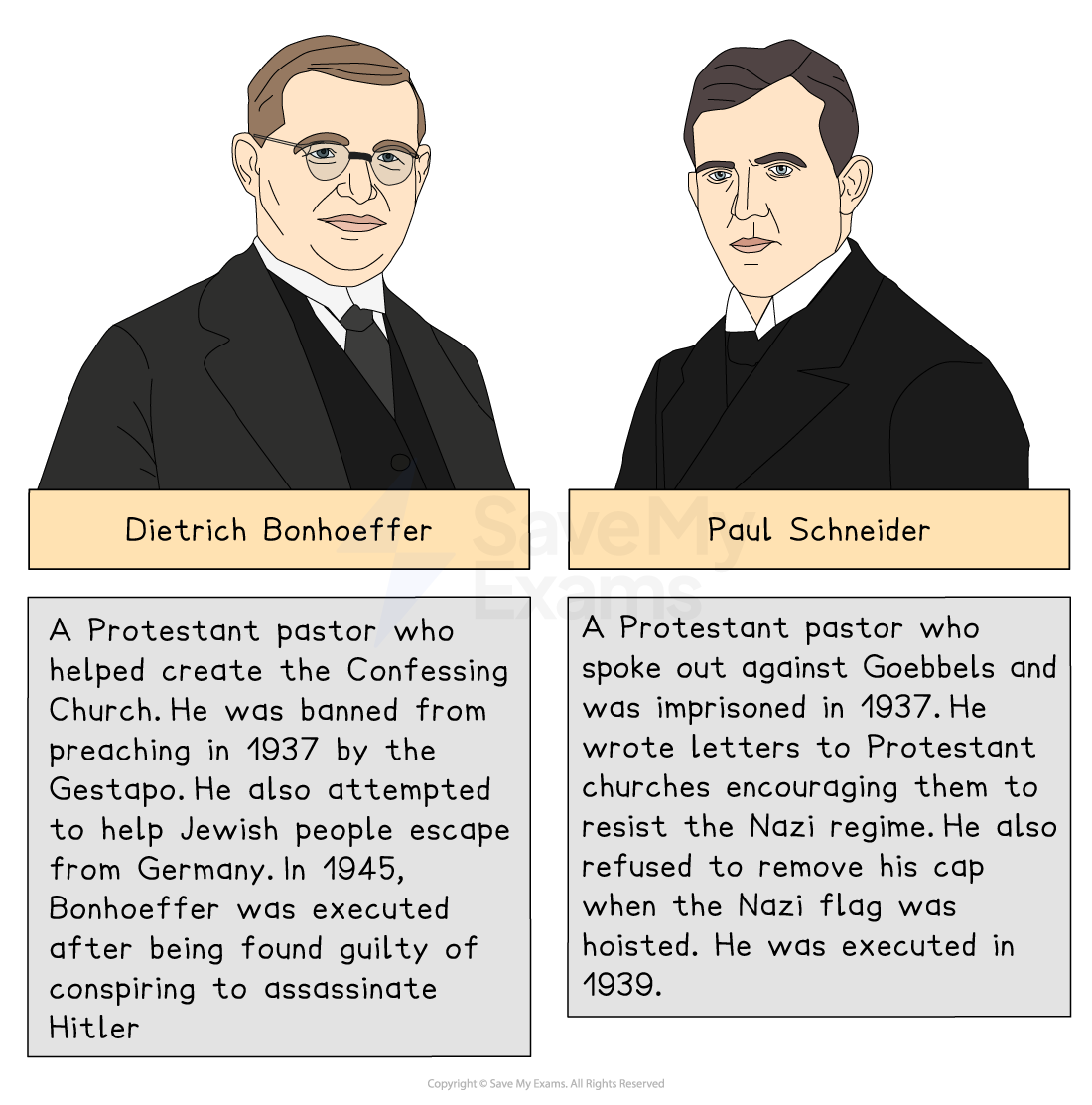
The Pastors' Emergency League (PEL) was the main source of opposition from Protestants:
Formed by Pastor Martin Niemöller
They opposed the formation of the Reich Church
They believed that Jewish people should be able to become Christians
The PEL created the Confessional Church in 1934:
Around 6,000 pastors joined, and only 2,000 pastors were part of the Reich Church
Around 800 pastors were sent to concentration camps for opposing the Nazis
The 1939 census of Germany showed that 43 million people still considered themselves to be Protestant:
Youth groups and opposition
After Hitler became Chancellor in 1933, all young people were expected to attend one of the Nazi-run youth groups
However, many young people opposed these and ran their own groups
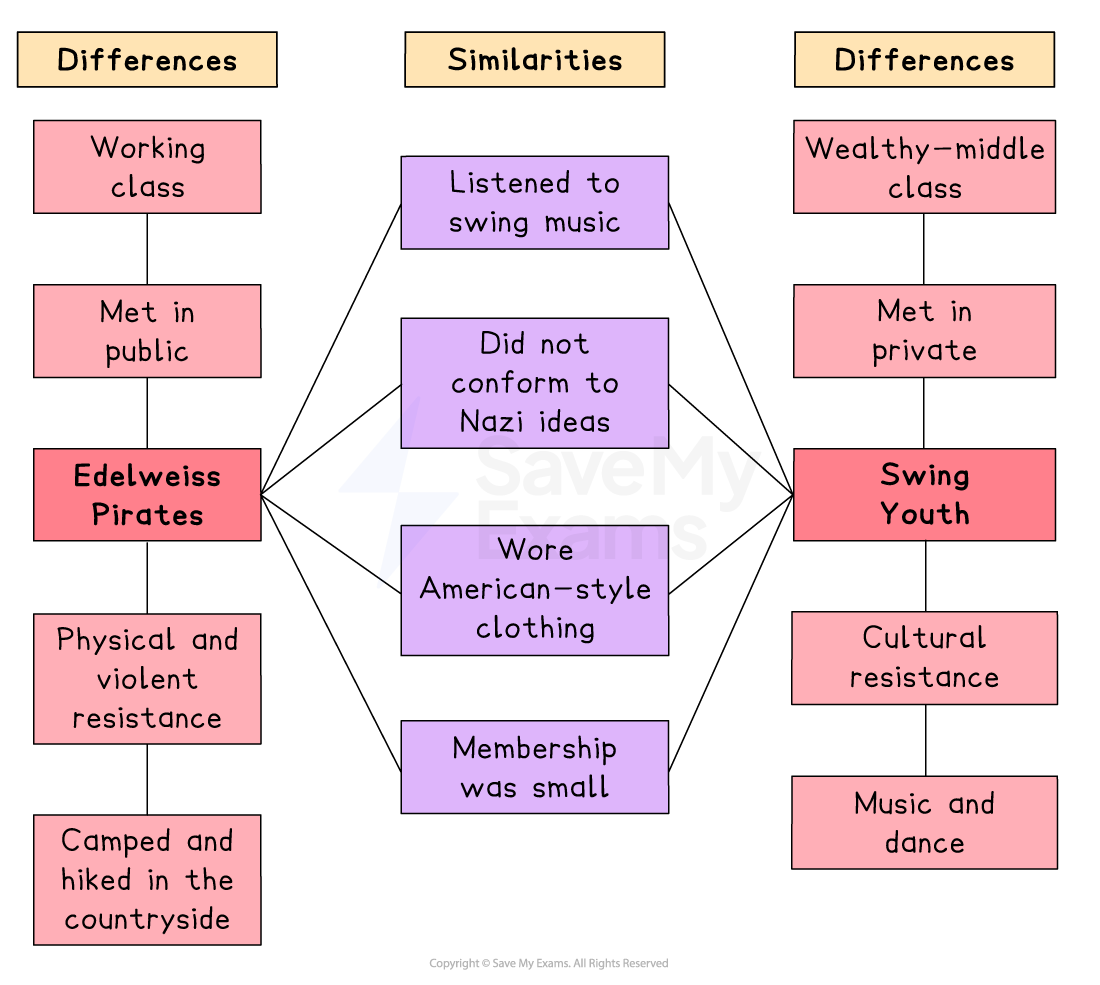
The Edelweiss Pirates
Used the symbol of the edelweiss flower
Had different names depending on where they came from:
Members in Essen were called ‘Travelling Dudes’
Members in Cologne were called ‘Navajos’
Resented the military discipline of the Hitler Youth
Wanted a sense of freedom similar to the youth in Britain and the USA
By 1939, there were only 2,000 Edelweiss Pirates compared to eight million Hitler Youth
The Swing Youth
They admired American culture, especially music:
Played music from their record players
Gathered together to smoke and drink alcohol
Organised illegal dances of up to 6,000 members:
The 'jitterbug' was a favourite dance
Heinrich Himmler disliked the Swing Youth’s focus on jazz music because it was associated with African Americans
They presented more cultural opposition rather than a genuine threat to the Nazi regime
Examiner Tips and Tricks
The first question you will answer on Living Under Nazi Rule will be Question 6 on Paper 3. This question is worth 7 marks and it will be accompanied by a source. The question will always start with 'What can Source A tell us about...'
To score well in this question, you have to refer to the details in the source and help explain them or put them in their historical context using your own knowledge.
For example, if the source was a photograph was of a young person dancing, you might refer to the fact that they were dancing. Then using your own knowledge, you could explain how the jitterbug was a popular dance with members of the swing youth and that listening and dancing to swing music was dissaproved of by the Nazis.

Unlock more, it's free!
Join the 100,000+ Students that ❤️ Save My Exams
the (exam) results speak for themselves:

Was this revision note helpful?
