Achieving total power, July 1933 to August 1934 (OCR GCSE History B (Schools History Project)): Revision Note
Exam code: J411

Summary
Between July 1933 and August 1934, Hitler consolidated his power. When President Hindenburg died, Hitler had complete power over Germany.
Having taken power from the Reichstag using the Enabling Act, Hitler then targeted the law courts and local governments. All judges had to be Nazi Party members, trial by jury was scrapped and local state parliaments were replaced with Nazi Party governors.
It was the Night of the Long Knives that really secured Hitler's power. The execution of the SA leaders removed both the SA and the Army as a threat to Hitler. Once the Röhm and his SA colleagues had been killed, the Army gave its loyalty to Hitler.
When Hindenburg died in August 1934, all members of Germany's armed forces swore a personal oath of allegiance to Hitler - their new Führer.
Nazi control of local government and courts
Control of the legal system allowed the Nazi Party to remove opposition under the illusion that it was fair and just
However, cases were often pre-determined and biased in favour of a conviction
Judges and lawyers
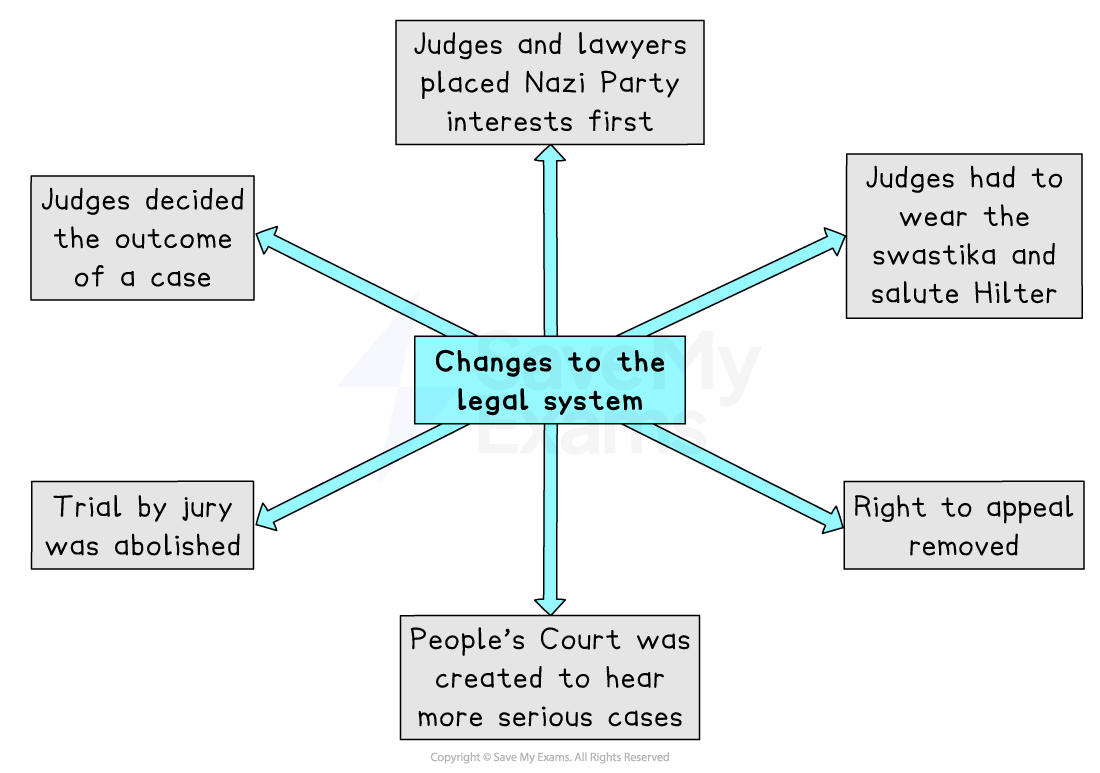
Judges and lawyers were required to prioritise the interests of the Nazi Party above all else:
Judges joined the National Socialist League for the Maintenance of the Law
Judges were dismissed if they did not join
Lawyers joined the German Lawyers Front
Judges had to wear the swastika from 1936
Judges decided the outcome of cases, not the jury
Law courts
Trial by jury was removed so that judges could decide the outcome of the case
The People’s Court was introduced to hear cases of treason
Judges radically loyal to the Nazi Party were selected
Trials were held in secret
The right to appeal was removed
Control of the legal system led to a rapid rise in the number of political opponents executed
Between 1930 and 1932, only eight people were executed
Between 1934 and 1939, this increased to 534 people
Local government
In January 1934, the 18 Länder parliaments (local parliaments) were shut down and never reopened
Instead, loyal Nazi Party local governors were appointed
Examiner Tips and Tricks
Don’t confuse judges with lawyers:
Judges are responsible for overseeing the case and deciding the outcome
Lawyers should represent the defendant involved in the case
The causes of the Night of the Long Knives
By 1933, Hitler had removed most threats to his power
However, two potential threats remained
The Army
Hitler was concerned that the generals in the Army might move against him
Some generals had been alarmed by Hitler's rise to power and his threats to disband the army and replace it with the SA
They had the weapons, the organisation and the numbers to overthrow him in a coup d'tat
The SA
The second threat came from within Hitler's own party in the form of the SA
By 1934, its numbers had swelled to three million men
Their thuggish behaviour was becoming increasingly embarrassing to Hitler
The SA leader, Ernst Röhm, was growing frustrated with Hitler and had taken to publicly criticising him
Röhm believed Hitler was backtracking on promises made to replace the Army with the SA
Rumours began to spread that Röhm was planning to overthrow Hitler, although there was no evidence to support this
The rivalry between Himmler's SS and the SA was increasing
Himmler may have encouraged Hitler to move against Röhm
The Night of the Long Knives
Hitler arranged a meeting with Röhm and other SA leaders on 30th June 1934:
Röhm and around 400 SA members were arrested and shot
Other opponents, such as von Schleicher, Gregor Strasser and von Kahr, were also arrested and killed
The public was informed that Röhm had been planning to replace Hitler, and therefore, his death served the interests of the country
The consequences of the Night of the Long Knives
The decline of the SA
Once its leaders had been executed, the SA declined as a force in Nazi Germany
Its numbers also drastically reduced and had halved by 1935
The rise of the SS
The SA leaders were executed by members of the SS
The Night of the Knives was a turning point for the SS
From that moment on, the SS grew into one of the most important organisations in Nazi Germany
Its leader, Heinrich Himmler, became one of the most powerful people in Nazi Germany
Support of the Generals
The leaders of Germany's Army saw the Night of the Long Knives as Hitler choosing them over the SA
They repaid him for this support with their loyalty
Hitler showed he was a ruthless murderer
Hitler announced in the papers and on the radio that the killings had been necessary to protect Germany
But it wasn't just the SA leaders who were accused of hatching a plot against him who were killed
Former political rivals such as von Schleicher, Gregor Strasser and von Kahr were brutally murdered
The Death of President Hindenburg
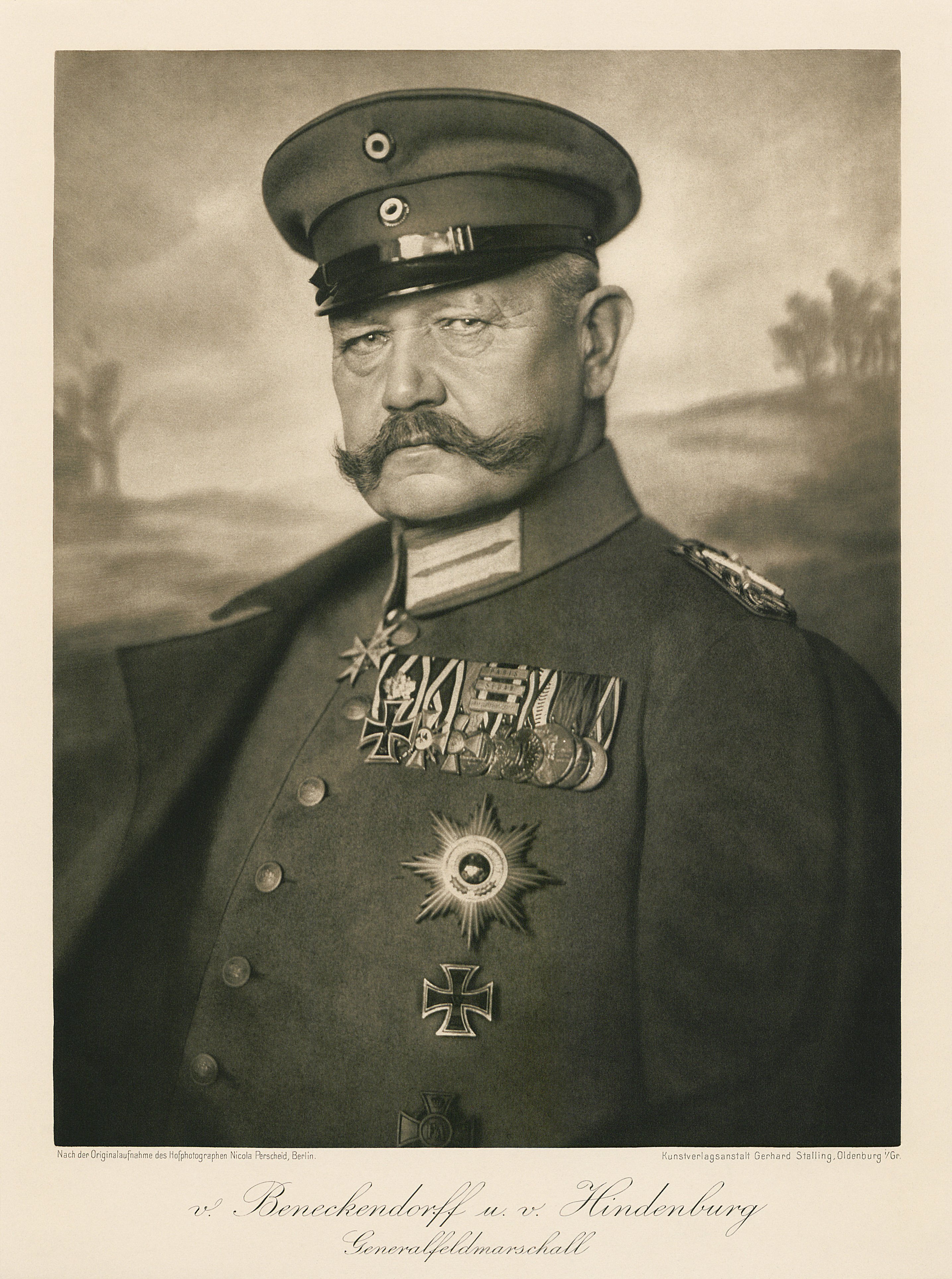
Paul von Hindenburg had been the President of Germany since 1925
On 2nd August 1934, he died of lung cancer aged 86
Hitler becomes the Führer
Upon Hindenburg's death, Hitler combined the positions of president and chancellor to make himself Führer (the word literally meaning leader)
Every member of Germany's armed forces was forced to swear a personal oath of allegiance to Adolf Hitler
This marked the end of the Weimar Republic and the beginning of Hitler’s Nazi Germany
This is sometimes called the Third Reich - or Third Empire

Unlock more, it's free!
Join the 100,000+ Students that ❤️ Save My Exams
the (exam) results speak for themselves:

Was this revision note helpful?
