The Nazi Party, 1933 (OCR GCSE History B (Schools History Project)): Revision Note
Exam code: J411

Summary
Hitler was the leader and by far the most important figure in the NSDAP. However, he was supported by a range of other key individuals, including Joseph Goebbels and Ernst Röhm. Goebbels controlled Nazi propaganda and Röhm was in charge of the Nazi private Army (SA).
Both men were key in helping the Nazis achieve the enormous successes in the 1932 elections. However, the broad appeal that the Nazi policies had was also key. These policies meant people from all areas of society voted for them.
Who were the key individuals in the Nazi Party?
Adolf Hitler
Hitler was the head of the party
He had reshaped it into exactly what he wanted it to be after he became the leader in 1921
He was charismatic and very effective public speaker
To make the most of this skill, during the 1932 general election, Hitler travelled around Germany by plane, giving speeches
This enabled him to reach as many people as possible
His book, Mein Kampf, had also become a bestseller
Joseph Goebbels
Goebbels was highly skilled in creating and spreading effective propaganda
This involved using radio and film, which were new forms of media in the 1920s and 1930s
Goebbels ensured the Nazi message was put across in simple terms and in ways that ordinary people could understand
He also repeated these messages as often as possible
For example, 'Bread and Work' was an election campaign slogan that greatly appealed to the millions of unemployed
He also created a cult of personality around Hitler
This portrayed Hitler as being heaven-sent to save Germany
Wilhelm Frick
Wilhelm Frick was a long-serving Nazi Party member
When Hitler was made Chancellor, Frick was one of only two Nazis who were invited to become members of the cabinet
Ernst Röhm
Röhm was a working-class man who had risen to become an officer in the German Army
He became the leader of the Sturmabteilung or Storm troopers, also known as the SA or the brownshirts, which was the Nazi private army
The number of brownshirts had risen to 400,000 by 1933
The Nazis used the SA to help them win elections
The SA intimidated voters, physically attacked opponents and marched through towns and villages
In times of chaos and uncertainty, they represented order and discipline to many voters
Hermann Göring
Göring was a former flying ace in the First World War and was regarded as a national hero
He was Hitler's second in command
When Hitler became Chancellor, Göring was made a minister and put in charge of the police in the province of Prussia
He founded the secret police organisation known as the Gestapo
Heinrich Himmler
Himmler was the leader of the Schutzstaffel or SS (their name literally means Protection Squadron)
They began as Hitler's elite bodyguards
Under Himmler, the blackshirted SS expanded enormously, especially after the Night of the Long Knives (opens in a new tab)
The SS went on to play a central but terrible role in the Nazi regime
It was the SS who ran the Nazi death camps and committed the massacres in Eastern Europe during World War 2
Rudolph Hess
Hess had fought in the First World War and was imprisoned with Hitler for his part in the Munich Putsch
Whilst in prison, Hitler had dictated his book, Mein Kampf, to Hess
Hess was made Deputy Leader of the Nazi Party and worked in party organisation and administration
The SA and Nazi propaganda
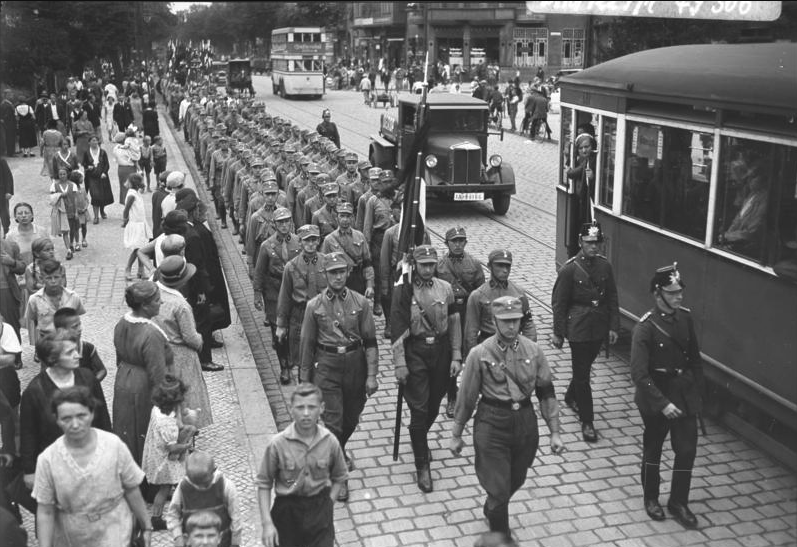
The SA appealed to many Germans
Having an "army" in uniform made the NSDAP look disciplined
In an economic crisis, the Nazi Party had the manpower to keep law and order
The NSDAP’s paramilitary forces were much stronger than the KPD
The SA had 400,000 members
The KPD’s Red Front Fighters numbered 130,000
The elections of 1930 and 1932 were violent
The SA intimidated candidates, broke into rival political parties' headquarters and disrupted their rallies
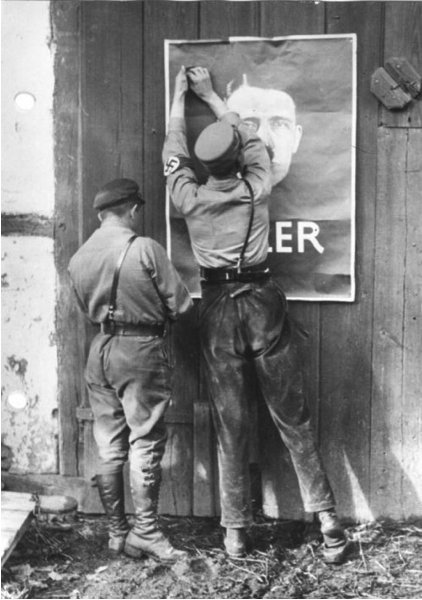
As well as posters, Goebbels produced leaflets and radio broadcasts to spread Nazi propaganda
Goebbels designed much of Nazi propaganda to appeal to people's emotions and to make them angry or upset
This, Goebbels argued, was much more effective than presenting facts or figures to back up an argument
"Arguments must therefore be crude, clear and forcible, and appeal to emotions and instincts, not the intellect"
Joseph Goebbels
Nazi policies
The key to the Nazi Party's success in the election was that their policies appealed to many different groups in German society
Some policies, such as promising to ignore the Treaty of Versailles, appealed to people of all backgrounds and ages
Other policies were targeted at specific groups
This contrasted with political parties like the German Communist Party (KPD), which mainly appealed to the working classes
Big businesses
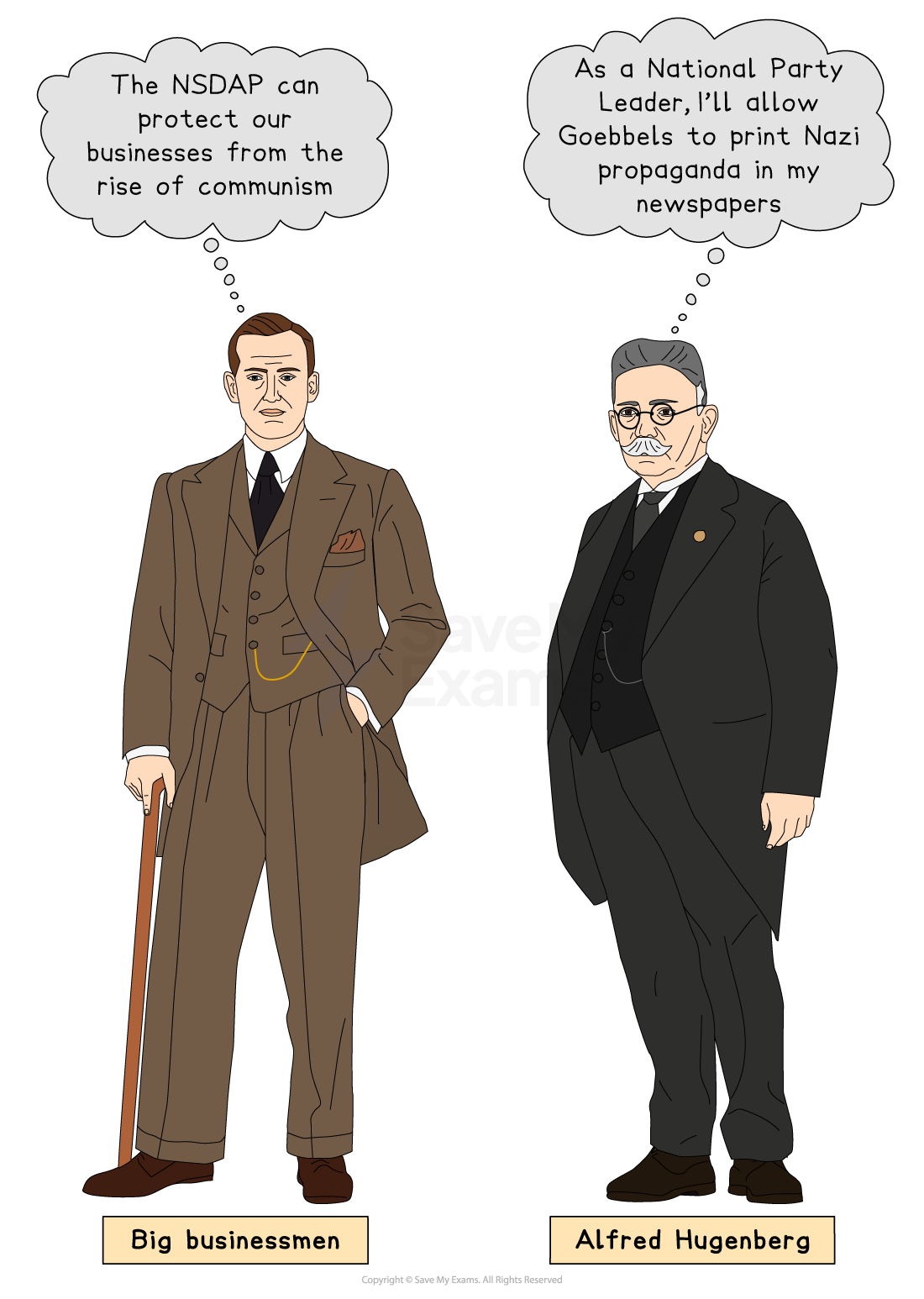
Hitler persuaded big businessmen like Benz and Krupps to fund the NSDAP
Working-class support
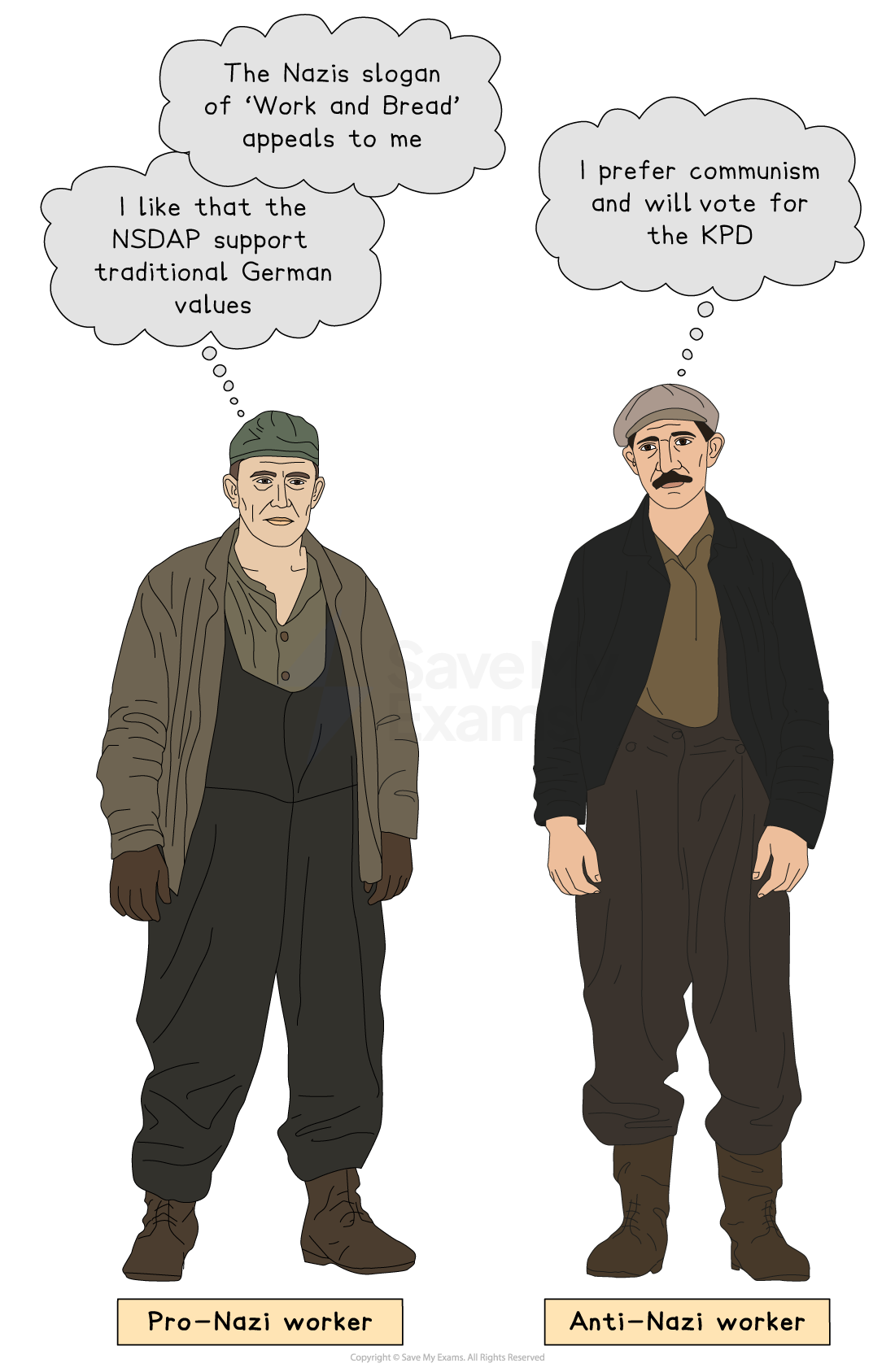
The NSDAP tried to become the party of the workers
They were named the National Socialist German Workers’ Party
The NSDAP targeted many of their policies towards the working classes. These include the redistribution of land and improved working conditions
The NSDAP had some election success with the workers, but never gained the majority of the working-class vote
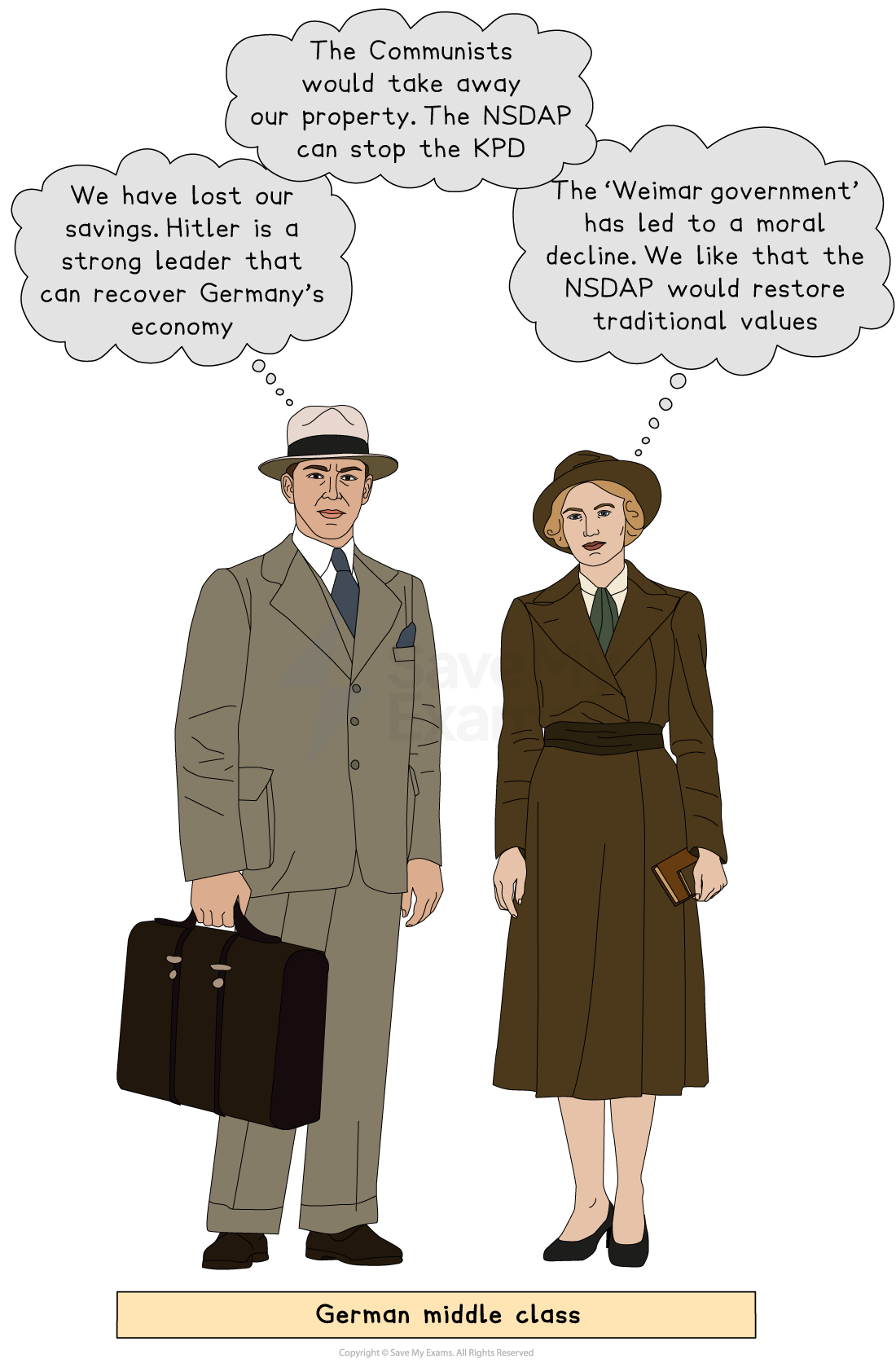
Middle-class support
The middle classes contained teachers, lawyers and smaller business owners
They often owned property and had savings
From 1929 to 1933, the middle classes no longer supported moderate parties
Farmers
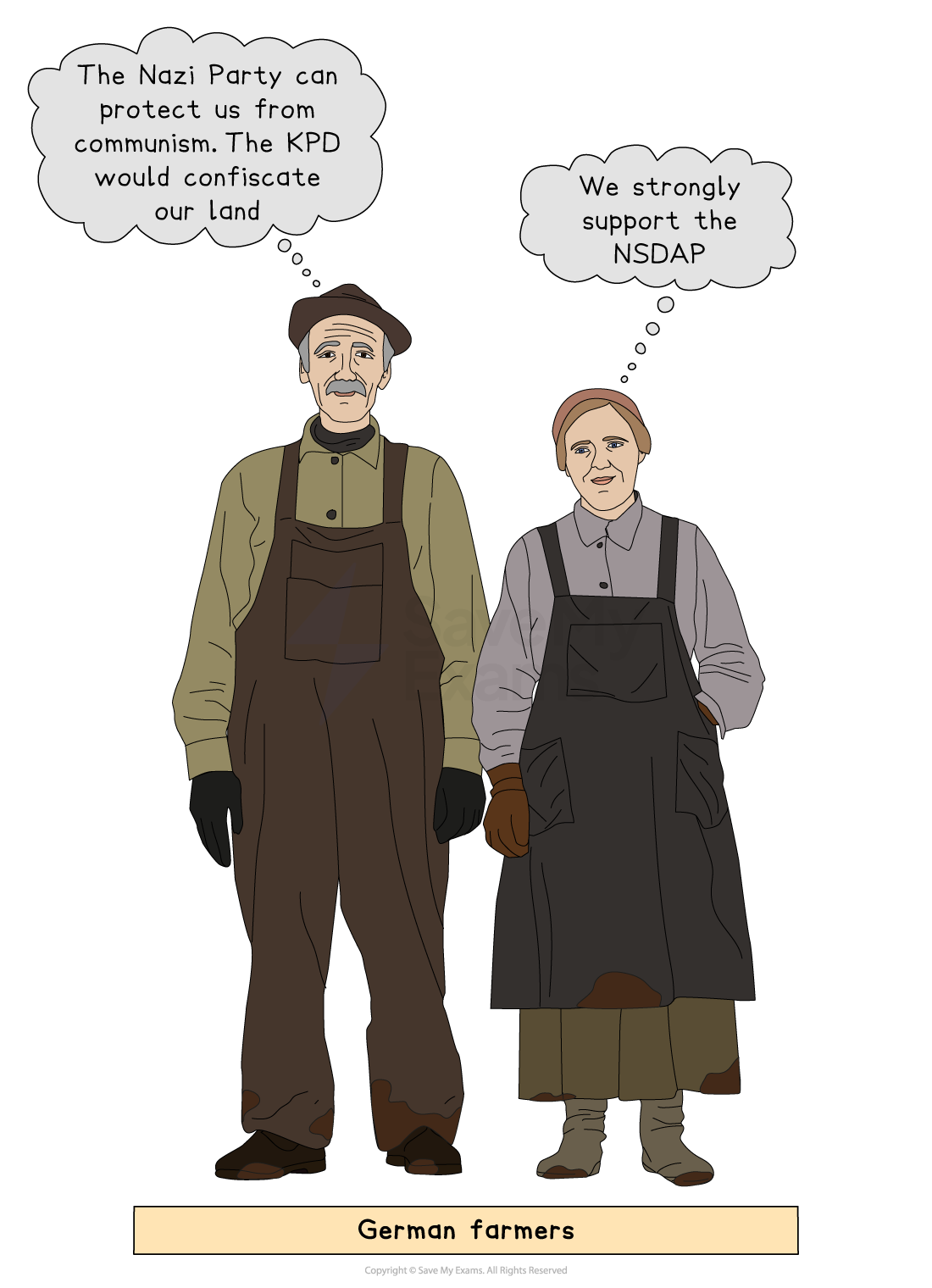
Farmers were poorly treated under the Weimar Republic
High debt, low prices and increasing taxes damaged the standard of living in farming communities
By 1929, the income of agricultural workers was 44% below the national average
Farmers initially did not like the NSDAP
The Twenty-Five Point Programme created a policy of confiscating all private land. Under this policy, farmers would lose their income
The Nazi Party changed their policy to say that, if the people voted for the NSDAP, it would only confiscate land owned by the Jewish people
In 1930, the Nazi Party gained 60% of the rural vote in some areas
Young people
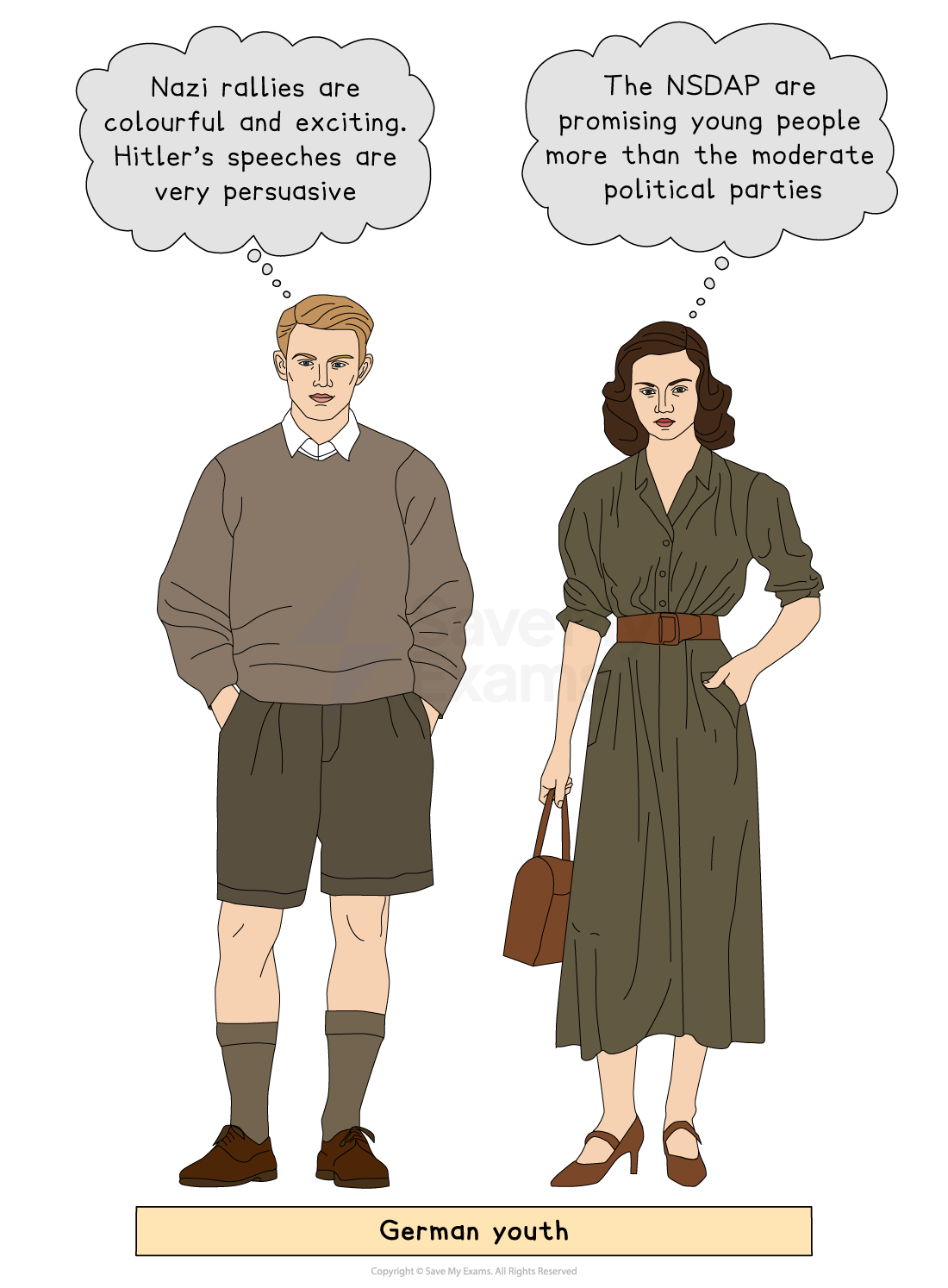
Young people suffered greatly from the economic crisis in the 1930s
By January 1933, unemployment hit 6.1 million people
Half of all 16 and 30-year-olds did not have a job
The elections of 1932
Presidential elections
In 1932, Hindenburg’s seven-year term as German President came to an end
Aged 84, Hindenburg was becoming increasingly frail
Moderate politicians persuaded Hindenburg to stand for re-election to try to stabilise the Weimar Republic
Hitler decided to enter the presidential election
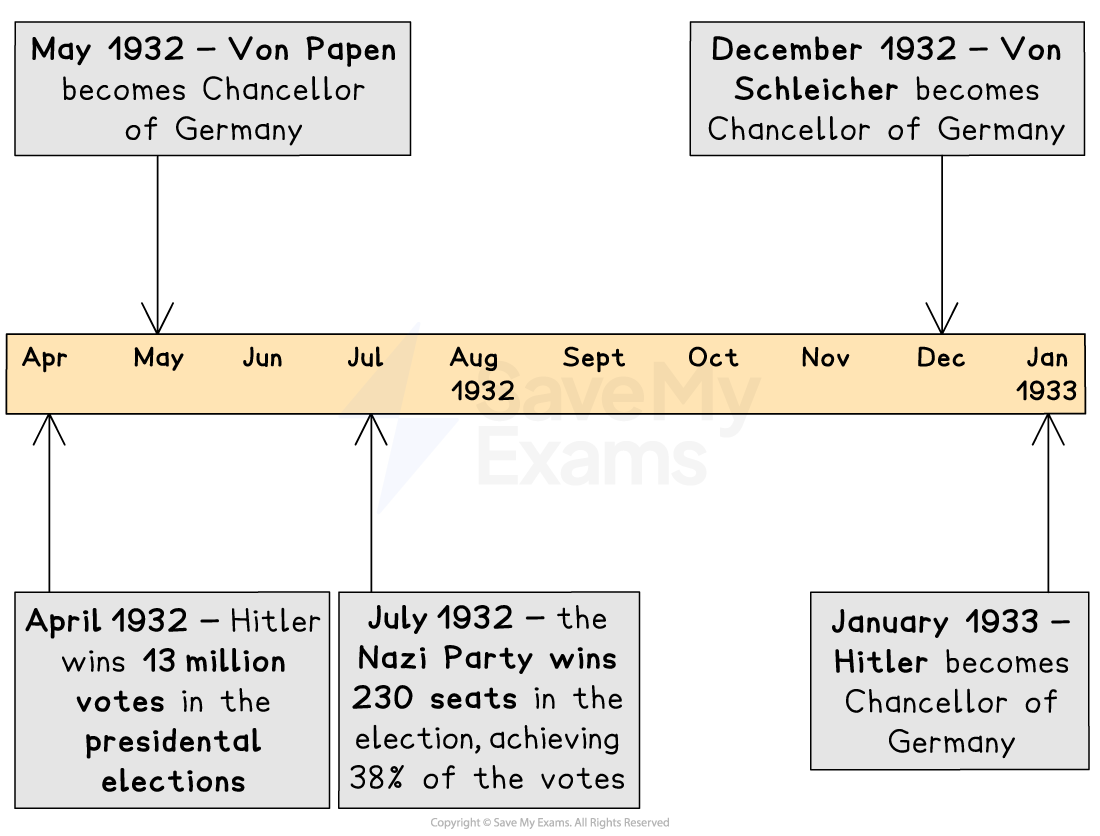
In March 1932, the first round of presidential elections began
Hindenburg achieved 49.6%. This was not the 50% required to become president
Hitler achieved 30% of the votes
In April, the government repeated the election
Hitler had relentlessly campaigned in the run-up to the election
Hitler hired an aeroplane to travel around Germany, making speeches
The SA performed parades and disrupted communist meetings
Political opponents fought in the streets across Germany
The results of the election gave Hindenburg the presidency
Hitler increased his share of the votes to 36% and showed he was a political force to be reckoned with
The July 1932 Elections
In the July 1932 election, the NSDAP became the biggest party in the Reichstag
The Nazi Party received 38% of the vote
This was not the 50% needed to have a majority in the Reichstag
The NSDAP’s share of the votes had increased from 18% in 1930
Hitler demanded that Hindenburg appoint him as chancellor
Hindenburg ignored Hitler’s request and kept his friend von Papen as chancellor
Hindenburg disliked Hitler and hoped public opinion would turn against the NSDAP
The November 1932 Elections
Hindenburg called for another election in November 1932
The NSDAP retained their position as the biggest party
However, their share of the votes had reduced to 33%
NSDAP support from the middle class was reduced because Hitler verbally attacked von Papen
The KPD had grown their representation in the Reichstag, achieving 17% of the votes
Von Papen could no longer remain the chancellor of Germany because the SPD did not have a majority in the Reichstag
Hindenburg persuaded von Papen to resign
Examiner Tips and Tricks
Although Hitler lost the 1932 presidential elections, the margin of defeat was small.
Many Weimar politicians assumed that Hindenburg would be easily re-elected. The fact that Hitler achieved 13 million votes scared many moderate parties in the Reichstag.
An exam question may focus on why Hitler became the Chancellor in 1933. The 1932 presidential election provides evidence of the number of Germans who believed in Hitler’s ability to restore Germany’s economy and reputation.

Unlock more, it's free!
Join the 100,000+ Students that ❤️ Save My Exams
the (exam) results speak for themselves:

Was this revision note helpful?
