The Impact of Wartime Opposition (OCR GCSE History B (Schools History Project)): Revision Note
Exam code: J411

Summary
The combination of propaganda and fear meant that no significant opposition movements against the Nazi Party emerged during the war. However, there was still opposition.
A group of Army generals almost succeeded in killing Hitler and religious leaders from both Catholic and Protestant Churches spoke out against the Nazis. The White Rose group attempted to encourage opposition amongst students and it is believed that passive resistance became more widespread towards the end of the war. However, Nazi control was so complete and the punishments were so harsh, that the impact of this opposition was limited.
The July bomb plot, 1944
The July bomb plot was an attempt to assassinate Hitler and seize control of Germany from the Nazi Party
It was planned by members of the Wehrmacht (German Army)
The plot was led by Colonel Claus Graf von Stauffenberg, who had been a supporter of Hitler and the Nazis
Von Stauffenberg was badly injured fighting in North Africa during the Second World War
He lost his right hand, two fingers on his left hand and his left eye
When he returned to Germany to recover, he became disillusioned with Hitler and the war
Von Stauffenberg made contact with others who believed that Hitler was leading Germany to disaster
This included Ludwig Beck, who was Chief of the German Army General Staff
When von Stauffenberg was appointed Chief of Staff to the Reserve Army in July 1944, the men developed a plan to use a bomb to kill Hitler
Stauffenberg attended regular meetings with Hitler
It was decided that he would take explosives hidden in his briefcase
He would leave to answer a prearranged phone call before the bomb went off
Once Hitler was dead, the plotters would trigger the emergency order known as Operation Valkyrie
This would give them the authority to use the Reserve Army to remove the SS and Gestapo from power
Events of 20th July 1944
Von Stauffenberg arrived for the meeting with Hitler
He discovered that it had been moved from a concrete bunker to a well-ventilated hut due to the warm weather
He primed the explosive and slid his briefcase under the table before excusing himself to answer the phone
The bomb exploded and von Stauffenberg immediately set off to Berlin to carry out the rest of the plot
Von Stauffenberg soon learned that Hitler had survived the explosion
The strong table leg had protected Hitler from the blast
The flimsy hut had allowed the blast to dissipate
Von Stauffenberg, Beck and their fellow conspirators were quickly arrested and executed by firing squad
Religious opposition
The Nazis faced opposition from both Catholics and Protestants
Catholic opposition
When Hitler ordered crucifixes to be removed from Catholic churches, it was met with fierce opposition:
Of the 43 crucifixes removed from schools in the Mühldorf district in Bavaria, 42 were returned by the police
These events triggered some individuals, including Cardinal Galen, to actively speak out and resist the Nazis
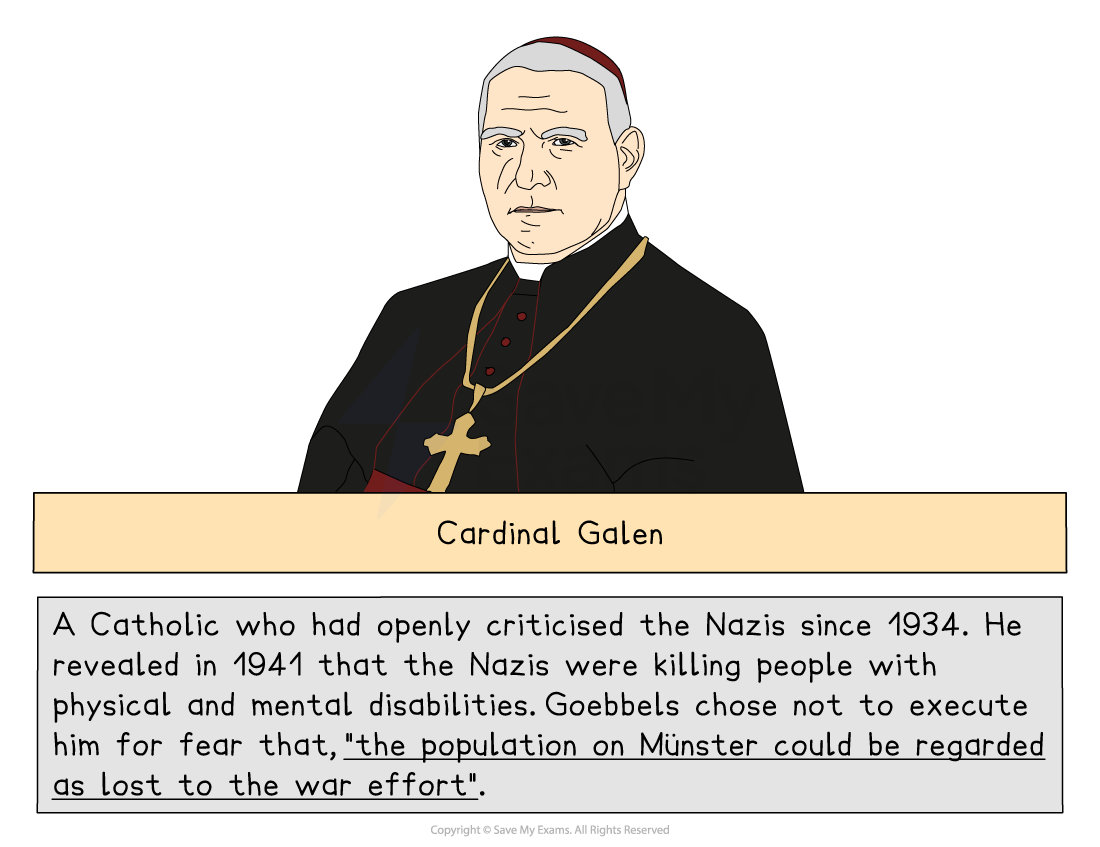
Opposition from the Protestant Church
The Pastors' Emergency League (PEL) was the main source of opposition from Protestants
It was formed by Pastor Martin Niemöller
They opposed the formation of the Reich Church
They believed that Jewish people should be able to become Christians
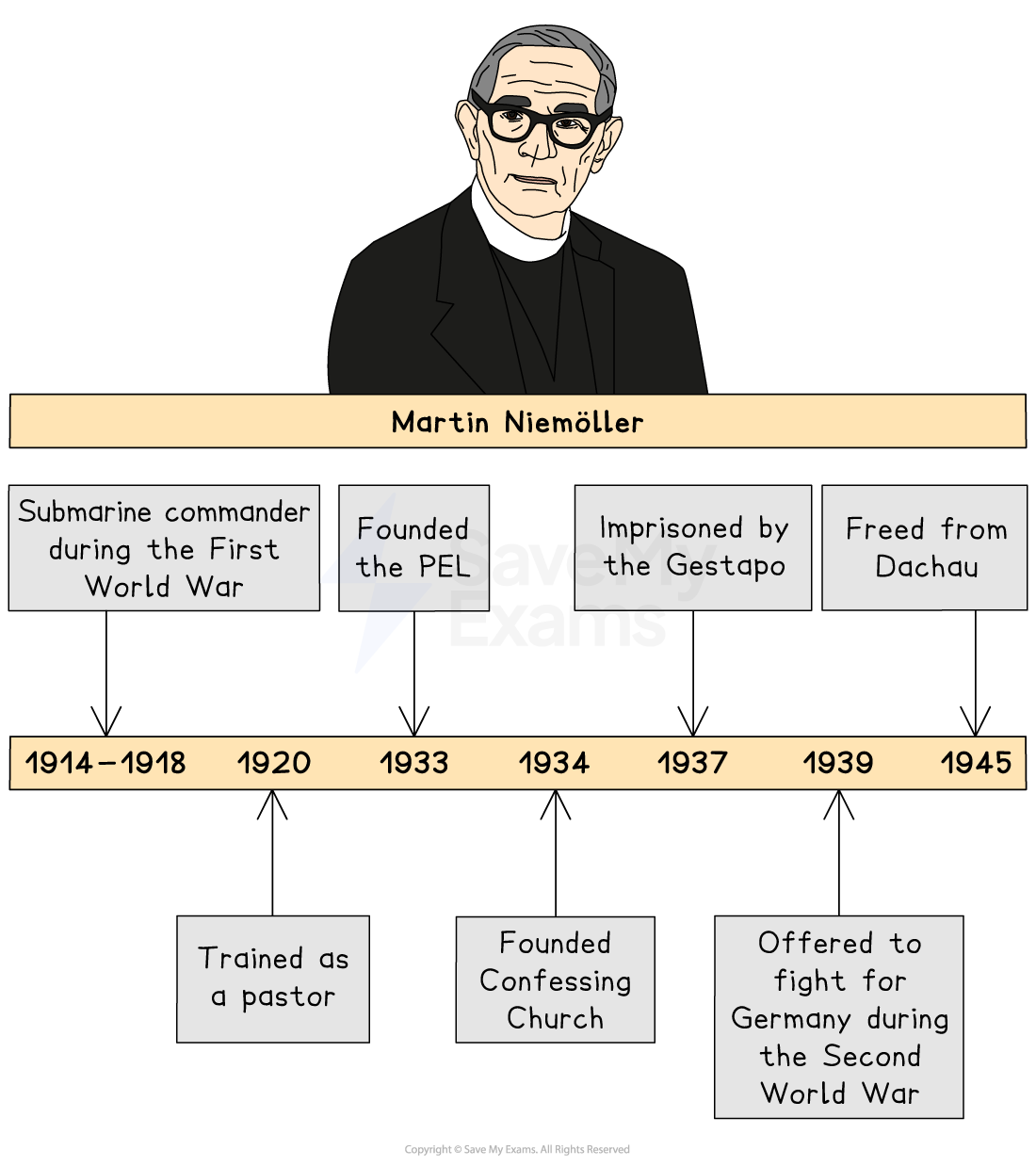
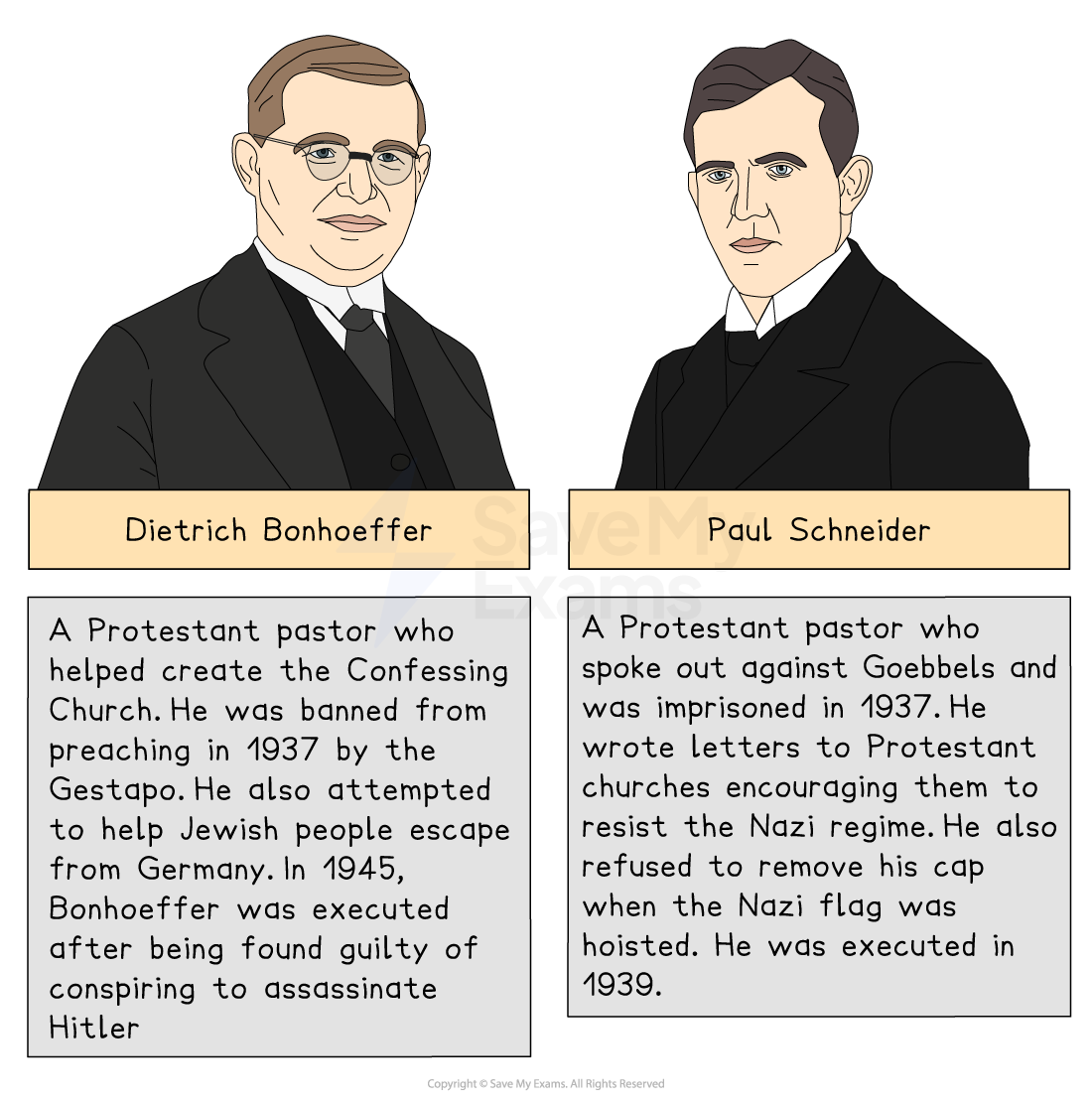
The PEL created the Confessional Church in 1934:
Around 6,000 pastors joined, and only 2,000 pastors were part of the Reich Church
Around 800 pastors were sent to concentration camps for opposing the Nazis
The White Rose group
Formed at Munich University in 1943
They publicly opposed the Nazi government through leaflets and marches
Its leaders, Hans and Sophie Scholl, were arrested and executed by guillotine in 1943
Passive resistance during the war
Passive resistance is a way of protesting or opposing something without using violence
Some acts of passive resistance were small or difficult to identify
This makes it difficult to know how widespread it was
Passive resistance could involve:
Claiming to be sick to stay off work when perfectly healthy
Damaging factory machinery that made weapons or ammunition
Listening to foreign radio stations like the BBC
Telling anti-Nazi jokes
Refusing to greet people with 'Heil Hitler'
Writing graffiti on walls
What impact did wartime opposition have on the Nazi Party?
Wartime opposition had a limited impact on the Nazi Party
Most opposition was small-scale and disorganised
Fear of being discovered by the Gestapo and the brutal treatment of those caught plotting put many people off

Unlock more, it's free!
Join the 100,000+ Students that ❤️ Save My Exams
the (exam) results speak for themselves:

Was this revision note helpful?
