Practical: Reflex Actions (SQA National 5 Biology): Revision Note
Exam code: X807 75

Written by: Ruth Brindle
Updated on
Investigating reaction times
Reaction time is the time taken to respond to a stimulus
for example, catching a falling object after it is released
It is an indicator of how quickly the nervous system detects, processes, and responds to sensory information
Reaction time can be affected by a variety of factors, such as age, stress, fatigue, background noise, or the use of stimulants such as caffeine
In this investigation, you will measure human reaction time using a ruler drop test and determine how one chosen factor (e.g. caffeine consumption or background noise) influences it
The further down the ruler is caught, the longer the person’s reaction time
Apparatus
30 cm ruler
Volunteers x5
Method
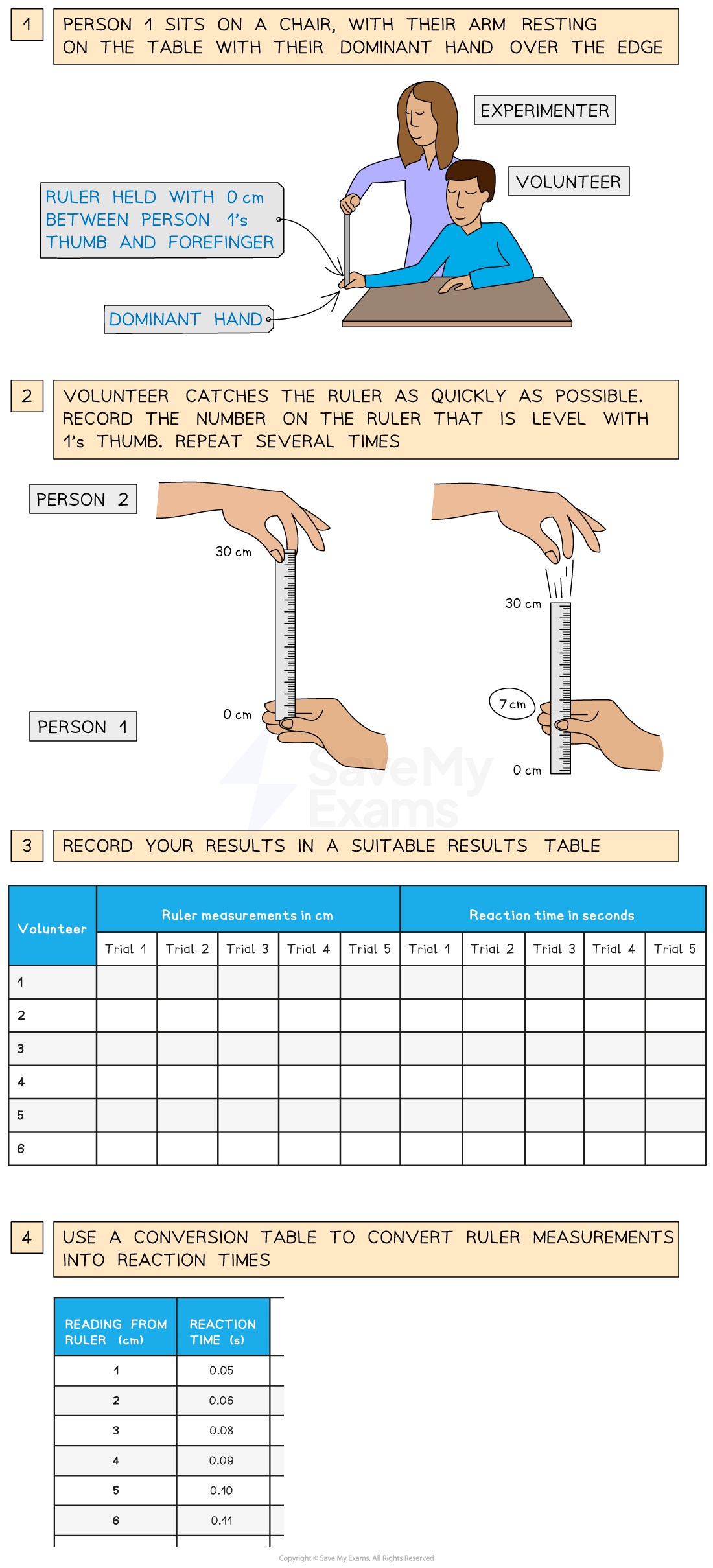
Each volunteer needs to sit in a chair with a good upright posture
Ensure the volunteer places their forearm on the table so that it extends over the edge
Ask the volunteer to place their thumb and fingers on either side of the bottom of the vertically placed ruler, with the number “0” at the bottom and the “30” near the top
Tell the volunteer that the ruler will be "dropped" without warning. The volunteer needs to catch the ruler with their thumb and forefinger as soon as they sense it dropping
Drop the ruler. When your volunteer catches it, record the number on the ruler displayed just over the thumb. The lower the number, the faster the reaction time
Conduct five trials with the same volunteer
Repeat the experiment with at least four other volunteers and record your results in a suitable table. Use a conversion table to convert the measurements into reaction times
Examiner Tips and Tricks
Note that this practical is a 'suggested practical' in the specification, rather than content that all students are expected to learn. Some schools may choose to complete alternative practicals, or may miss out practical work that is not realistic, e.g. due to equipment or time constraints

Unlock more, it's free!
Join the 100,000+ Students that ❤️ Save My Exams
the (exam) results speak for themselves:

Was this revision note helpful?