Genetic Engineering (SQA National 5 Biology): Revision Note
Exam code: X807 75
The process of genetic engineering
Genetic engineering is a process that involves transferring genetic information from one cell to another
This is done to introduce desirable characteristics
Specifically, genetic engineering is changing the genetic material of an organism by removing or altering genes within that organism, or by inserting genes from another organism
The organism receiving the genetic material is said to be genetically modified (GM)
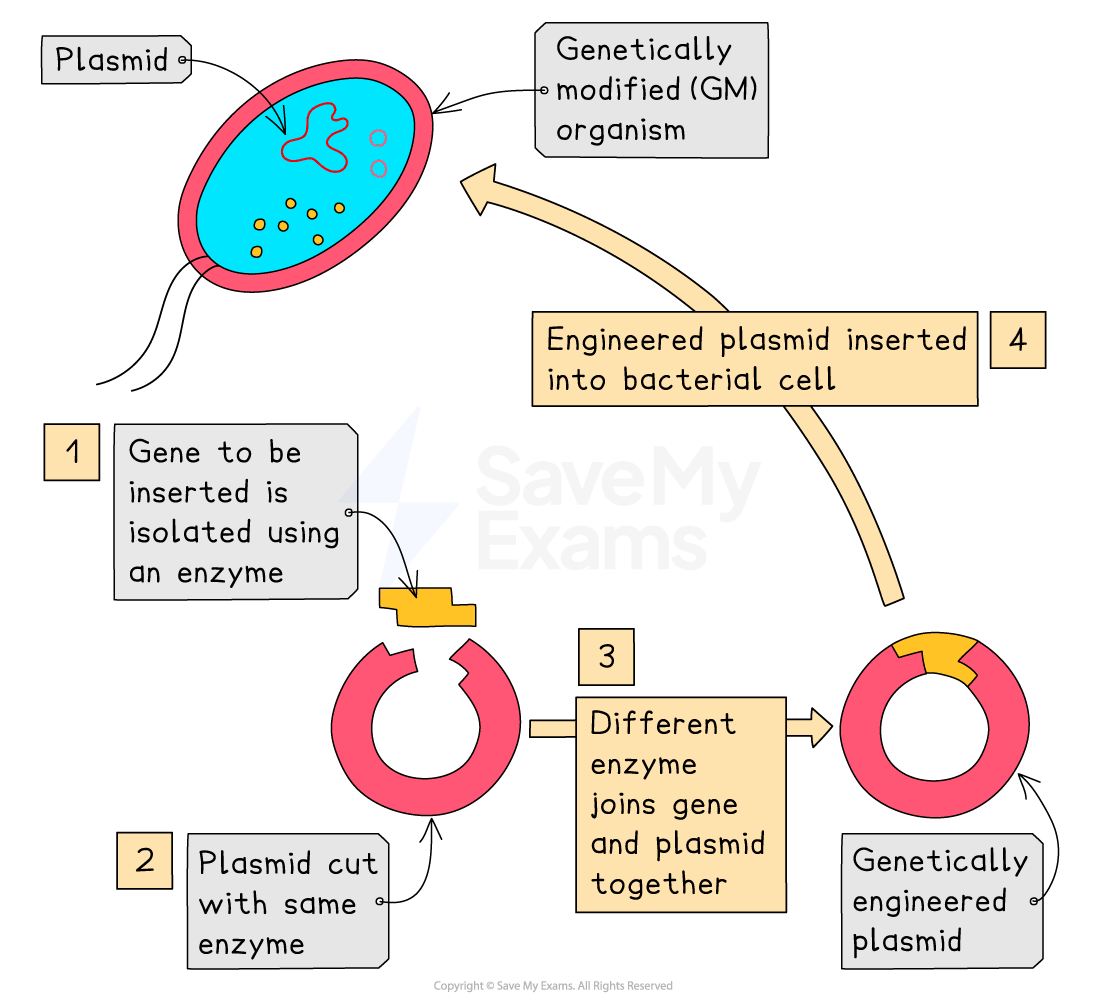
Stages of genetic engineering
The required gene is identified and located in the section of DNA within the chromosome of the source organism
Enzymes are used to extract the required gene from the DNA section
The same enzyme cuts a bacterial plasmid from a bacterial cell
Different enzymes are used to join together the plasmid and the isolated gene; the plasmid has now been genetically engineered
The genetically engineered plasmid is inserted into a host bacterial cell to produce a GM organism
When the bacteria reproduce, the genetically engineered plasmids are copied as well
The bacteria will then express the gene and make the required protein, e.g. human insulin
Examples of genetic engineering
There are many examples of genetically modified organisms, including:
The gene for human insulin has been inserted into bacteria, which then produce human insulin that can be collected and purified for medical use for diabetics
Crop plants, such as wheat and maize, have been genetically modified to contain a gene from a bacterium that produces a poison that kills insects, making them resistant to insect pests such as caterpillars
Some crops have been genetically modified to produce additional vitamins, e.g. ‘golden rice’ contains genes from another plant and a bacterium which make the rice grains produce a chemical that is turned into vitamin A in the human body, which could help prevent vitamin A deficiency in certain areas of the world
Potatoes have been genetically modified to resist blight, a disease caused by a fungus-like organism that can destroy crops, helping to reduce the need for chemical fungicides and improve food security
Tomatoes have been genetically modified to have a longer shelf life by altering genes that control the softening process, allowing them to stay fresh for longer and reducing food waste

Unlock more, it's free!
Join the 100,000+ Students that ❤️ Save My Exams
the (exam) results speak for themselves:

Was this revision note helpful?