Types of Variation (SQA National 5 Biology): Revision Note
Exam code: X807 75

Written by: Ruth Brindle
Updated on
Types of variation
Variation describes the differences in characteristics between individuals of the same species
Variation is the result of genes from two parents combining, giving rise to a unique offspring
It can be discrete or continuous, depending on how the trait is inherited
Discrete variation
Discrete variation is controlled by one gene (single gene inheritance)
Characteristics determined by one gene alone are unaffected by environmental influences
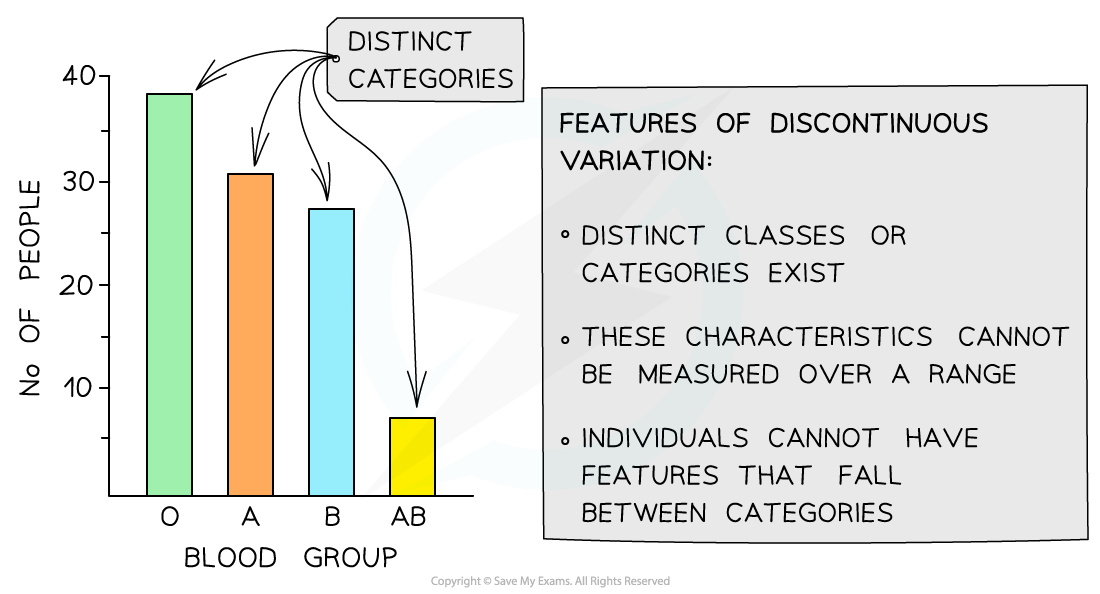
The phenotypes produced form distinct categories, meaning that individuals either have one form of a characteristic or another
Examples of discrete variation include:
blood groups (A, B, AB or O)
tongue rolling ability
flower colour in pea plants (purple or white)
Discrete data is represented in bar charts with no intermediate values
Continuous variation
Continuous variation is controlled by many genes (polygenic inheritance)
The more genes that are involved, the more intermediate values exist in the phenotype
Many characteristics that demonstrate continuous variation are impacted by environmental factors
For example, a person's height is determined by their genetics, but without the proper diet, they may not reach their full growth potential, and so will not be as tall as expected
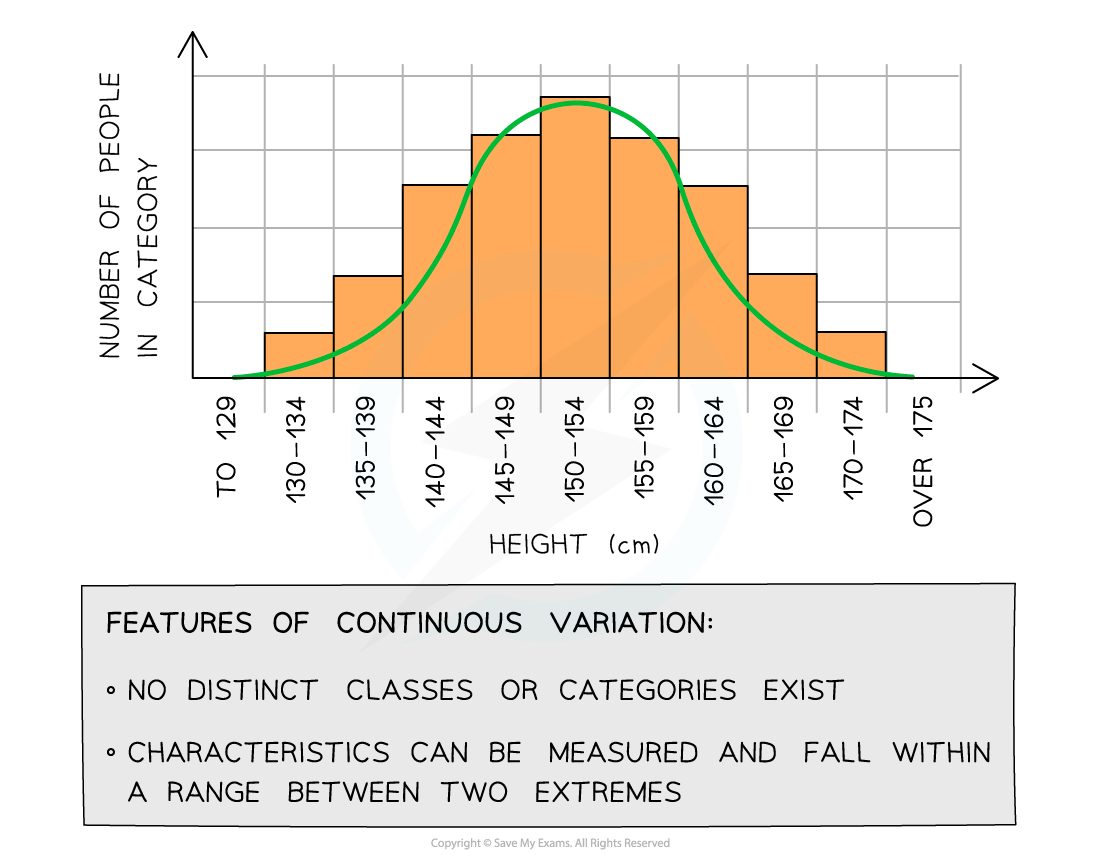
The phenotypes show a continuous range of values with no distinct categories
Examples of continuous variation include:
height
body mass
leaf length in plants
milk yield in cows
Continuous data is shown as a bell-shaped curve on a histogram

Unlock more, it's free!
Join the 100,000+ Students that ❤️ Save My Exams
the (exam) results speak for themselves:

Was this revision note helpful?