Fertilisation (SQA National 5 Biology): Revision Note
Exam code: X807 75

Written by: Ruth Brindle
Updated on
Fetilisation
Fertilisation can be defined as:
the fusion of a male gamete and female gamete to produce a zygote
Note that the gametes are haploid and fuse to create a diploid zygote
The zygote then develops into an embryo
Cells start to become specialised to perform specific functions, forming all the body tissues of the offspring
Fertilisation in humans
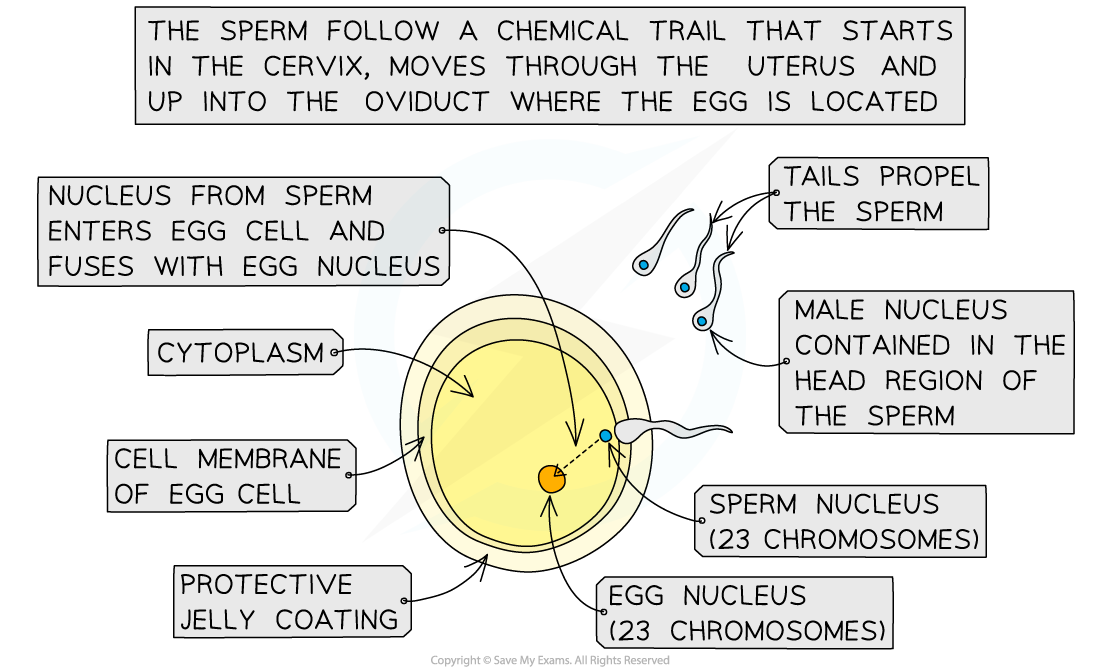
During sexual intercourse, semen is ejaculated into the female's vagina near the cervix, and sperm travel through the cervix into the uterus
Fertilisation occurs in the oviduct if a sperm meets an egg, typically 1-2 days after ovulation
A human zygote contains the full 46 chromosomes (23 pairs of chromosomes) and is therefore diploid
Half of the chromosomes in a zygote come from the father (from a haploid sperm cell) and the other half from the mother (from a haploid egg cell)
Fertilisation in plants
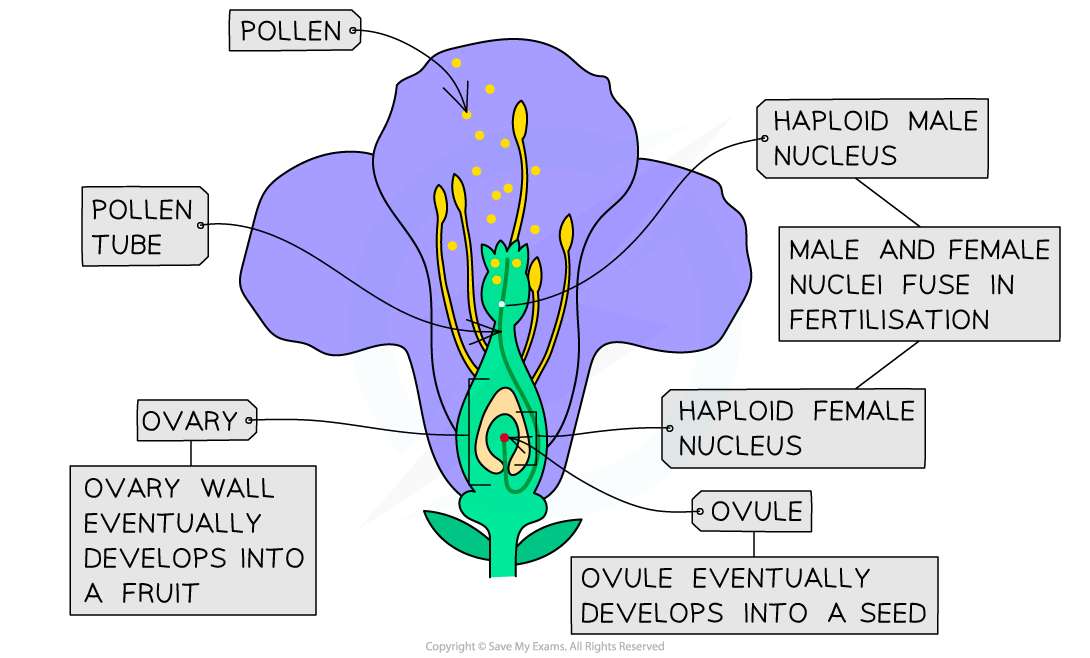
In plants, fertilisation occurs when a pollen tube grows down from a pollen grain to deliver the male nucleus into the ovary
Here, the male and female gametes fuse to form the embryo

Unlock more, it's free!
Join the 100,000+ Students that ❤️ Save My Exams
the (exam) results speak for themselves:

Was this revision note helpful?