Speciation (SQA National 5 Biology): Revision Note
Exam code: X807 75

Written by: Naomi Holyoak
Updated on
Isolation barriers
Speciation can be defined as:
the development of new species from pre-existing species over time
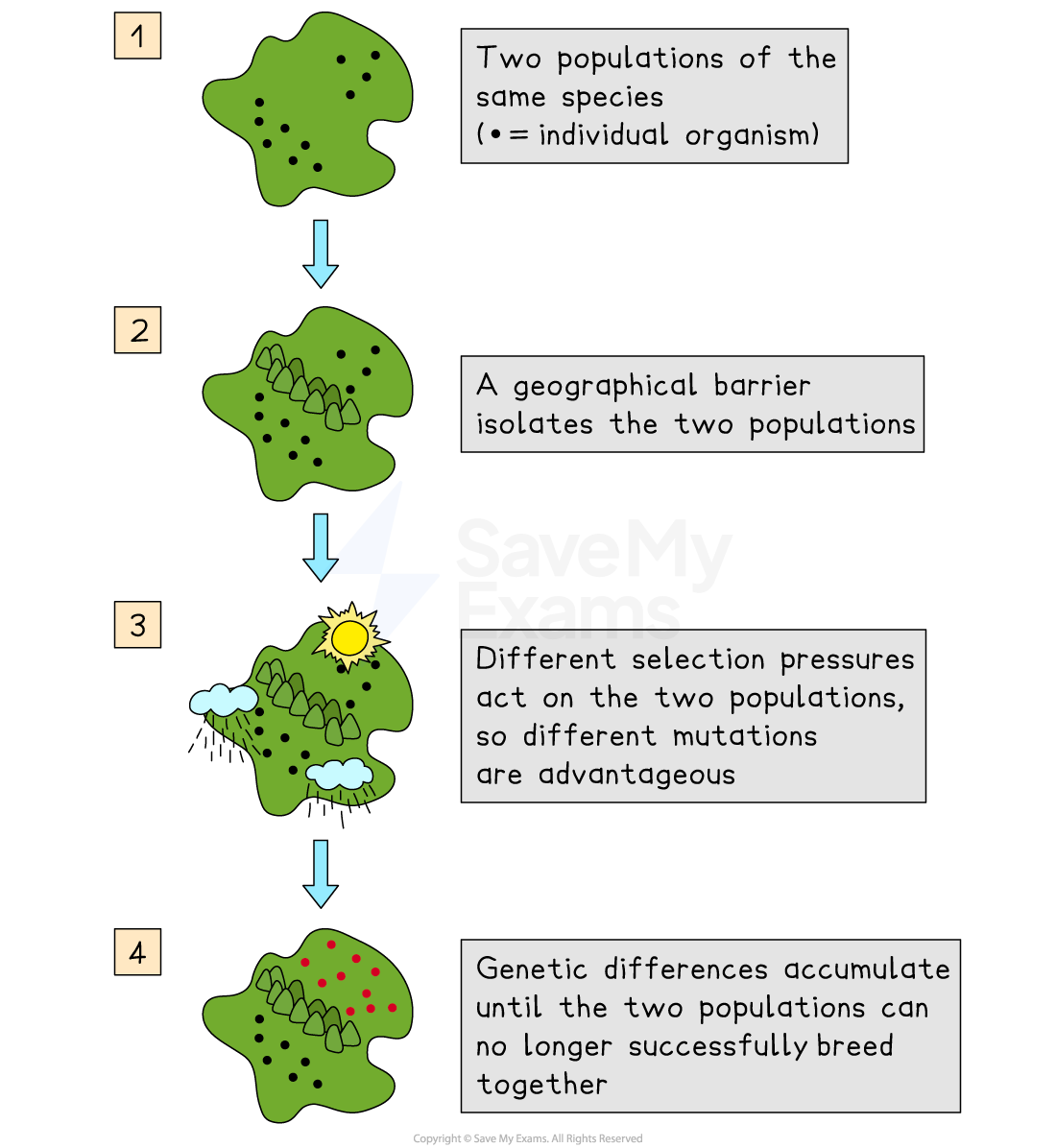
For speciation to occur, two populations of the same species must be isolated from each other
Isolation prevents gene flow between the two populations
Isolation of populations occurs due to the presence of an isolation barrier; examples include:
geographical barriers: a physical separation, e.g. a mountain range, a wide river or an ocean, keeps populations apart so they cannot interbreed
ecological barriers: populations use different habitats or resources, e.g. one on dry heath, one in a wetland, so they rarely encounter each other to breed
behavioural barriers: populations have different courtship signals, e.g. calls or mating displays, so they do not recognise each other as mates
The process of speciation
Once two populations of the same species have been isolated by a barrier, speciation may occur as follows:
Different mutations may arise in the isolated populations
Each population may face different selection pressures in their environment
Natural selection selects different mutations in the two populations, and genetic differences accumulate over time
The two populations are said to have become different species at the point at which they can no longer breed together to produce fertile offspring
Examiner Tips and Tricks
Note that the process of speciation is still natural selection, so it includes all of the same ideas, i.e. variation, selection pressures, differences in reproductive success, and genetic change over time.

Unlock more, it's free!
Join the 100,000+ Students that ❤️ Save My Exams
the (exam) results speak for themselves:

Was this revision note helpful?