Sailmaker: Characters (SQA National 5 English): Revision Note
Exam code: X824 75

In an exploration of the play Sailmaker, ideas about society are represented through the playwright’s characterisations. Alan Spence’s characters, for example, illustrate ideas about grief, social class, religious tensions, and family relationships in 1960s Scotland.
Characterisation can include:
How characters are established
How characters are presented:
Their physical appearance
Their actions and motives
What they say and think
How they interact with others
What others say and think about them
How far the characters conform to or subvert stereotypes
Their relationships to other characters
Below you will find character profiles of:
Alec
Davie
Billy
Ian
Alec

The play begins by introducing the audience to a young Alec grieving his mother’s death:
The impact of the event is illustrated by his vivid memories
He remembers the moment a policeman knocks on the door
His flashback repeats his father’s words: “Yer mammy’s dead”
Alec describes two sides of himself, showing his uncertainty and detachment:
He says “I was standing there, crying — real big deep sobs” but the “other part of me, the part that accepted, was just watching”
Alec and his cousin Ian have shared interests, but different natures, foreshadowing them growing apart:
They play football and make bows and arrows together, but Alec is more imaginative and sensitive than Ian
Alec is proud of his father’s trade as a sailmaker, but Ian bluntly clarifies that Alec’s father is now a “tick man” (a debt-collector)
When Alec confides in Ian that he thought he saw “Mary” in the sky after his mother’s death, Ian describes it as “creepy”
Alec’s growing independence creates barriers with his family:
He dislikes the “bookie” and remarks on his father’s drinking
The lack of communication with his family leads to his search for meaning at the local Christian “Mission”, which he visits instead of playing football
Alec is different to the rest of his family:
He does well in bible studies, works hard at school, and gets a bursary for a private boys’ school
He is unlike his father and uncle who remain manual labourers, and takes a different path to Ian who wants to get a job and leave school early
Alec is preparing to leave home for university, becoming the only member of his family to do so
Davie
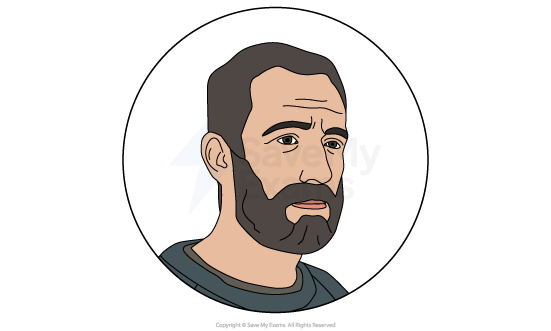
Davie, Alec’s grief-stricken father, frustrates his son and his brother Billy:
He is largely resigned to his own fate
He increasingly relies on gambling and drinking as coping mechanisms
Despite his struggles, he is optimistic about his son’s prospects
Davie is presented as a traditional working-class man, preferring to ignore problems and avoid difficult conversations:
He underplays the death of Alec’s mother, describing it as “bit of bad news”
Despite his previous glories as a sailmaker, he ends up as a debt-collector, and, for a short while, a factory worker:
His character represents the decline in industry that impacted so many working-class families in 1960s Glasgow
He tells Alec: “The chandlers ah worked for shut doon… Naebody needs sailmakers these days”
His disillusionment is symbolised by his broken promise to make a sail for Alec’s yacht
While Alec tries to find common ground through his interest in Christianity and boxing, Davie’s lack of drive prevents it:
He tells Alec he was once religious but “drifted” away from it, and that boxing is a “mug’s game”
He also admits that he is a “mug” for gambling
He is presented as intelligent and well-read, highlighting his lost potential
He loves his son and encourages him to escape the cycle of poverty by working hard at school so he can get an office job instead of a trade
Unlike his brother Billy, he is open-minded and much less prejudiced against Catholics:
He even pushes back against his brother’s anti-Catholic bigotry
His defeatist nature, however, leads to conflict with his son:
While he encourages Alec’s future at a private school, he spends the bursary money on a bet and fails to pay the electricity bill
Although he meets women at the pub he prefers to stay isolated
He is often seen sitting in a chair in his messy home despite constantly mentioning that he ought to tidy it
The play begins with Davie telling Alec, “just you an me now son”, but ends with Alec leaving him alone
Billy
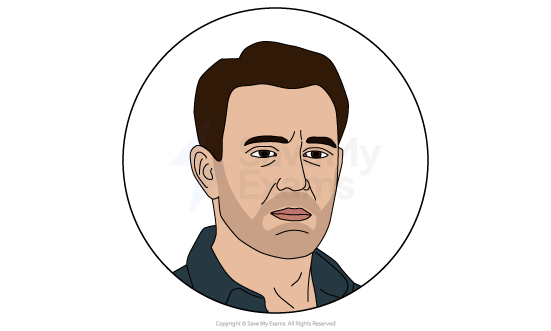
Billy is Davie’s brother and Alec’s uncle
He is proud of being a hard-working painter and decorator by trade:
When he loses his job he works on a Saturday, painting a shop
Billy is presented as a responsible and generous family man, painting Alec’s yacht for him and helping Davie out with a gambling debt and a job at the factory:
He tries to advise Davie, scolding him for “bevvying” and “bettin too heavy”
He passes his values down to Ian, his son, encouraging him into a trade
Presented as a traditional working-class man:
He is practical and proud of his roots
This also manifests itself in negative views about Irish Catholics
Billy has none of the same problems as his brother, but he is narrow-minded:
he does not see the point of visiting London nor taking any risks
Perhaps his experiences in the army have made him cautious
When Ian expresses an interest in enlisting, he tells him: “It’s no just playin at cowboys ye know”
In the end, Billy has to move to Aberdeen with Ian to find work
Ian
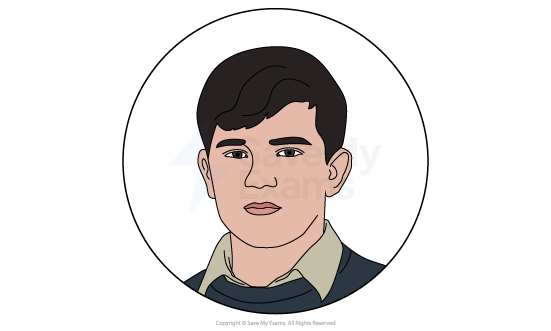
Ian and his father Billy act as a contrast to Alec and Davie
While Ian and Alec are the same age and share childhood games together, they are distinctly different:
Ian prefers reality to Alec’s preference for imagination
He describes the yacht as simply broken with “nae sails or nae mast”
Similarly, when Alec tells Ian his father is a sailmaker, Ian is quick to tell him he is in fact now a “tick man” (debt-collector)
Ian is not compassionate when Alec discusses his mother’s death and thinks his fascination with religion is superstitious:
He thinks that the “medal” of “Our Lady” brings Alec bad luck
Ian and Alec get along well as young children, playing football, discussing Rangers, and singing songs together, but they grow apart quickly:
In Act Two, Ian is still playing football, while Alec has moved on
While Alec plans to work hard and study further after school, Ian is keen to leave school early and get a trade job like his father
Ian’s words often appear to belong to his father, implying he copies others rather than forming his own opinions:
He mimics his father’s bigoted comments about Catholics
He tells Alec, “Ye need a trade. That’s what ma da says”
He teases Alec’s desire to join a boys’ school by suggesting the boys are all “snobs” and implying they are homosexual:
“Ah’d watch ma bum if ah was you!”
Ian represents a repeated cycle:
He starts to work on weekends with his father
His relationship with Alec ends when he and his father move away to find work
Examiner Tips and Tricks
Writers use characters to convey ideas, often opposing ideas, and to raise debates. For example, Alec represents the idea of imagination and intellect, while Ian is practical and indoctrinated. Still other ideas are conveyed by a character’s progression (or “journey”) in the play. Ian’s future appears to repeat a cycle, following his father into a trade, while Alec escapes his roots and moves away.
Sources
Spence, A. (2008), Sailmaker, from Spence, A. and Cooper, J. (2012), Sailmaker Plus, Hodder Gibson

Unlock more, it's free!
Join the 100,000+ Students that ❤️ Save My Exams
the (exam) results speak for themselves:

Was this revision note helpful?