Using Price Elasticity of Demand (PED) (Cambridge (CIE) A Level Economics): Revision Note
Exam code: 9708

PED and total expenditure/revenue
Revenue is the amount of money a firm receives from selling its goods or services
Total revenue = price x quantity
Also referred to as consumer expenditure from the buyer’s perspective
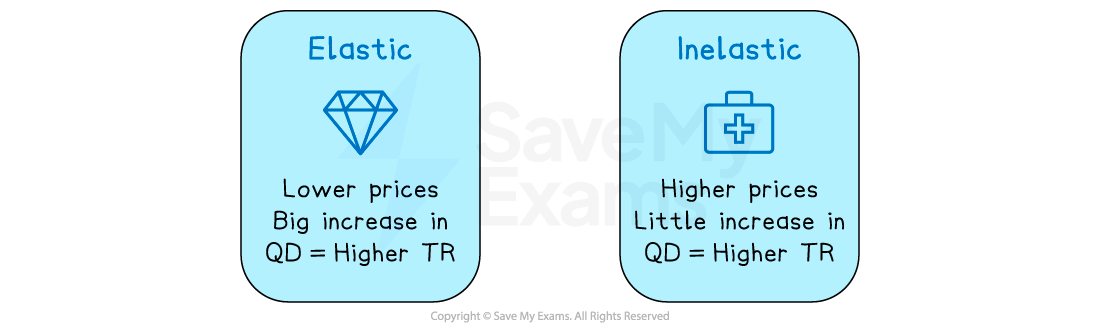
The total revenue rule states that in order to maximise revenue, firms should increase the price of products that are inelastic in demand, and decrease prices on products that are elastic in demand
1. Lowering price for elastic demand
The demand curve is very elastic in this market

Diagram analysis
When a good or service is price elastic in demand, there is a greater than proportional increase in the quantity demanded to a decrease in price
Total revenue is higher once the price has been decreased from P1 to P2
(P2 x Q2) > (P1 x Q1)
2. Raising price for inelastic demand
The demand curve is very inelastic in this market

Diagram analysis
The demand curve is very inelastic in this market
When a good/service is price inelastic in demand, there is a smaller-than-proportional decrease in the quantity demanded to an increase in price
Total revenue is higher once the price has been increased
(P2 x Q2) > (P1 x Q1)
Worked Example
A firm raises the price of its products from £10 to £15. Sales have fallen from 100 to 40 units per day. Explain if the firm has made the correct decision
Step 1: Calculate the initial sales revenue
format('truetype')%3Bfont-weight%3Anormal%3Bfont-style%3Anormal%3B%7Dtext%7Bfill%3A%23000000%3B%3C%2Fstyle%3E%3C%2Fdefs%3E%3Ctext%20font-family%3D%22Arial%22%20font-size%3D%2214%22%20text-anchor%3D%22middle%22%20x%3D%2217.5%22%20y%3D%2214%22%3ESales%3C%2Ftext%3E%3Ctext%20font-family%3D%22Arial%22%20font-size%3D%2214%22%20text-anchor%3D%22middle%22%20x%3D%2267.5%22%20y%3D%2214%22%3ERevenue%3C%2Ftext%3E%3Ctext%20font-family%3D%22math10ebb3c113d02fd51a017c38df2%22%20font-size%3D%2214%22%20text-anchor%3D%22middle%22%20x%3D%22107.5%22%20y%3D%2214%22%3E%3D%3C%2Ftext%3E%3Ctext%20font-family%3D%22Arial%22%20font-size%3D%2214%22%20text-anchor%3D%22middle%22%20x%3D%22135.5%22%20y%3D%2214%22%3EPrice%3C%2Ftext%3E%3Ctext%20font-family%3D%22Arial%22%20font-size%3D%2214%22%20text-anchor%3D%22middle%22%20x%3D%22161.5%22%20y%3D%2214%22%3Eof%3C%2Ftext%3E%3Ctext%20font-family%3D%22Arial%22%20font-size%3D%2214%22%20text-anchor%3D%22middle%22%20x%3D%22194.5%22%20y%3D%2214%22%3Eproduct%3C%2Ftext%3E%3Ctext%20font-family%3D%22Arial%22%20font-size%3D%2214%22%20text-anchor%3D%22middle%22%20x%3D%22226.5%22%20y%3D%2214%22%3EX%3C%2Ftext%3E%3Ctext%20font-family%3D%22Arial%22%20font-size%3D%2214%22%20text-anchor%3D%22middle%22%20x%3D%22261.5%22%20y%3D%2214%22%3EQuantity%3C%2Ftext%3E%3Ctext%20font-family%3D%22Arial%22%20font-size%3D%2214%22%20text-anchor%3D%22middle%22%20x%3D%22304.5%22%20y%3D%2214%22%3Esold%3C%2Ftext%3E%3Ctext%20font-family%3D%22math10ebb3c113d02fd51a017c38df2%22%20font-size%3D%2214%22%20text-anchor%3D%22middle%22%20x%3D%22108.5%22%20y%3D%2235%22%3E%3D%3C%2Ftext%3E%3Ctext%20font-family%3D%22Arial%22%20font-size%3D%2214%22%20text-anchor%3D%22middle%22%20x%3D%22122.5%22%20y%3D%2235%22%3E%26%23xA3%3B%3C%2Ftext%3E%3Ctext%20font-family%3D%22Arial%22%20font-size%3D%2214%22%20text-anchor%3D%22middle%22%20x%3D%22136.5%22%20y%3D%2235%22%3E10%3C%2Ftext%3E%3Ctext%20font-family%3D%22Arial%22%20font-size%3D%2214%22%20text-anchor%3D%22middle%22%20x%3D%22151.5%22%20y%3D%2235%22%3Ex%3C%2Ftext%3E%3Ctext%20font-family%3D%22Arial%22%20font-size%3D%2214%22%20text-anchor%3D%22middle%22%20x%3D%22170.5%22%20y%3D%2235%22%3E100%3C%2Ftext%3E%3Ctext%20font-family%3D%22math10ebb3c113d02fd51a017c38df2%22%20font-size%3D%2214%22%20text-anchor%3D%22middle%22%20x%3D%22108.5%22%20y%3D%2256%22%3E%3D%3C%2Ftext%3E%3Ctext%20font-family%3D%22Arial%22%20font-size%3D%2214%22%20text-anchor%3D%22middle%22%20x%3D%22126.5%22%20y%3D%2256%22%3E%26%23xA3%3B%3C%2Ftext%3E%3Ctext%20font-family%3D%22Arial%22%20font-size%3D%2214%22%20text-anchor%3D%22middle%22%20x%3D%22136.5%22%20y%3D%2256%22%3E1%3C%2Ftext%3E%3Ctext%20font-family%3D%22math10ebb3c113d02fd51a017c38df2%22%20font-size%3D%2214%22%20text-anchor%3D%22middle%22%20x%3D%22142.5%22%20y%3D%2256%22%3E%2C%3C%2Ftext%3E%3Ctext%20font-family%3D%22Arial%22%20font-size%3D%2214%22%20text-anchor%3D%22middle%22%20x%3D%22155.5%22%20y%3D%2256%22%3E000%3C%2Ftext%3E%3C%2Fsvg%3E)
Step 2: Calculate the sales revenue after the price change
format('truetype')%3Bfont-weight%3Anormal%3Bfont-style%3Anormal%3B%7Dtext%7Bfill%3A%23000000%3B%3C%2Fstyle%3E%3C%2Fdefs%3E%3Ctext%20font-family%3D%22Arial%22%20font-size%3D%2214%22%20text-anchor%3D%22middle%22%20x%3D%2217.5%22%20y%3D%2214%22%3ESales%3C%2Ftext%3E%3Ctext%20font-family%3D%22Arial%22%20font-size%3D%2214%22%20text-anchor%3D%22middle%22%20x%3D%2267.5%22%20y%3D%2214%22%3ERevenue%3C%2Ftext%3E%3Ctext%20font-family%3D%22math17f39f8317fbdb1988ef4c628eb%22%20font-size%3D%2214%22%20text-anchor%3D%22middle%22%20x%3D%22107.5%22%20y%3D%2214%22%3E%3D%3C%2Ftext%3E%3Ctext%20font-family%3D%22Arial%22%20font-size%3D%2214%22%20text-anchor%3D%22middle%22%20x%3D%22135.5%22%20y%3D%2214%22%3EPrice%3C%2Ftext%3E%3Ctext%20font-family%3D%22Arial%22%20font-size%3D%2214%22%20text-anchor%3D%22middle%22%20x%3D%22161.5%22%20y%3D%2214%22%3Eof%3C%2Ftext%3E%3Ctext%20font-family%3D%22Arial%22%20font-size%3D%2214%22%20text-anchor%3D%22middle%22%20x%3D%22194.5%22%20y%3D%2214%22%3Eproduct%3C%2Ftext%3E%3Ctext%20font-family%3D%22Arial%22%20font-size%3D%2214%22%20text-anchor%3D%22middle%22%20x%3D%22226.5%22%20y%3D%2214%22%3EX%3C%2Ftext%3E%3Ctext%20font-family%3D%22Arial%22%20font-size%3D%2214%22%20text-anchor%3D%22middle%22%20x%3D%22261.5%22%20y%3D%2214%22%3EQuantity%3C%2Ftext%3E%3Ctext%20font-family%3D%22Arial%22%20font-size%3D%2214%22%20text-anchor%3D%22middle%22%20x%3D%22304.5%22%20y%3D%2214%22%3Esold%3C%2Ftext%3E%3Ctext%20font-family%3D%22math17f39f8317fbdb1988ef4c628eb%22%20font-size%3D%2214%22%20text-anchor%3D%22middle%22%20x%3D%22108.5%22%20y%3D%2235%22%3E%3D%3C%2Ftext%3E%3Ctext%20font-family%3D%22Arial%22%20font-size%3D%2214%22%20text-anchor%3D%22middle%22%20x%3D%22122.5%22%20y%3D%2235%22%3E%26%23xA3%3B%3C%2Ftext%3E%3Ctext%20font-family%3D%22Arial%22%20font-size%3D%2214%22%20text-anchor%3D%22middle%22%20x%3D%22136.5%22%20y%3D%2235%22%3E15%3C%2Ftext%3E%3Ctext%20font-family%3D%22Arial%22%20font-size%3D%2214%22%20text-anchor%3D%22middle%22%20x%3D%22151.5%22%20y%3D%2235%22%3Ex%3C%2Ftext%3E%3Ctext%20font-family%3D%22Arial%22%20font-size%3D%2214%22%20text-anchor%3D%22middle%22%20x%3D%22167.5%22%20y%3D%2235%22%3E40%3C%2Ftext%3E%3Ctext%20font-family%3D%22math17f39f8317fbdb1988ef4c628eb%22%20font-size%3D%2214%22%20text-anchor%3D%22middle%22%20x%3D%22108.5%22%20y%3D%2256%22%3E%3D%3C%2Ftext%3E%3Ctext%20font-family%3D%22Arial%22%20font-size%3D%2214%22%20text-anchor%3D%22middle%22%20x%3D%22126.5%22%20y%3D%2256%22%3E%26%23xA3%3B%3C%2Ftext%3E%3Ctext%20font-family%3D%22Arial%22%20font-size%3D%2214%22%20text-anchor%3D%22middle%22%20x%3D%22143.5%22%20y%3D%2256%22%3E600%3C%2Ftext%3E%3C%2Fsvg%3E)
Step 3: Explain the decision
By raising the price, total revenue has fallen by £400
This indicates that the product is price elastic in demand
The firm should have lowered their price in order to maximise revenue
Examiner Tips and Tricks
A common error students make is to say that when prices increase and the product is inelastic in demand, the quantity demanded does not fall. It does, but it is a less than proportional change than the increase in price.
When governments tax demerit goods such as cigarettes, the increase in price is greater than the decrease in QD, but QD still falls.
Using PED in decision-making
1. Strategic pricing decisions
Businesses can use PED insights to guide pricing strategies:
If demand is inelastic, raising prices can boost revenue
If demand is elastic, lowering prices may increase sales volume and overall revenue
2. Making demand less sensitive to price
Firms often aim to reduce price sensitivity to strengthen revenue potential. Strategies include:
Persuasive advertising: Highlighting unique benefits or endorsements to make products more appealing than alternatives
Branding: Creating a strong brand identity to differentiate from competitors and build customer loyalty
Mergers and acquisitions: Expanding market control by joining forces with competitors
Monopoly creation: Securing exclusive rights through patents or regulation to limit competition and control pricing
Knowledge of PED is important to firms seeking to maximise their revenue
Sales revenue will be maximised
If their product is price inelastic in demand, they should raise their prices
If their product is price elastic in demand, then they should lower their prices
Firms lower their prices for elastic sections of their market, e.g., off-peak train travel
Firms increase prices for inelastic sections of their market, e.g., peak hour train travel
3. The implications of PED for governments
Knowledge of PED is important to Governments with regard to taxation and subsidies
If governments tax price-inelastic products, they can raise tax revenue without harming firms too much
Consumers are less responsive to price changes so firms will pass on the tax to the consumer
If Governments subsidise price-elastic-in-demand products, there can be a greater-than-proportional increase in the quantity demanded
This strategy is especially good for encouraging consumption of merit goods such as electric vehicles

Unlock more, it's free!
Join the 100,000+ Students that ❤️ Save My Exams
the (exam) results speak for themselves:

Was this revision note helpful?