External Growth (Cambridge (CIE) A Level Economics): Revision Note
Exam code: 9708

External growth
External growth occurs when a firm expands by merging with or acquiring another firm
This is often faster than internal growth
Types of external growth
External (inorganic) growth usually takes place in one of three ways
Horizontal, vertical or conglomerate integration

1. Horizontal integration
Horizontal Integration involves a merger or takeover with a firm in the same market at the same stage of production
E.g., a clothing retailer takes over another clothing retailer
Benefits may include:
increased market share
reduced competition
greater economies of scale
2. Forward vertical integration
involves a merger or takeover with a firm further forward in the supply chain
E.g., a dairy farmer merges with an ice-cream manufacturer
Benefits of forward vertical integration
Greater control over distribution and sales
The firm can control how products are marketed, priced and sold to consumers
Higher profit margins
By removing intermediaries such as wholesalers or retailers, the firm keeps a larger share of the final sale price
Better market information
Direct contact with consumers provides insights into customer preferences and demand trends
Case Study
Context
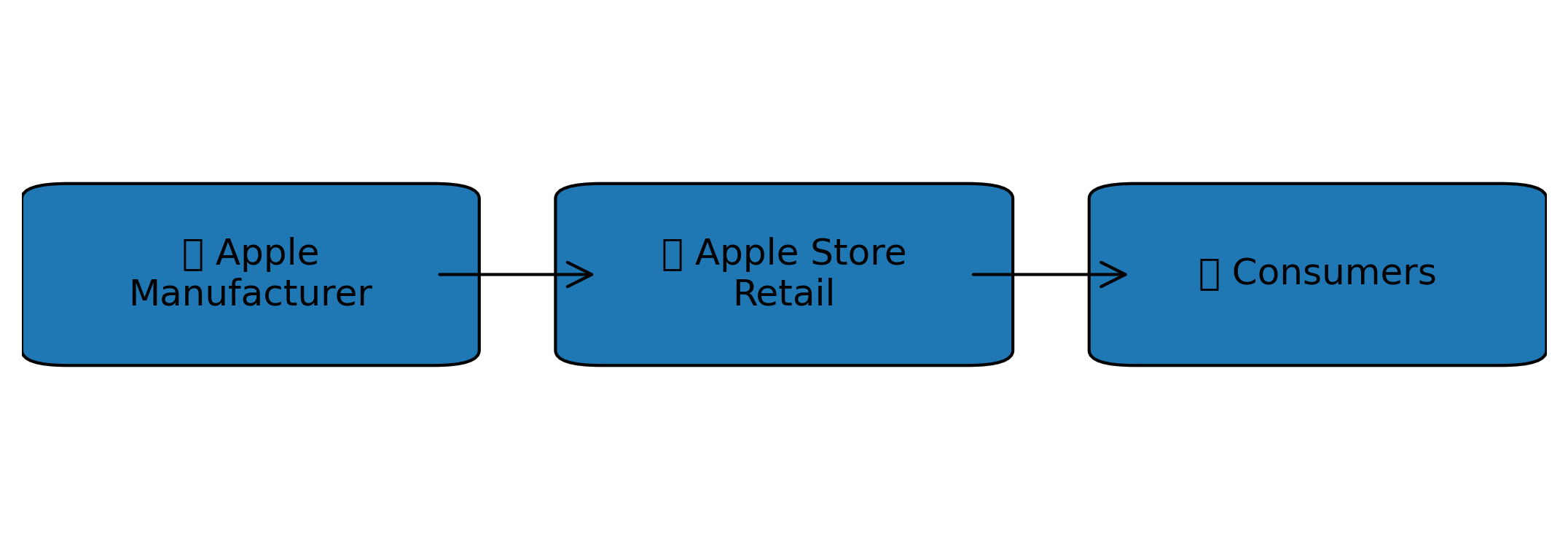
Apple produces products such as the iPhone, iPad and Mac computers. In many technology markets, manufacturers rely on independent retailers or network providers to sell their products. This limits the firm’s control over pricing, marketing and customer experience.
Growth strategy
Apple pursued forward vertical integration by expanding its own network of Apple Stores and online retail platforms. By selling directly to consumers, Apple moved forward in the supply chain, taking control of the distribution and retail stages. This allowed the firm to manage how its products are displayed, marketed and supported.
Outcome
This strategy has helped Apple maintain strong control over branding, pricing and customer experience. Apple also benefits from higher profit margins, as it no longer shares revenue with independent retailers. Direct contact with consumers also provides valuable market information about customer preferences.
3. Backward vertical integration
Involves a merger or takeover with a firm further backward in the supply chain
E.g., an ice-cream retailer takes over an ice-cream manufacturer
Benefits of backward vertical integration
Greater security of supply
The firm reduces the risk of supply disruptions from external suppliers
Lower input costs
Producing inputs internally can reduce purchasing costs and improve cost control
Improved production coordination
Better control over inputs can improve efficiency, quality and production planning
4. Conglomerate integration
Involves a merger or takeover with a firm in an unrelated market
E.g., a food manufacturer buying a football club
Benefits of conglomerate integration
Risk diversification
Operating in multiple unrelated industries reduces dependence on a single market
Access to new growth opportunities
Firms can enter profitable industries and expand their sources of revenue
Examiner Tips and Tricks
Look carefully at the two types of businesses you have been presented with and make a judgement about the most likely reason they have chosen to grow
Reasons for integration
Firms pursue mergers and takeovers for several reasons
Reason | Explanation |
|---|---|
Increase market power |
|
Achieve economies of scale |
|
Reduce competition |
|
Improve supply chain control |
|
Diversify risk |
|
Increase market share |
|
Consequences of integration
Integration can have several outcomes, either positive or negative, or a combination of the two
Consequence | Explanation |
|---|---|
Greater economies of scale |
|
Increased market power |
|
Reduced competition |
|
Possible diseconomies of scale |
|
Integration difficulties |
|
Regulatory scrutiny |
|

Unlock more, it's free!
Join the 100,000+ Students that ❤️ Save My Exams
the (exam) results speak for themselves:

Was this revision note helpful?
