What is the RPF? (DP IB Extended Essay): Revision Note

What is the purpose of the RPF?
What is the Reflection and Progress Form (RPF)
The Reflection and Progress Form (RPF) is a mandatory document that records a student's reflection process and confirms they attended required meetings
It is a core part of the EE submission and must be sent to the IB along with the final essay
The form serves two main functions:
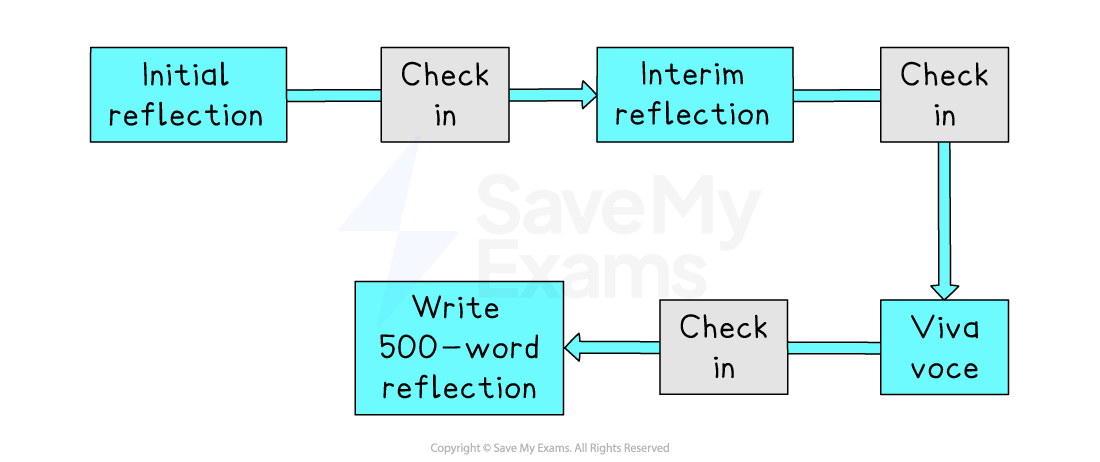
It acts as a formal record of the three mandatory reflection sessions
It provides the only evidence used for assessment under Criterion E
The single reflective statement
Students must write one reflective statement — a short piece of writing where the researcher thinks back on their learning and personal growth — of no more than 500 words
This is a significant change from the previous "3-reflection form" known as the RPPF — which required multiple separate entries throughout the process
Examiners will not read or assess beyond 500 words, so going over the limit can reduce the mark awarded
Check-ins may happen between sessions, but only the three formal reflection sessions are recorded on the RPF
The statement must be written only after the viva voce — the final interview between the student and supervisor celebrating the completion of the work
The reflective statement section must remain blank until after the viva voce. The attendance fields for the three reflection sessions are completed during the process
It should be written in the same language used for the essay
Role in assessment and Criterion E
The RPF is the sole document used to assess Criterion E: Reflection, which is worth a maximum of 4 marks
Criterion E measures a student’s ability to evaluate their learning and demonstrate personal growth
The examiner looks for evidence of:
Evaluative reflection — considering the impact of the research experience on the student as a learner
Growth — showing how the student has developed new skills or changed their perspective during the project
Transfer of learning — explaining how skills like time management or research can be used in other studies or future careers
Mandatory requirements and consequences
If the RPF is missing from the submission, Criterion E will automatically receive zero marks
A form that is submitted blank or written in a different language than the essay will also result in a mark of zero
The supervisor must initial the form to authenticate — prove the work is the student’s own — and confirm that the three sessions took place
The completed RPF is initialled and dated by the supervisor
Unlike previous guides, the supervisor's own comments are no longer included on the RPF
Examiner Tips and Tricks
Keep the reflective statement within 500 words—examiners will not read or assess beyond the maximum limit, so going over can directly limit the credit you receive for Criterion E.
Examiner Tips and Tricks
Don’t treat the RPF like a diary. It’s assessed only through the final reflective statement, so focus on evaluative reflection with specific examples of growth, shifts in perspective, and transfer of learning.

Unlock more, it's free!
Join the 100,000+ Students that ❤️ Save My Exams
the (exam) results speak for themselves:

Was this revision note helpful?