Interdisciplinary EE Pathway (DP IB Extended Essay): Revision Note

What does an interdisciplinary EE require?
Meaningfully integrating two DP subjects
This pathway requires you to integrate knowledge, methods and understanding from two different DP subjects
Integration means combining elements like concepts, theories or perspectives from both subjects to answer the research question
The goal is to create new insights or a deeper understanding that would not be possible through a single subject alone
You are strongly recommended to be studying at least one of the two subjects you choose
This ensures you have enough background knowledge to conduct rigorous research
You do not need to give equal weight to both subjects, but the contribution of each must be clear. Instead, the essay should make it clear that combining the two subjects enabled a better response to the research question than either subject alone
You cannot choose Environmental Systems and Societies (ESS) or Literature and Performance for this pathway
These subjects are already cross-disciplinary and must be taken as single subjects in the subject-focused pathway
Why choose an interdisciplinary EE?
This pathway is often suitable for complex global issues that cannot be solved by one discipline alone
Examples include climate change, migration, public health or the ethics of technology
You must ensure that the topic allows for critical analysis rather than just describing the two subjects separately
It is normal for your thinking to evolve as you explore your topic—switching pathways before you finalise your research question is completely acceptable
What frameworks can interdisciplinary EEs use?
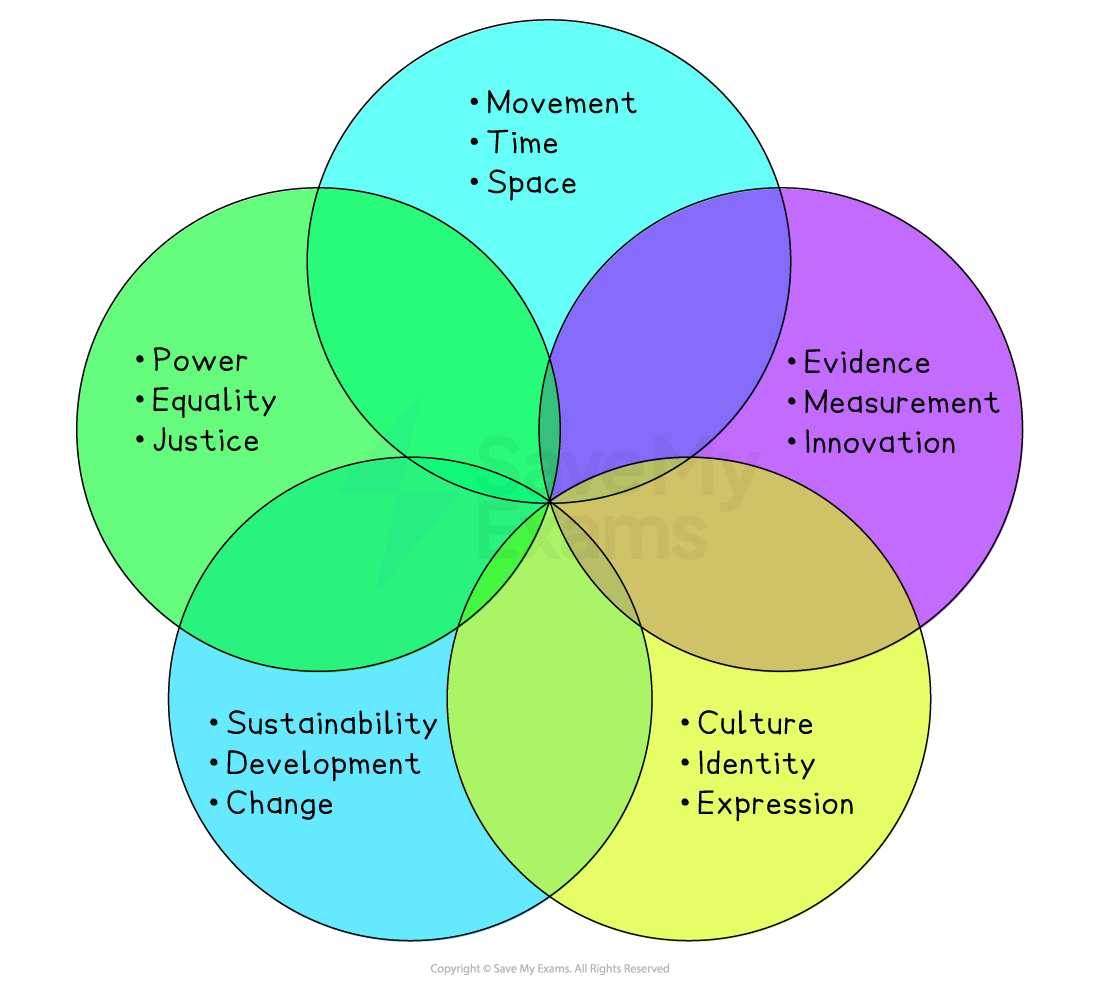
The five interdisciplinary frameworks
You must register your interdisciplinary essay under one of five specific interdisciplinary frameworks
The framework is a tool to help you position and shape your inquiry but is not directly assessed
A topic doesn’t need to match every word in the framework title (e.g., you might focus on ‘identity’ more than ‘culture’)
Power, equality and justice
Covers social or political issues such as conflict, rights, racism, gender, poverty and the legal system
Culture, identity and expression
Covers belief systems, art, language, cultural heritage, traditions and the politics of identity
Movement, time and space
Covers migration, globalisation, urbanism, travel, virtual communities and the history of exploration
Evidence, measurement and innovation
Covers digital innovation, the relationship between art and science, gaming and scientific inquiry
Sustainability, development and change
Covers environmental issues, economic development, food security and social change
Examiner Tips and Tricks
If your “interdisciplinary” plan sounds like two separate mini-essays (one per subject), your research question is probably too broad. Rework it so that answering it genuinely requires both subjects working together.
Examiner Tips and Tricks
Don’t obsess over picking the ‘perfect’ interdisciplinary framework. The framework helps you position your inquiry for registration, but it isn’t assessed—and the same topic can often fit more than one depending on emphasis.

Unlock more, it's free!
Join the 100,000+ Students that ❤️ Save My Exams
the (exam) results speak for themselves:

Was this revision note helpful?