Structuring a Line of Argument (DP IB Extended Essay): Revision Note

How do you build a coherent line of argument?
Defining a line of argument
A line of argument—a sustained, logical thread of reasoning that runs through the essay—is the foundation of a successful inquiry
The argument must be clearly derived from the research question (RQ), which acts as the starting point for all investigation
A coherent argument creates logical connections that help the reader follow the researcher's position and understand why certain choices were made
Criterion C assesses analysis and line of argument: how effectively you analyse evidence and sustain a coherent argument that links your research question, findings and conclusions
The argument development model
Building an argument is an iterative process that evolves as the student gathers more information
Drafting the claim—the initial position or stance a researcher takes regarding their topic
Planning the reasoning—the process of determining the logical steps required to support a specific position
Gathering evidence—collecting research findings that provide data-driven support for the argument
Planning the flow—deciding the order in which points will be presented to ensure the argument unfolds effectively
Refining the claim—revisiting and adjusting the original position to ensure it remains valid based on the final research
Using claims and counterclaims
A strong argument is built on claims—clear assertions or statements that are supported by reasoned analysis and evidence
A balanced discussion—an academic review that considers multiple perspectives rather than just one—is required for high marks
Researchers must engage with counterclaims—arguments or evidence that challenge the main line of reasoning
Engaging with contradictory evidence actually strengthens the argument rather than weakening it
This practice shows the researcher is aware of the uncertainties or controversies within their field of study
Contradictory findings can be used to discuss the limitations of a theory or to provide a more nuanced answer to the RQ,
Establishing logical progression
Logical progression—the intentional and sustained set of connections between the different parts of the essay
Remember — the PEELL structure is a useful technique for maintaining this progression at the paragraph level
Signposts—organisational tools like headings and clear transitions—guide the reader through the details of the evidence
Examiner Tips and Tricks
If a paragraph doesn’t explicitly link back to the research question, it won’t strengthen your line of argument — end each paragraph with a clear sentence that ties the point to the RQ.
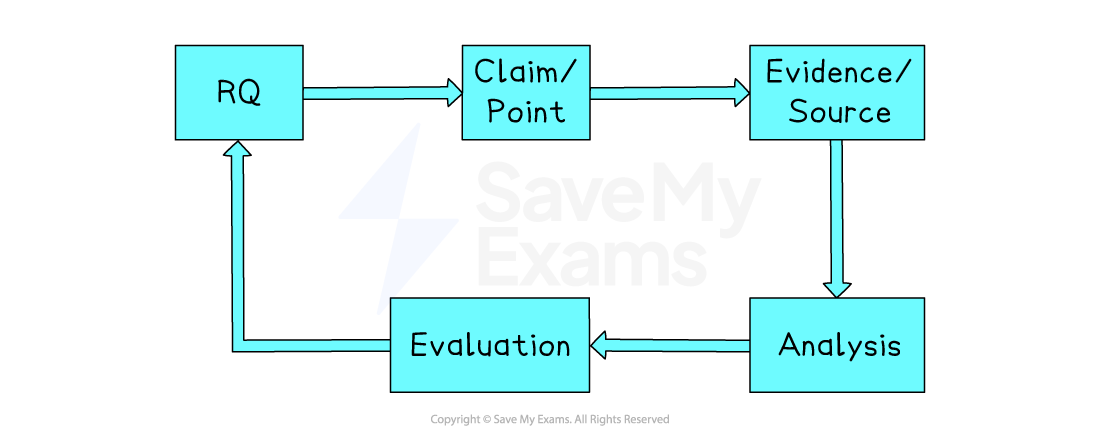
Themes and structural elements
Arguments are often organised around themes—central ideas or categories that allow the researcher to group related findings logically,
The line of argument must be visible throughout the three-part academic structure,
The introduction provides an early insight into the intended direction of the argument
The body uses analysis and evaluation to build the argument step-by-step
The conclusion synthesises the findings to provide a final response without introducing new ideas

Unlock more, it's free!
Join the 100,000+ Students that ❤️ Save My Exams
the (exam) results speak for themselves:

Was this revision note helpful?