Modern Understandings of Sovereignty (DP IB Global Politics: HL): Revision Note

Responsibilities of the state
As the world became more globalised in the 20th century, more discussion regarding state sovereignty developed
People began to focus on the duties and responsibilities of the state rather than only the rights and privileges
Traditional notions | Challenges to the norm |
|---|---|
|
|
|
|
|
|
A more modern understanding is that states are responsible for the protection of their people and the protection of human rights
The United Nations' Responsibility to Protect (R2P) is an attempt to shift global norms away from simply considering the rights of states
It argues that under extreme circumstances, such as genocide or government collapse, the international community should interfere.
Many argue interference of this kind causes more harm than good
Realists such as John Mearsheimer dispute the idea that actors will have good intentions when interfering with other states
Any interference will give the opportunity for powerful states and actors to exploit weaker states.
Pooled sovereignty
Pooled sovereignty is where states share some of their decision-making power with international organisations or institutions
With the growth of intergovernmental organisations (IGOs), states have increasingly made the choice to pool their sovereignty with other states
This means they give up some power to make decisions for themselves and their states because the benefits outweigh the loss
Benefits can be
Economic
Political
Social
Environmental
Cultural
Security
Liberalism argues that by pooling sovereignty, states become more powerful
There is strength in numbers, and we already live in an interconnected and interdependent world
Case Study
The European Union and pooled sovereignty
The European Union (EU) is a clear example of states choosing to pool their sovereignty
Member states agree to share some decision-making power with EU institutions such as the European Commission, European Parliament and European Court of Justice
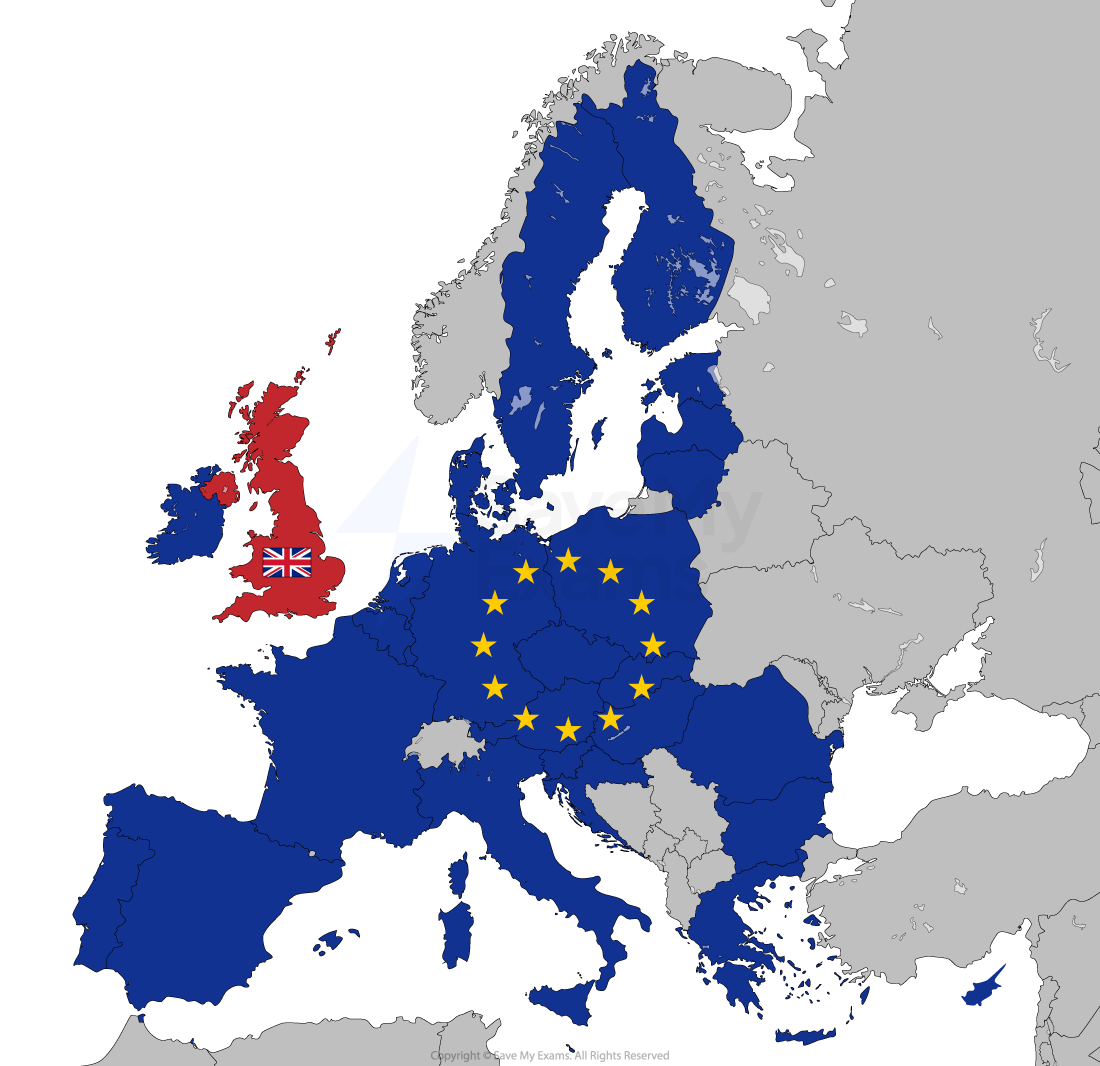
Sharing decision-making
By joining the EU, countries accept common rules in areas such as trade, environmental standards and competition law
This means they give up some control over aspects of their national policies
Benefits and significance
However, many states believe the benefits outweigh the loss of sovereignty
For example, the EU creates economic benefits through the single market, allowing goods, services, money and people to move freely between member states
It also provides political and security cooperation, as well as joint policies on issues such as climate change and consumer protection

Unlock more, it's free!
Join the 100,000+ Students that ❤️ Save My Exams
the (exam) results speak for themselves:

Was this revision note helpful?
