Interpretations of Liberty & Equality (DP IB Global Politics: HL): Revision Note

Positive liberty
Positive liberty is freedom that comes from having the actual means, resources and capacity to act - for example, having the education, money or health to pursue your choices
It can be seen in everyday life when people make choices as to whom they marry or what house they buy
Some argue there is no such thing as positive liberty because no one has complete freedom to do what they want
You may want to marry someone who doesn’t want to marry you
You may not be able to afford to buy the house you’d like to buy
Negative liberty
Negative liberty means that no one is actively trying to stop you from doing what you want to do
It is a theoretical concept described by political theorist Isaiah Berlin
Sometimes referred to as Freedom from
Negative liberty means no one is actively stopping you from doing what you want to do
The state is not preventing you from legally marrying the person you want to marry
The real estate agent is not preventing you from buying a house
Legal equality
Equality means that all people have the same intrinsic value
To have legal equality all people must have the same value in the legal rights
Within states, legal equality is sometimes seen in constitutions or national laws which outline the responsibility of the state to the people
In Canada legal equality is prioritised in the Canadian Charter of Rights and Freedoms:
Every individual is equal before and under the law and has the right to the equal protection and equal benefit of the law without discrimination and, in particular, without discrimination based on race, national or ethnic origin, colour, religion, sex, age or mental or physical disability
Source: https://www.justice.gc.ca/eng/csj-sjc/rfc-dlc/ccrf-ccdl/ (opens in a new tab)
Legal equity
Equity is related to fairness and not sameness
Legal equity recognises that although all people are equal in value, the law cannot always be applied the same way to every single person
The law sometimes does treat people differently, and this is not always discrimination
The government may give driver’s licences to people who pass driving tests, but not to those who fail them
The government may provide cheaper housing to those with very low incomes but not to everyone
The government may take a higher percentage of tax from people with higher incomes
In these examples people are not treated equally, but the laws are applied with fairness and equity
Case Study
Disability access law and legal equity in the United Kingdom
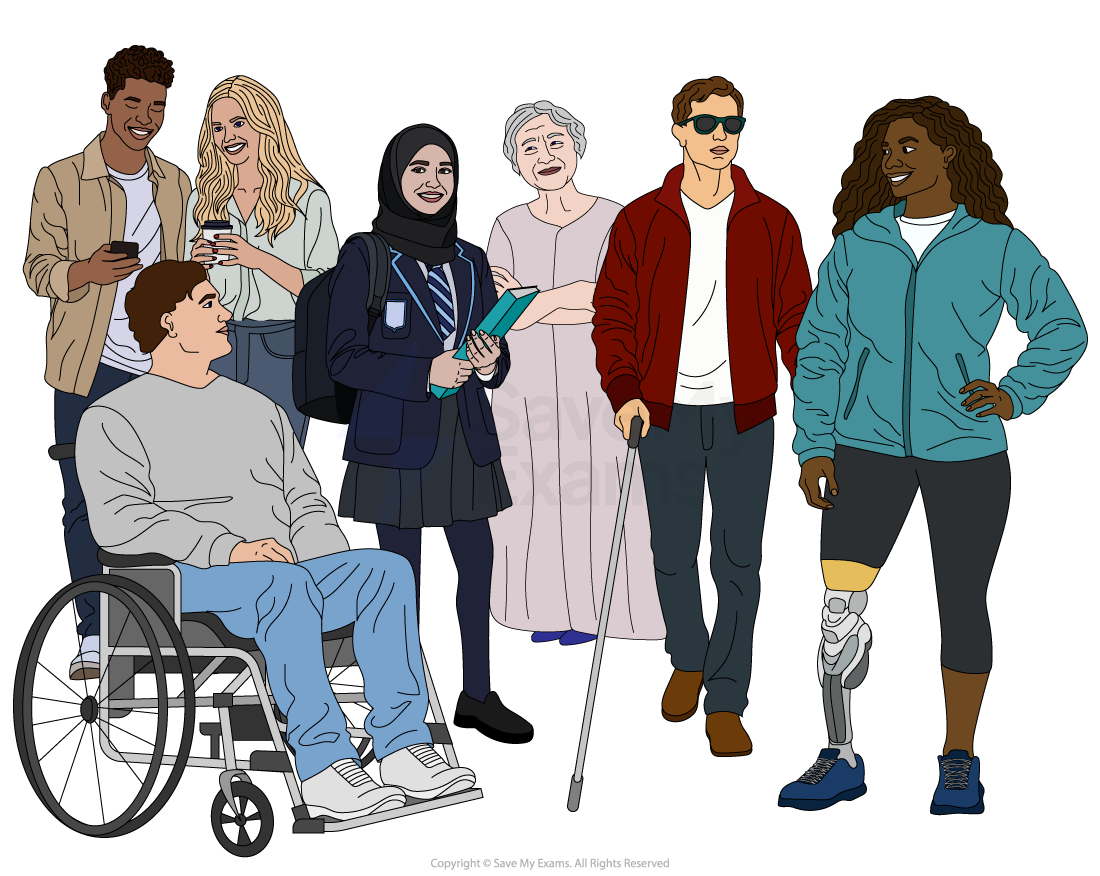
In the UK, laws recognise that fairness sometimes requires treating people differently to achieve equal opportunities
This idea reflects legal equity, where the law adapts to people’s circumstances rather than treating everyone exactly the same
The Equality Act 2010
This law requires employers, schools and public services to make reasonable adjustments for people with disabilities
These adjustments help ensure that people with disabilities can participate fully in society
Adjustments required by law may include:
wheelchair ramps or lifts in public buildings
extra time in exams for students with certain learning difficulties
accessible transport or adapted workplace equipment
These measures mean that people are treated differently, but the goal is to create fair access and opportunities

Unlock more, it's free!
Join the 100,000+ Students that ❤️ Save My Exams
the (exam) results speak for themselves:

Was this revision note helpful?
