Political & Social Rights & Justice (DP IB Global Politics: HL): Revision Note
Political systems promoting rights and justice
Rights are the basic freedoms and entitlements that individuals have, which should be protected by law and respected by others
Justice means receiving fair treatment
Political systems refer to the type of government in a state
Some political systems may be more likely to promote human rights than others
There is not a specific political system that guarantees human rights, but democracy is widely seen as the most conducive to rights and justice
Political scientist Amartya Sen argued that democracy should be seen as the fairest form of government which best leads to social and economic development
Democracy and respect for human rights are interdependent according to the United Nations and many NGOs
Democracy aims to:
preserve and promote the dignity and rights of people
achieve social justice
promote economic and social development
strengthen the unity of society
promote national stability
Additionally, democratic governments and their agencies are transparent, limiting corruption
Case Study
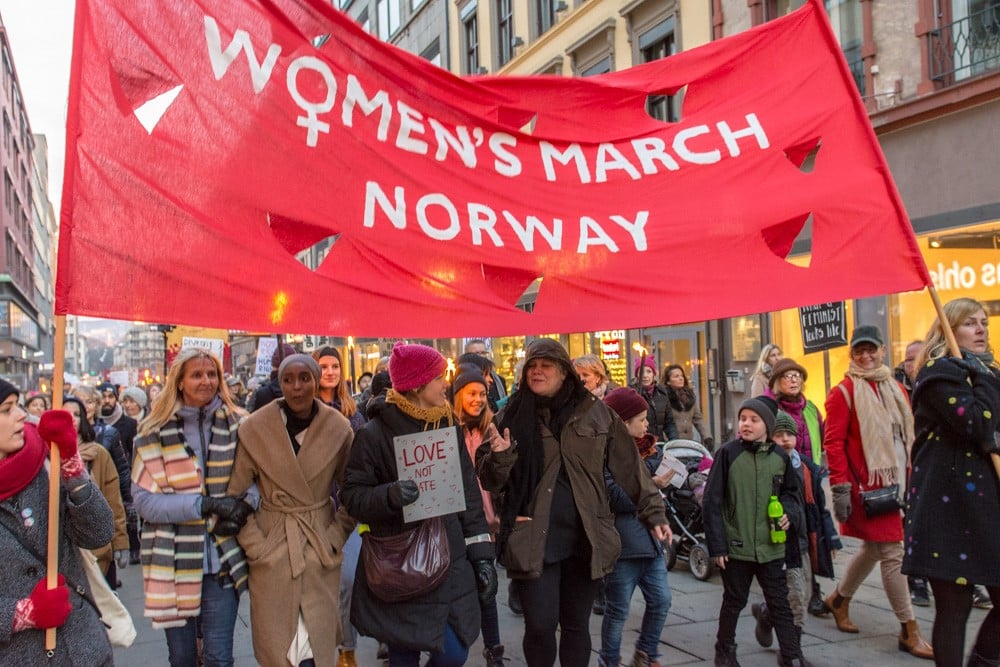
Democracy and human rights in Norway
Norway is widely regarded as one of the world’s most stable democracies
It is a constitutional monarchy with a parliamentary democratic system, where citizens elect representatives to parliament
Elections are free and fair, and multiple political parties compete for power
It illustrates how democratic participation, transparency and legal protections can create a political system that strongly promotes human rights, justice and social stability.
Protection of rights
Norway’s political system places strong emphasis on protecting human rights and ensuring justice
Citizens benefit from rights such as:
freedom of expression and freedom of assembly
equality before the law
strong legal protections for minority groups
These rights are protected by the Norwegian constitution and independent courts
Democracy and social development
Norway demonstrates how democratic systems can support social and economic development
The government invests heavily in education, healthcare and welfare systems, helping ensure high living standards and social equality
Transparency and accountability
Democratic institutions in Norway are highly transparent, with strict anti-corruption measures and strong oversight of government decisions
Citizens, journalists and civil society groups can scrutinise government actions, helping ensure rights are respected
Political systems limiting rights and justice
Political systems that limit rights and justice include any system that does not allow citizens political rights
Freedom of belief
Freedom to express opinions
Freedom to meet in groups to discuss politics or protest
Freedom to take part in government and elections
Any system of government can limit political rights
There is growing concern that political rights in many democratic states are being reduced
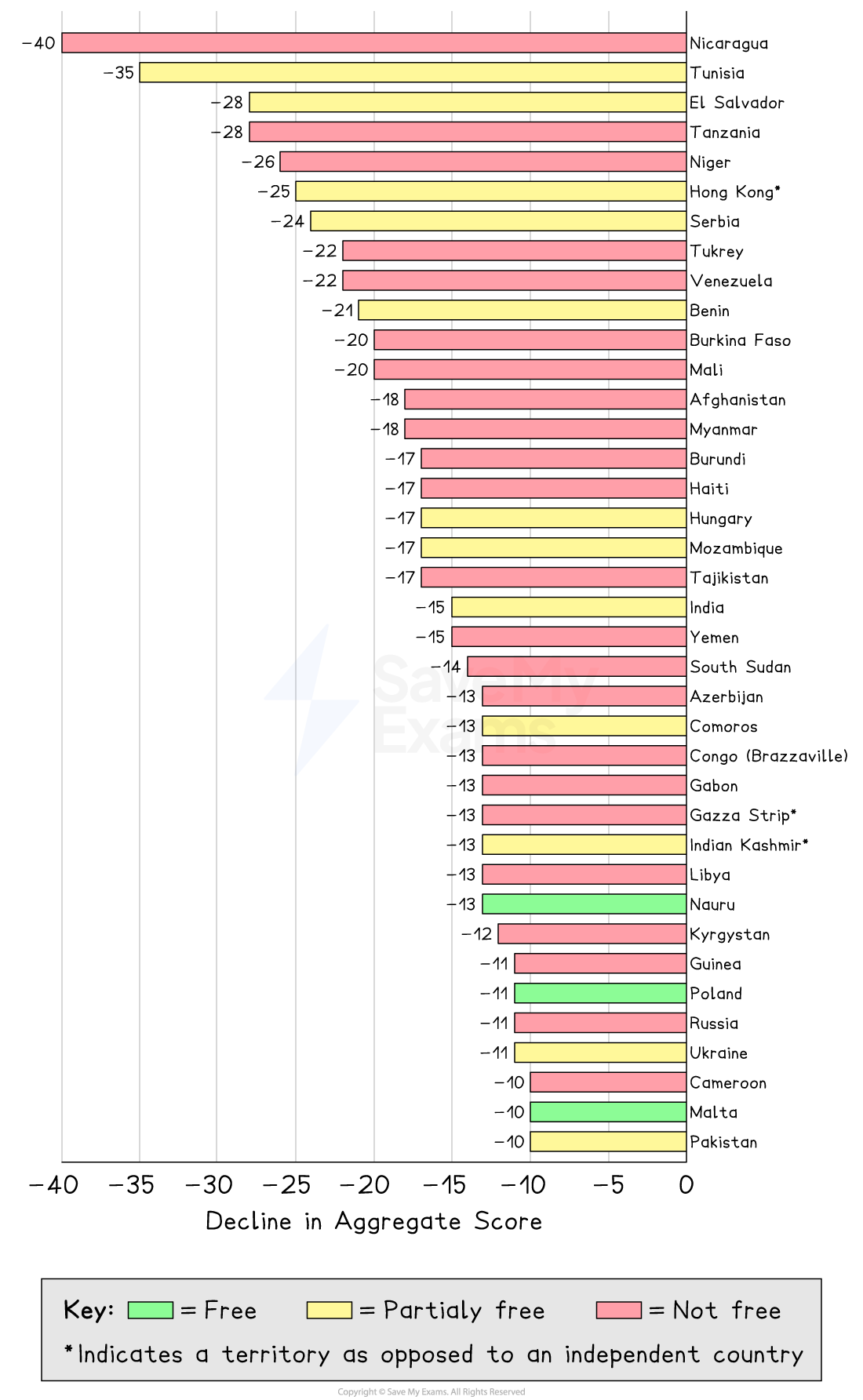
According to the NGO Freedom House, a global crisis can be seen in terms of states limiting rights and justice
Scores are based on political and civil rights
Countries experiencing significant decline in freedom since 2015
Case Study
Declining political rights in Nicaragua
Nicaragua is formally a democratic state, but in recent years it has been criticised for significantly limiting political rights and freedoms
This reflects wider global concerns about declining rights highlighted by organisations such as Freedom House
Restrictions on political rights
Under President Daniel Ortega, the government has restricted key freedoms, including freedom of expression, belief and political participation
Opposition figures have been arrested, independent media has been shut down and protests have been heavily controlled
Elections in Nicaragua have been widely criticised as unfair, with opposition candidates detained or prevented from running
Citizens’ ability to take part in government and choose leaders freely has been restricted
Freedom House assessment
Freedom House has classified Nicaragua as “not free”, citing major declines in both political rights and civil liberties

Unlock more, it's free!
Join the 100,000+ Students that ❤️ Save My Exams
the (exam) results speak for themselves:

Was this revision note helpful?
