Universal Declaration of Human Rights (UDHR) (DP IB Global Politics: HL): Revision Note

Origins of the UDHR
The UDHR is the most globally-recognised document outlining human rights
It combines global concepts of human rights into one document, although some claim it is Eurocentric
It was formed in the aftermath of World War II as part of a global desire to prevent further conflict
World War II impacted the lives of millions of people
Over 25 million combatants were killed in battle globally
Over 6 million non-combatants were killed for who they were by Nazi Germany
The vast majority were Jewish, but other groups were also targeted
Roma
People with disabilities
Political opponents
LGBTQ+
People of colour
Many other vulnerable and marginalised people
Japan was responsible for the deaths of millions of non-combatants in China, Indonesia, Philippines, India and Sri Lanka
In addition, millions of people became refugees once the war had ended
The United Nations General Assembly made the decision to construct a formal declaration to protect human rights that all actors would respect
It was thought that a common agreement or global norms regarding human rights would help to ensure a better quality of life for all people and lessen the chance of future conflict
The Human Rights Commission was formed to decide what those rights would be
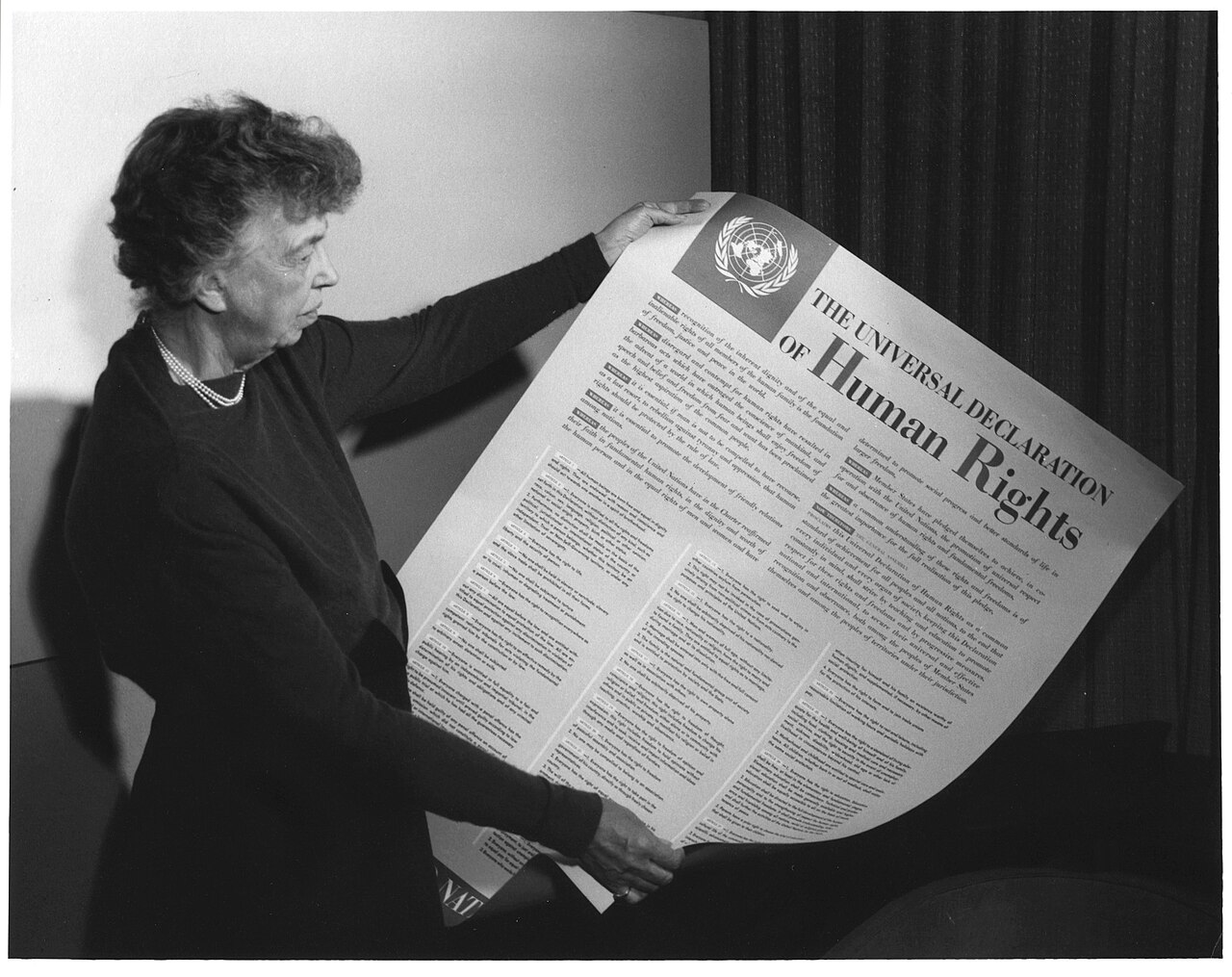
It was led by human rights activist Eleanor Roosevelt (USA)
To ensure diversity of opinion non-Western participants included Peng-chun Chang (China) and Charles Habib Malik (Lebanon)
The Universal Declaration of Human Rights was adopted in 1948 and immediately adopted by most member states
It is considered a non-binding international law
Eight states abstained, highlighting that it was not universally accepted from the outset
Saudi Arabia objected on religious grounds, arguing that articles on marriage and freedom of religion conflicted with Islamic law
South Africa refused to support the declaration because its apartheid system of racial segregation directly contradicted the UDHR's commitment to equality
The Soviet bloc (USSR, Ukraine, Byelorussia, Yugoslavia, Poland and Czechoslovakia) argued that the UDHR placed too much emphasis on individual civil and political rights and not enough on collective economic and social rights
The UDHR and the Charter of the UN
The Charter of the United Nations is the founding document of the UN
It clarifies that the main purpose of the UN is to prevent conflict and maintain peace
The Universal Declaration of Human Rights (UDHR) is a document which puts the ideals of the charter into practice
It lists thirty human rights in a clear and concise document that the UN believes will help achieve its goals
UDHR human rights
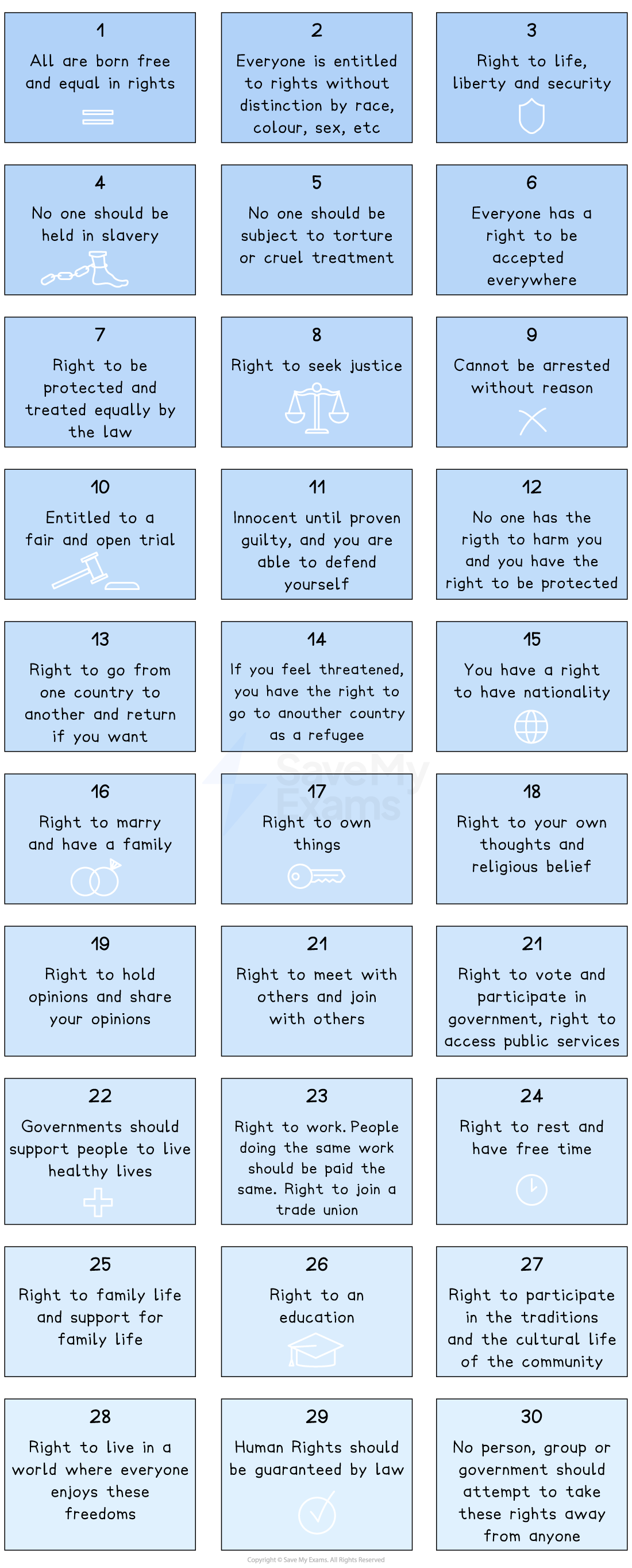
The UDHR is an aspirational document
It is understood that there will never be a day where human rights are enjoyed by all people on earth, but it is essential to always be working toward this ideal
It established new global norms for human rights
States that want to enjoy the benefits of joining the United Nations must also accept the responsibilities outlined in the UDHR

Unlock more, it's free!
Join the 100,000+ Students that ❤️ Save My Exams
the (exam) results speak for themselves:

Was this revision note helpful?