Civil Society (DP IB Global Politics: HL): Revision Note

Jane Hirons

Written by: Jane Hirons

Reviewed by: Steve Vorster

Updated on

Humanitarian foundations

  • Humanitarian means acting in a way that saves lives and protects the dignity of people

  • Foundations are non-profit organisations

  • Humanitarian foundations can be found at all levels of global politics. 

    • On the local level they may serve those in need by operating food kitchens or shelters

    • On the regional level they may provide essential services in times of crisis such as earthquakes or conflict

    • On the global level they may also respond to crisis and work on long-term sustainable development strategies

  • All humanitarian foundations rely on the permission of the state to operate

  • Most regional and global humanitarian organisations work closely with IGOs, in particular the United Nations

  • NGOs are often humanitarian organisations

Examples of global humanitarian foundations

Foundation

Activities

The Red Cross/Red Crescent

  • Provides emergency humanitarian aid in conflict and disaster zones, including medical care, food and shelter

  • Promotes international humanitarian law and protects victims of war

Médecins Sans Frontières

  • Provides emergency medical care to people affected by conflict, disease outbreaks and natural disasters, regardless of race, religion or political affiliation

  • Operates independently of governments and armed groups, allowing it to work in some of the most dangerous and difficult-to-reach areas in the world

Refugees International

  • Advocates for the protection and support of displaced people around the world

  • Investigates crises and pressures governments and organisations to improve refugee policies and humanitarian responses

Strengths and limitations

Strengths of humanitarian organisations

Limitations of humanitarian organisations

  • They directly help people who are suffering

  • They must respect state sovereignty and can only operate if the state allows them

  • They can support states dealing with crises or natural disasters

  • Non-state actors, such as violent resistance groups, can disrupt their work

  • They are apolitical and aim to help anyone in need without taking sides

  • They rely on funding from governments and donations, which can fluctuate

  • They have extensive experience and can respond quickly

  • They may be targeted by violence in conflict zones, limiting their ability to operate

Case Study

Limitations of humanitarian organisations in Yemen

Background

The Yemen civil war, which began in 2014, has created a severe humanitarian crisis. Humanitarian organisations have faced major limits in their ability to help those in need
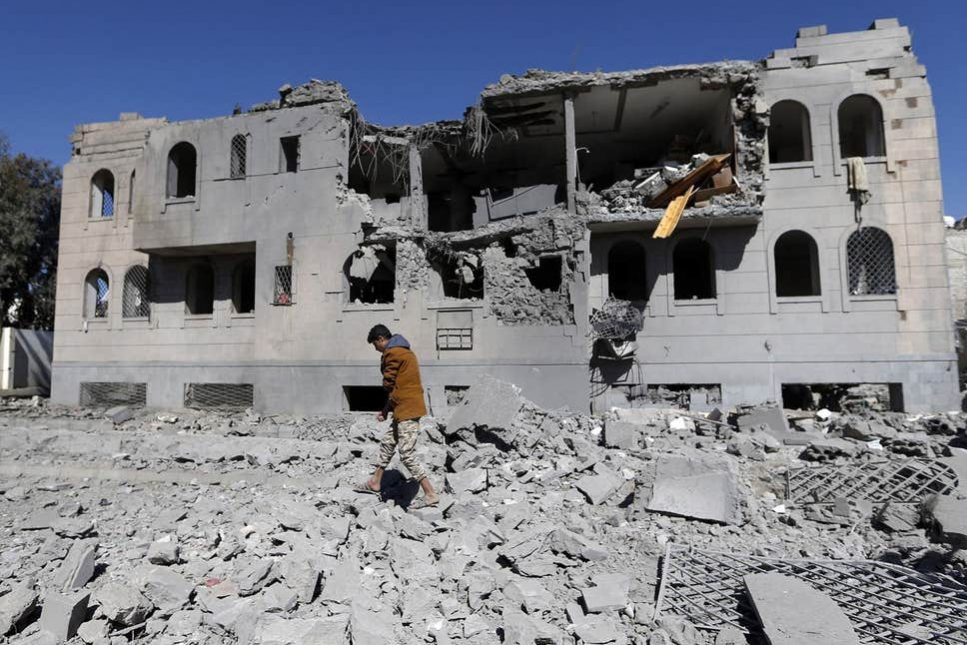
Man walking on debris in front of a heavily damaged building with partially collapsed walls and broken windows, under a clear blue sky.

Humanitarian response

  • Organisations such as the Red Cross and WHO have provided food, medical care and emergency aid

Limitations

  • However, their work has been restricted because they must respect state sovereignty, meaning access is often controlled by governments or local authorities

  • Their operations have also been disrupted by armed groups, which have blocked aid and created dangerous conditions

    • Humanitarian workers have also been targets of violence, forcing some organisations to reduce or stop their work

  • In addition, limited and inconsistent funding has reduced the amount of aid available

Unlock more, it's free!

Join the 100,000+ Students that ❤️ Save My Exams

the (exam) results speak for themselves:

Jane Hirons

Author: Jane Hirons

Expertise: Content Writer

Jane has been actively involved in all levels of educational endeavors including designing curriculum, teaching and assessment. She has extensive experience as an international classroom teacher and understands the challenges students face when it comes to revision.

Steve Vorster

Reviewer: Steve Vorster

Expertise: Economics & Business Subject Lead

Steve has taught A Level, GCSE, IGCSE Business and Economics - as well as IBDP Economics and Business Management. He is an IBDP Examiner and IGCSE textbook author. His students regularly achieve 90-100% in their final exams. Steve has been the Assistant Head of Sixth Form for a school in Devon, and Head of Economics at the world's largest International school in Singapore. He loves to create resources which speed up student learning and are easily accessible by all.