International Court of Justice (ICJ) (DP IB Global Politics: HL): Revision Note

Origins and purpose of the ICJ
The ICJ is an international court located in The Hague, Netherlands
It is the principal judicial organ of the UN
It is sometimes referred to by the building's old name, the Peace Palace, a building once used by the League of Nations
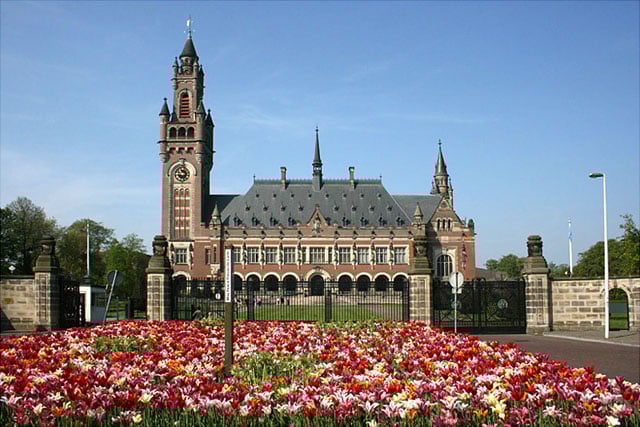
The ICJ was established in 1945 as part of the UN Charter (Article 92)
Its purpose is to resolve disputes between states through:
Negotiation | Mediation | Conciliation |
|---|---|---|
|
|
|
Although cases brought to the ICJ are not always focused specifically on human rights, the ICJ rules on whether states' actions violate international human rights laws
Interactions with state actors and the ICJ
The ICJ is designed to work with state actors to resolve disputes
It respects state sovereignty and cannot force a state into its court
It has the authority to criticise the actions of states deemed to be breaking international law
The ICJ has 15 judges each serving nine-year terms
Judges are elected by the UN General Assembly and Security Council
They come from all over the world with no duplication (member states of the UN) to ensure fairness and diversity
Court cases heard by the ICJ are between state actors only
States must have accepted a declaration recognising the ICJ’s authority
For a case to be brought to the ICJ, both states must give their consent
Case Study
Nicaragua v Colombia (ICJ Maritime Dispute)
This case, between Nicaragua and Colombia, ran from 2013 to 2022, with earlier rulings linked to a longer dispute over maritime boundaries
Both states accepted the ICJ’s authority, allowing the case to be heard
Reason for the case
The dispute centred on sovereignty over parts of the Caribbean Sea, including control of fishing areas and potential oil resources
Nicaragua argued that Colombia was unlawfully claiming resources within its maritime territory
Role and decision of the ICJ
The ICJ examined the legal arguments
It ruled that Colombia had violated Nicaragua’s maritime rights and ordered it to stop claiming ownership of fishing and oil resources in Nicaragua’s waters
Significance
This example highlights that the ICJ only hears cases between state actors and depends on state consent to operate
It can clarify and uphold international law, even though enforcement relies on states themselves
Strengths and limitations of the ICJ
The ICJ has had successes resolving disputes between states
The court is often called upon to condemn the actions of states breaking international law
State sovereignty is one of the biggest limitations of the ICJ
Strengths | Limitations |
|---|---|
|
|
Case Study
The ICJ's response to Israel’s actions in Gaza
The International Court of Justice (ICJ) has assessed Israel’s actions in Gaza, focusing on international law and allegations of genocide. The case began in 2023 and is ongoing (as of 2026). South Africa is bringing the case, with Israel as the responding state
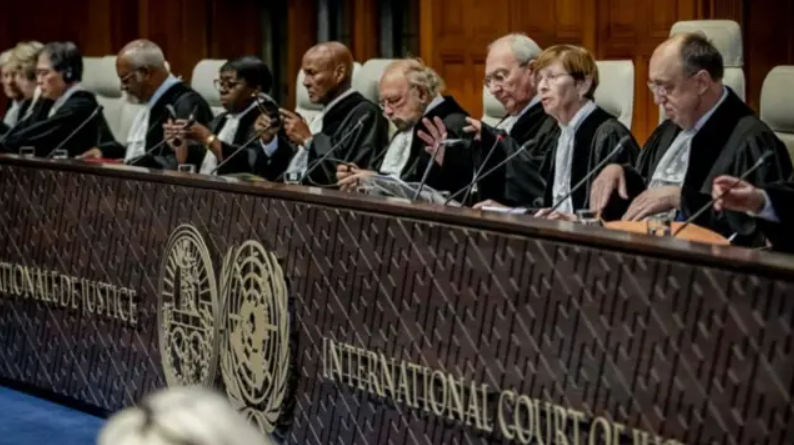
Reason for the case
The case was brought under the Genocide Convention, which allows disputes to go to the ICJ
South Africa argued that Israel had violated the Genocide Convention through its military actions in Gaza, highlighting harm to civilians and severe humanitarian conditions
Provisional decision and measures
In 2024, the ICJ ordered Israel to:
take steps to prevent possible acts of genocide
allow more humanitarian aid into Gaza
prevent incitement to genocide
It did not order a ceasefire but stressed the seriousness of the situation
Significance
This example shows that:
the ICJ can hold states accountable under international law
it relies on international agreements and state cooperation
enforcement depends on global pressure, not direct power

Unlock more, it's free!
Join the 100,000+ Students that ❤️ Save My Exams
the (exam) results speak for themselves:

Was this revision note helpful?