Private Companies (DP IB Global Politics: HL): Revision Note

Interactions with state actors
Private companies are owned by individuals or groups of investors
In our globalised world, private companies have become increasingly important actors, as some have immense wealth and power
Private companies are found at all levels of global politics
Smaller companies may operate locally in a community, town or city within a state
Larger companies may operate in many locations across the state
Multinationals or transnational companies (TNCs) start off in one state but expand to one or more other states
No matter the size of the company, all have interactions with state actors
The larger the company, the more power and influence it may have when dealing with state actors
Level of company operations | How they may interact with state actors |
|---|---|
Local |
|
National |
|
International |
|
Case Study
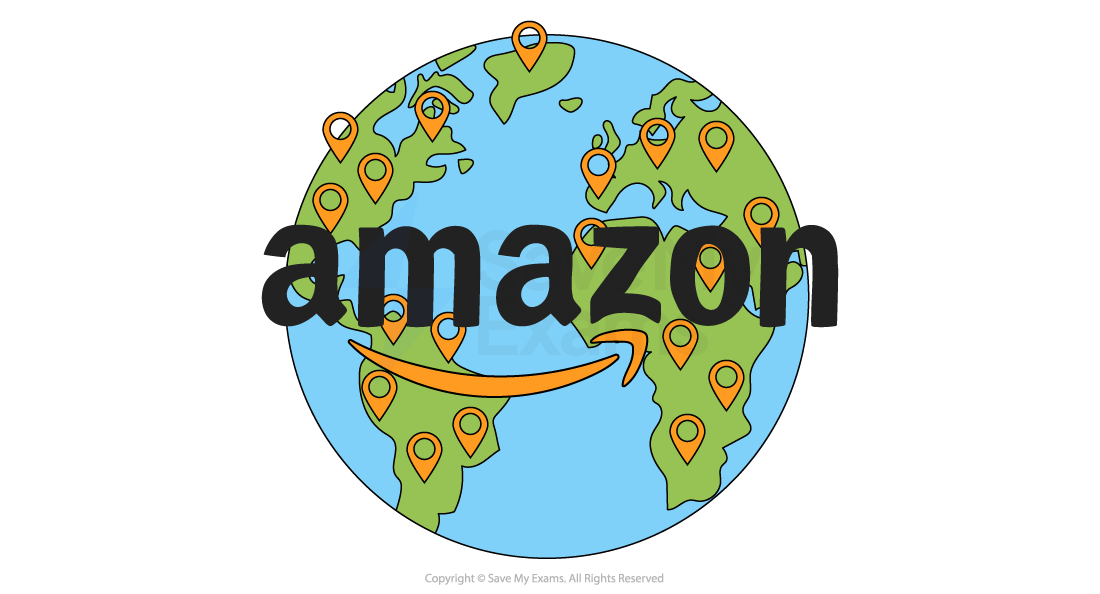
Amazon’s interaction with state actors
Amazon, a major multinational company founded in the United States, operates globally
It interacts with state actors at local, national and international levels
Its size and economic power give it significant influence in these interactions
Local-level interactions
Amazon must comply with government regulations to operate warehouses and delivery centres
This includes obtaining permits, paying local taxes and following rules on worker safety and wages
Local authorities also monitor working conditions and environmental impact
National-level interactions
Amazon is subject to tax laws and employment regulations set by governments
However, due to its economic importance, governments may offer financial incentives, such as tax breaks, to encourage investment and job creation
Amazon also engages in lobbying, attempting to influence government policies in areas such as taxation and digital regulation
International-level interactions
As a transnational corporation (TNC), Amazon operates in many countries and interacts with multiple governments
In some less economically developed countries, it can offer employment and economic growth, which may lead governments to provide favourable conditions
This can challenge state sovereignty, as governments may feel pressured to prioritise economic benefits over strict regulation
Impact on workers
How workers are treated has a huge impact on their daily lives
The goal of every company is to make money - this is sometimes at odds with ensuring the human rights of workers
Private companies are expected to obey the laws surrounding working conditions, many of which are related to human rights, including:
freedom from discrimination
personal security
the right to rest and leisure
the right to a fair wage
the right to an adequate standard of living
The laws of every state are different, but if workers' human rights are not respected, they may seek justice through government agencies or by forming or joining trade unions
Marxists are very concerned with imbalances of power between companies and workers, which they argue almost always lead to worker exploitation

Unlock more, it's free!
Join the 100,000+ Students that ❤️ Save My Exams
the (exam) results speak for themselves:

Was this revision note helpful?
