UN High Commissioner for Refugees (UNHCR) (DP IB Global Politics: HL): Revision Note

Purpose, function and structure of the UNHCR
A refugee is a person forced to leave their country because of war, persecution or natural disaster
The UNHCR is an UN agency established in 1950 to address the problem of the millions of people left homeless at the end of World War 2
It is led by a High Commissioner, appointed by the UN General Assembly, which oversees its global work
It has a headquarters in Geneva, supported by regional and country offices worldwide, and works with UN bodies, governments and NGOs
The Refugee Convention is an international law that has been ratified by 146 member states and aims to help:
refugees
people forcibly displaced within states
people denied a nationality and therefore stateless
Migrants
One of the UNHCR's most visible responsibilities is setting up and operating refugee camps in times of crisis
Neighbouring states often see thousands of people crossing over their borders
They appeal for help from the UNCHR to provide:
shelter, food and sanitation
education for children
financial support to the host country
health and psychological support
The UNHCR, human rights laws and treaties
Human rights laws and treaties are established by global governance institutions and are considered international laws
States are encouraged to agree to and ratify human rights laws and treaties but because of sovereignty, they have the right not to do so
The 1951 Refugee Convention
This law was created in 1951 to protect European refugees displaced by World War II, updated in 1967 to cover all refugees globally
It continues to have enormous importance in contemporary politics
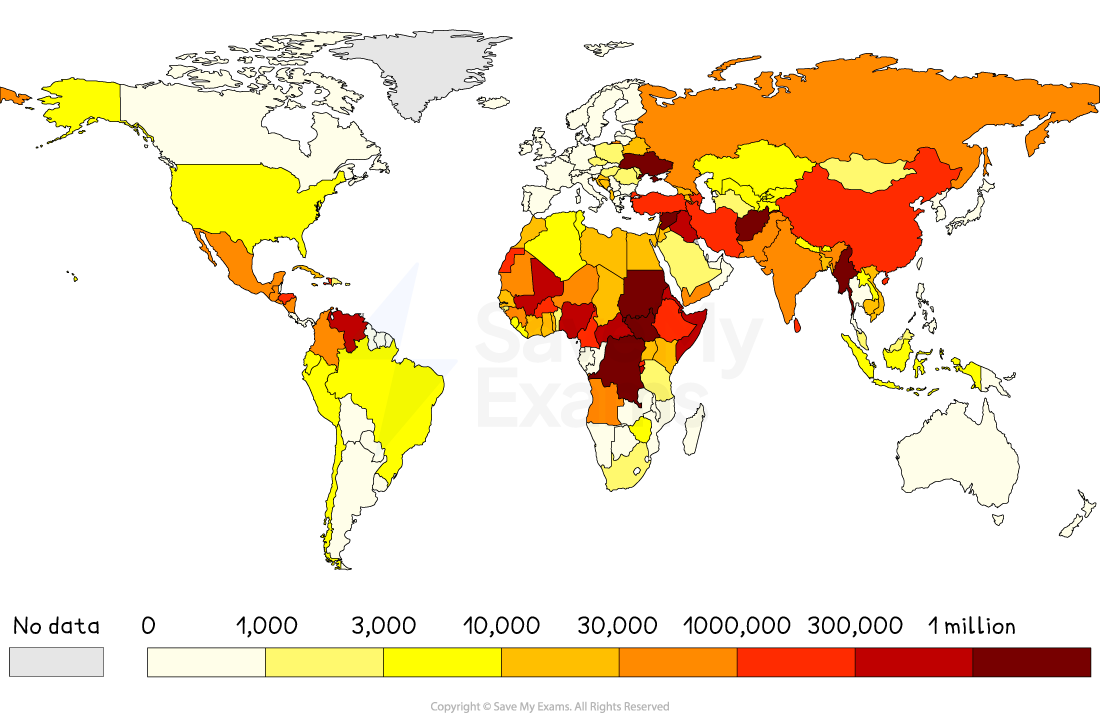
The number of refugees globally has been steadily increasing over recent decades, largely fleeing areas of conflict
Refugees by country of origin, 2024
The Convention's core principle states that a refugee should not be returned to a country where they face serious threats to their life or freedom
It includes basic minimum standards for the treatment of refugees, including housing, work and education
It also defines a refugee’s obligations to host countries and specifies certain categories of people, such as war criminals, who do not qualify for refugee status
States that ratify this law are obliged to support refugees in any way they can
Strengths and limitations of the UNHCR
Strengths of the UNHCR | Limitations of the UNHCR |
|---|---|
|
|

Unlock more, it's free!
Join the 100,000+ Students that ❤️ Save My Exams
the (exam) results speak for themselves:

Was this revision note helpful?
