UN Human Rights Council (UNHRC) (DP IB Global Politics: HL): Revision Note

Purpose, function and structure of the UNHRC
The UN Human Rights Council (UNHRC) was established in 2006 to strengthen the promotion of human rights globally
It is located in Geneva, Switzerland
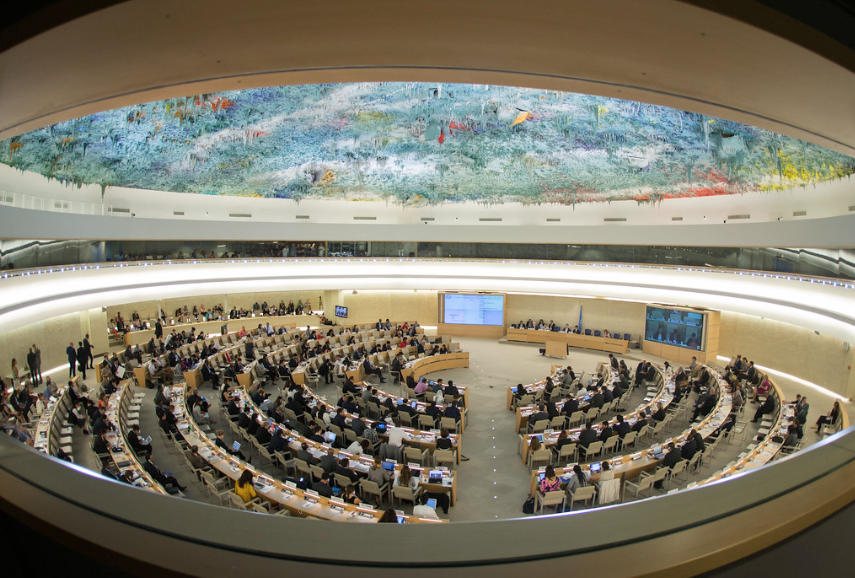
The purpose of the UNHRC is to ensure that people are aware of human rights globally and to investigate and report on human rights concerns
Its main areas of interest include:
Promoting and reviewing political rights and democracy
Promoting basic but sustainable standards of living
Promoting equality and non-discrimination
Investigating justice and rule of law
Promoting peace and security through human rights
The UNHRC is made up of 47 members, each from different states
13 from Africa
13 from Asia Pacific
8 from Latin America and the Caribbean
6 from Eastern Europe
7 Western Europe and others
Its structure counters criticism that powerful states dominate in the UN (e.g. the permanent five members of the Security Council) and it attempts to empower specific regions over Western states
Human rights laws and treaties and the UNHRC
Human rights laws and treaties are international agreements regarding human rights which are intended to be legally binding
The UNHRC and other UN bodies monitor the status of these human rights laws and treaties
Significant human rights laws and treaties | |||
|---|---|---|---|
Convention on the Elimination of all forms of racial discrimination (ICERD) | International Covenant on Civil and Political Rights (ICCPR) | International Covenant on Economic, Social and Cultural Rights (ICESCR) | Convention on the Elimination of all forms of Discrimination Against Women (CEDAW) |
Convention against Torture and other Cruel, Inhumane or Degrading Treatment (UNCAT) | Convention on the Rights of the Child (CRC) | Convention on the Protection of Rights of Migrant Workers and Members of Their Families (CMW) | UN Declaration on the Rights of Indigenous Peoples (UNDRIP) |
Although member states of the United Nations are strongly encouraged to ratify these human rights laws and treaties, not all do
If they do not, the UNHRC may continue to try to persuade them
Sovereignty is often an obstacle to the enforcement of human rights laws and treaties
Strengths and limitations of the UNHRC
The UNHRC has had some success, but its impact since its creation in 2006 is debatable
Strengths of the UNHRC
It conducts human rights reviews of all 193 member states every 4 years, and uses findings to open discussions with states
It has conducted in-depth investigations to document human rights abuses in more than 80 states and shared them with the global community
It prioritises vulnerable groups, including:
women
indigenous people
children
people with disabilities
It has provide a rapid response to human rights crises, including those in
Gaza
Central African Republic
Limitations of the UNHRC
It is increasingly difficult to enforce human rights norms as states prioritise their own interests and sovereignty
Some member states participating in the UNHRC are not actually protecting human rights, delegitimising its mission
It is underfunded
Member states within the UNHRC are not always in agreement
It has been accused of focusing on just a few countries and ignoring others, as some members are seen to protect their allies
Case Study
Criticism of the UNHRC’s response to China's treatment of Uyghur Muslims
The UN Human Rights Council (UNHRC) has been criticised for its limited response to alleged human rights abuses against Uyghur Muslims in Xinjiang, China
Reports from NGOs and journalists have claimed that China has detained large numbers of Uyghurs in re-education camps, raising concerns about forced labour, surveillance and cultural repression
UNHRC involvement
The UNHRC discussed the issue and reviewed evidence of abuses
Its report in 2022 found possible crimes against humanity
The Council attempted to hold debates on the situation
Limitations
A proposal to formally debate China’s actions was rejected by member states
Some countries voted against action to protect China, showing political bias
The UNHRC was unable to enforce change or compel cooperation
States prioritised political alliances and economic interests over human rights
Summary
The Xinjiang case demonstrates that the UNHRC’s effectiveness is often constrained by politics, reducing its ability to consistently protect human rights worldwide

Unlock more, it's free!
Join the 100,000+ Students that ❤️ Save My Exams
the (exam) results speak for themselves:

Was this revision note helpful?
