Unions (DP IB Global Politics: HL): Revision Note

Interactions with private companies and state actors
Trade unions are organisations formed by workers to advocate for better working conditions
The interactions of private companies, governments and unions vary from cooperative to antagonistic
Governments, companies and unions are interconnected
Some governments tolerate or even welcome unions as a way to ensure companies are protecting their workers
Some governments that strongly support companies and/or don’t allow freedom of expression discourage or ban unions
Some companies accept unions and work with them, but many see them as a challenge to their authority and power
Unions prioritise workers and actively negotiate for workers’ rights
If negotiations are unsuccessful, unions may encourage workers to stop working as a group (strike), causing great disruption to the company and sometimes daily life until they agree on a way forward
Strikes can cause hostility between companies and workers because they disrupt production
Strikes can also frustrate government and the public if essential service workers strike (e.g. healthcare, education or public transport)
Case Study
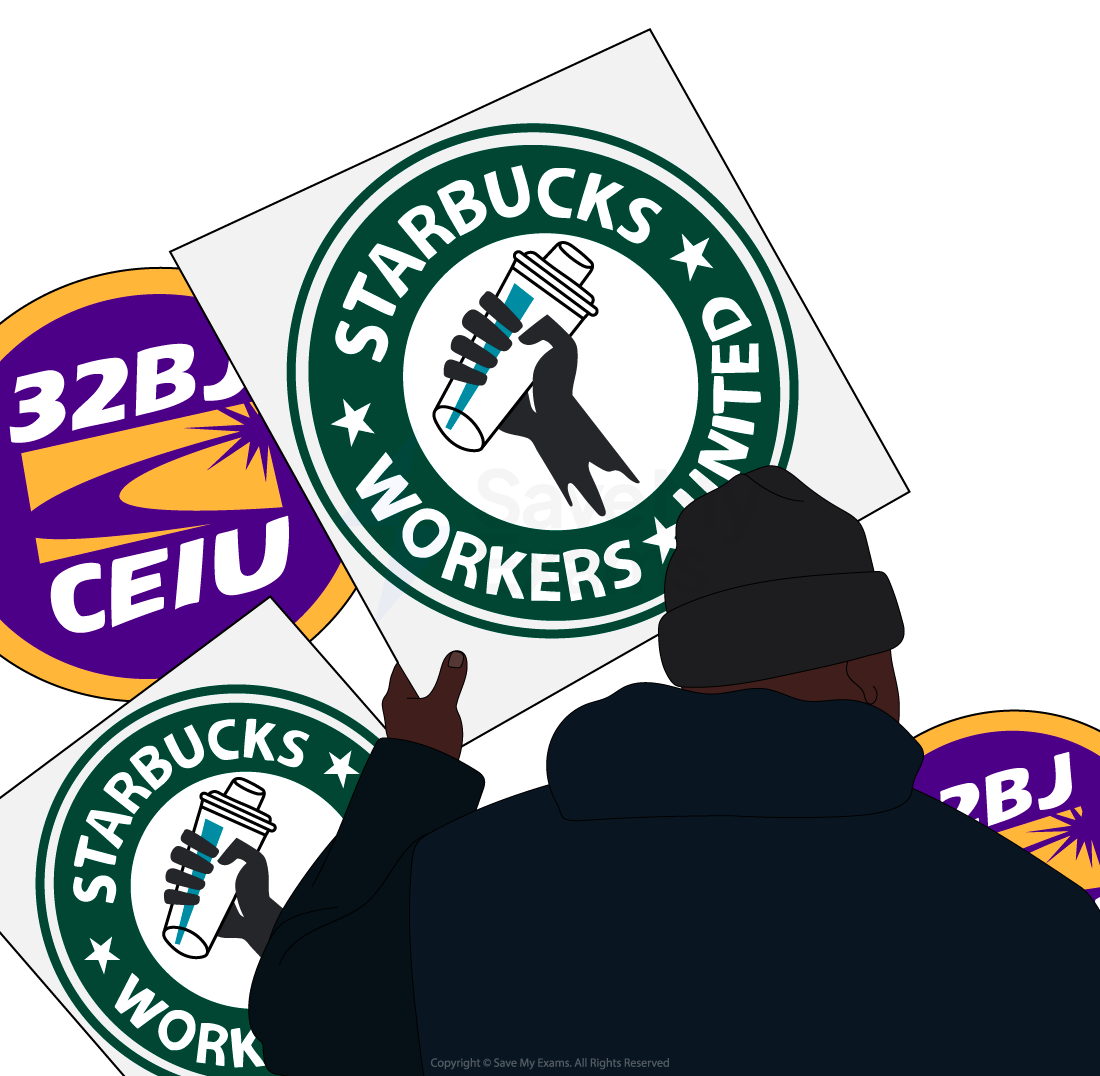
Starbucks unionisation disputes in the United States
Labour disputes at Starbucks in the United States since 2021 show how trade unions, companies and governments interact, often in conflict
Workers across many stores have attempted to unionise to improve working conditions
Role of trade unions
Employees formed and joined Starbucks Workers United to push for better pay, working conditions and job security
When negotiations stalled, workers organised strikes and walkouts to pressure the company
Role of companies
Starbucks has often opposed unionisation, arguing it prefers direct relationships with employees
The company has been accused of closing unionised stores and resisting negotiations, seeing unions as a challenge to their authority
Role of government
The US government, through the National Labor Relations Board (NLRB), has overseen union elections and investigated complaints
It has ruled in some cases that Starbucks violated labour laws, highlighting the government’s regulatory role
Impact of conflict
Strikes and disputes have caused temporary store closures and service disruption, affecting customers and increasing tensions between workers and management. This has also drawn public attention to workers’ rights
Impact on workers
The right to join a union is one of the rights found in the Universal Declaration of Human Rights (UDHR)
Unions represent workers and are usually organised by workers
Workers who satisfied with their conditions may not see a need for unions
Unions are democratic in nature
They operate on the principle that if people unite as a collective, they have a much better chance of improving workers’ rights and working conditions than if they try as individuals
Unions advocate for conditions such as:
higher wages
health and safety conditions
benefits such as medical or dental
job security
The impact of unions on workers is generally seen to be positive - workers are considered to be empowered as members
Unions are linked with higher wages and lower income inequality, improving income gaps experienced by marginalised workers because of gender and race
Unionised workers have better access to health, sick leave and retirement benefits
Unions are often associated with political parties that align with the ideas of social democracy, socialism or communism
Although some workers may support these ideas, some are suspicious of unions if their own political views are more conservative or nationalist

Unlock more, it's free!
Join the 100,000+ Students that ❤️ Save My Exams
the (exam) results speak for themselves:

Was this revision note helpful?