External Actors & Stakeholders Threatening State Legitimacy (DP IB Global Politics: SL): Revision Note

External interference and state legitimacy
External actors can interfere with a state’s right to self-govern, limiting its ability to make independent decisions
This can reduce state legitimacy if citizens perceive that their government is controlled, influenced or unable to act in their interests
However, the extent to which legitimacy is affected varies depending on the nature of the interference and the strength of the state
External factors causing political, economic and social instability
In our increasingly globalised world, external actors can and do influence the political, economic and social stability of the state
Other states
State actors can contribute to political instability by interfering in another country’s political processes
One way this can happen is through disinformation campaigns on social media, which attempt to influence elections and public opinion
E.g. According to the US Federal Bureau of Investigation (FBI), Russia organised a social media disinformation campaign during the 2016 US presidential election
The campaign aimed to damage Hillary Clinton’s reputation and support Donald Trump, which led many people to question the legitimacy of the election result
This can undermine legitimacy if citizens believe elections or political outcomes are being manipulated by foreign powers
Transnational corporations (TNCs)
Transnational corporations are large companies that operate and manage production or services in several different countries
They can affect the economic and political stability of a state
On the positive side, they can create jobs, investment and economic growth, which may strengthen the legitimacy of governments
However, problems can occur if corporations break laws, damage the environment or use corruption, especially in weaker states
If governments fail to regulate TNCs effectively, they may be seen as weak or complicit, reducing public trust
Case Study
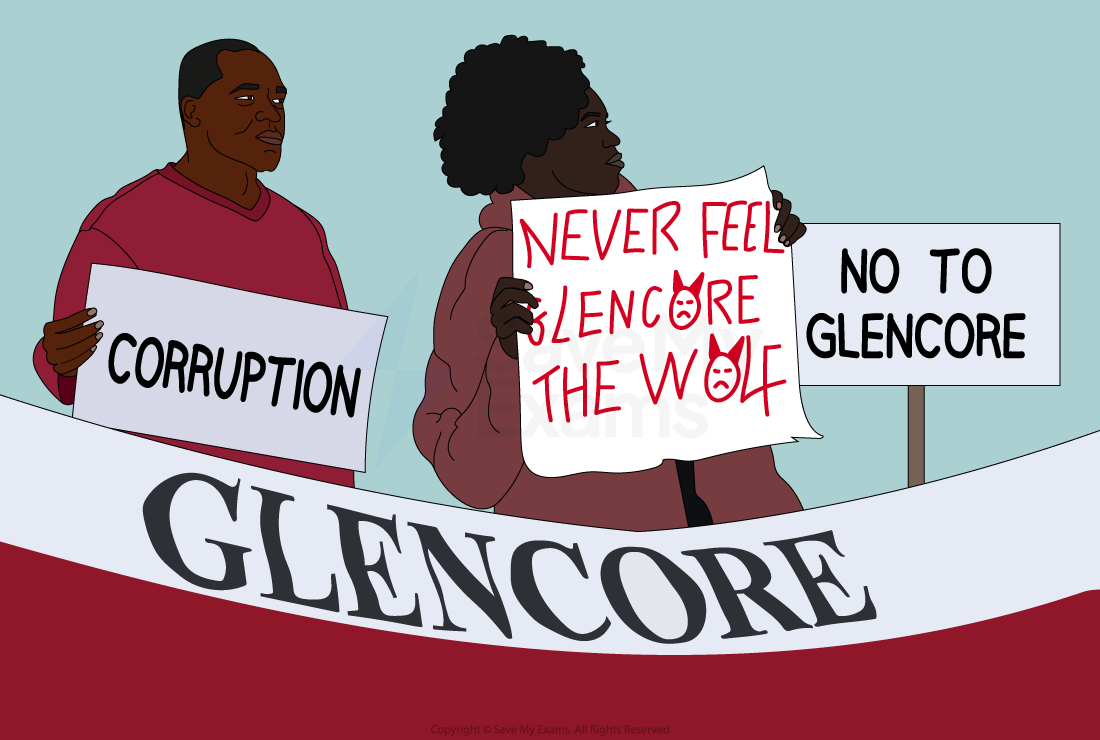
Glencore and governance in the Democratic Republic of the Congo
Background
Mining company Glencore, a large transnational corporation, has faced accusations of corruption, environmental damage and the use of child labour linked to its operations in the Democratic Republic of the Congo (DRC)
The DRC is a resource-rich but politically fragile state
Governance challenges
Weak state institutions make it difficult for the government to regulate powerful multinational companies
Allegations that mining companies have engaged in corruption or harmful practices have led to criticism of both the corporations and the government
Significance
These accusations have damaged public trust in the government
Some citizens believe the authorities have failed to properly regulate mining activities or protect local communities
Intergovernmental organisations (IGOs)
Joining an intergovernmental organisation can bring potential economic and political benefits, such as financial support, trade access or cooperation with other states
However, the rules and conditions imposed by these organisations may cause social or political unrest if citizens view them as unfair
E.g., during the Greek financial crisis (2008–2015), organisations including the European Union and the International Monetary Fund required Greece to introduce austerity measures in return for financial support
These policies led to large protests and social unrest, as many citizens believed the measures were harmful and illegitimate
This can weaken legitimacy if governments are perceived as implementing externally imposed policies rather than acting in the interests of their citizens
External actors using violence and force
Failure to maintain security can significantly reduce legitimacy, as the state is no longer seen as capable of protecting its population
The use of violence and force by external actors can be devastating for state legitimacy because it undermines the authority and capability of the state
External actors include
Other states
Violent non-state actors, such as resistance groups or drug traffickers
IGOs supporting humanitarian intervention
Individuals with links to terrorist groups
External actors using violence and force impact the social, political and economic stability of the state.
If the state government or agencies are unable to protect citizens from violence or force, there is a good chance that their approval of that government will reduce
Examiner Tips and Tricks
The impact of external interference on legitimacy varies: in strong states it may have limited effects, while in weaker states it can significantly undermine trust in government and political stability

Unlock more, it's free!
Join the 100,000+ Students that ❤️ Save My Exams
the (exam) results speak for themselves:

Was this revision note helpful?