Types of Power (DP IB Global Politics: SL): Revision Note

Introduction to power
Power is the ability to make others do what you want them to do or to bring about change
It is a key concept in global politics, at the heart of every political issue
Political theorist Steven Lukes described power as the capacity to bring about significant effects: to effect changes or prevent them
He also argued that power in the real world is multidimensional
Hard, soft and smart power are terms promoted by political theorist Joseph Nye to describe how this idea of three-dimensional power manifests in the real world
Hard power
Hard power is when an actor uses force or threats to get what they want or to bring about change
Force or threats can involve violence or the threat of violence but can also involve economic sanctions or threats to economic stability.
Hard power may be described as a stick-or-carrot approach
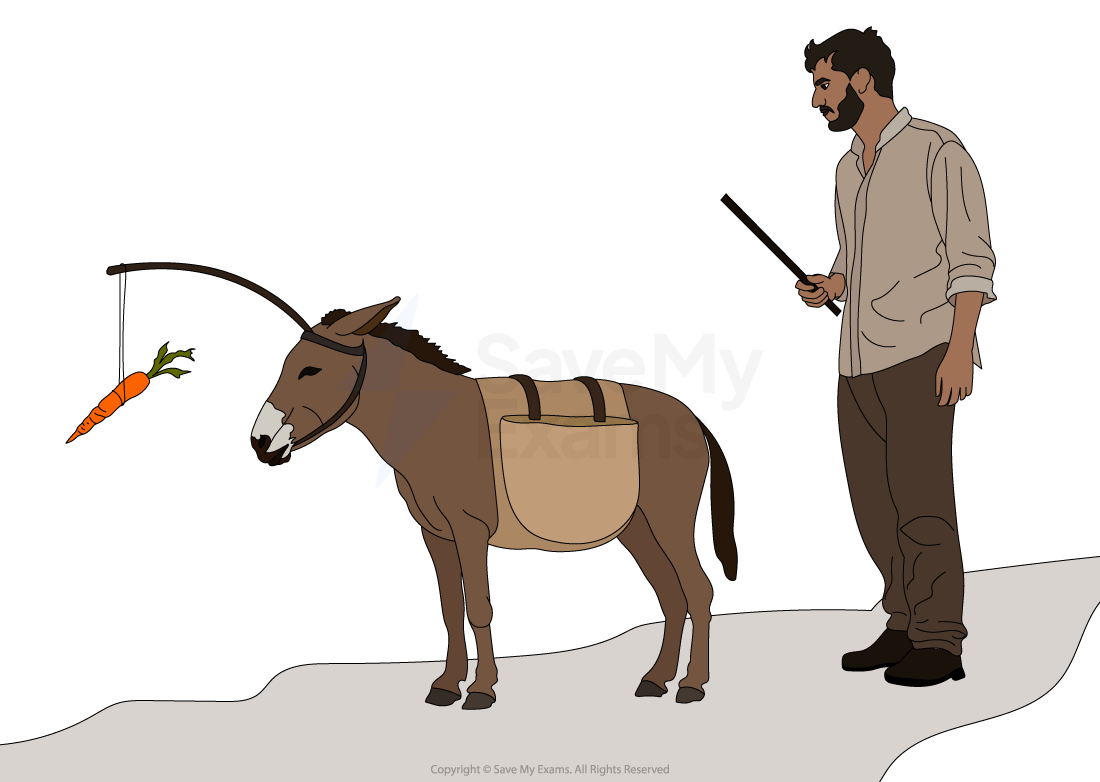
The cartoon illustrates hard power in the form of the stick which is used to beat the donkey to make it walk
The carrot can also be hard power; if the donkey is desperate or hungry enough, it will walk to get the carrot
Soft power
Soft power is the ability of a state to influence other countries through attraction, culture, values and diplomacy rather than military or economic force
There are other ways to get people to do what you want them to do, and not all involve violence or threats.
Many argue a more effective way is to convince or persuade people so they are convinced it's the right thing to do and less likely to resist
Soft power manifests in the real world in a variety of ways, including
Establishing norms and expectations
Reasoning and negotiation
Cultural power
Case Study
United States Soft Power
The United States is often seen as one of the most influential users of soft power. The US has been able to shape global attitudes and political debates through cultural influence, education and diplomacy
Culture
American films, music and television produced by companies such as Hollywood studios and Netflix are widely consumed around the world
This helps spread American ideas, values and lifestyles
Education
Many international students study at American universities, and exchange programmes allow people from other countries to experience US society and politics

Democracy
In addition, the US promotes values such as democracy, human rights and freedom of speech through international organisations and foreign policy
Smart power
Smart power is the effective combination of hard and soft power being used to bring about change
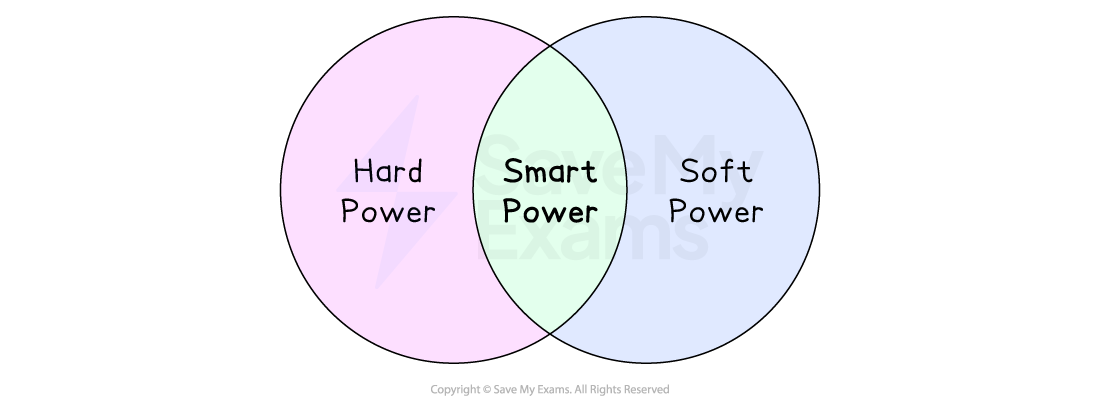
In global politics most political issues are approached using smart power tactics
Only using force and threats might get the desired results in the short term but can lead to long-term resentment and eventual retaliation
Using only soft power can be effective but will likely take longer to achieve results
Threatening and persuading might sound like an odd combination but can have longer-lasting results
Case Study
Smart Power: China’s Belt and Road Initiative (BRI)
China has used smart power through its Belt and Road Initiative (BRI), launched in 2013. The initiative aims to build infrastructure such as railways, ports, roads and energy networks across Asia, Africa and Europe
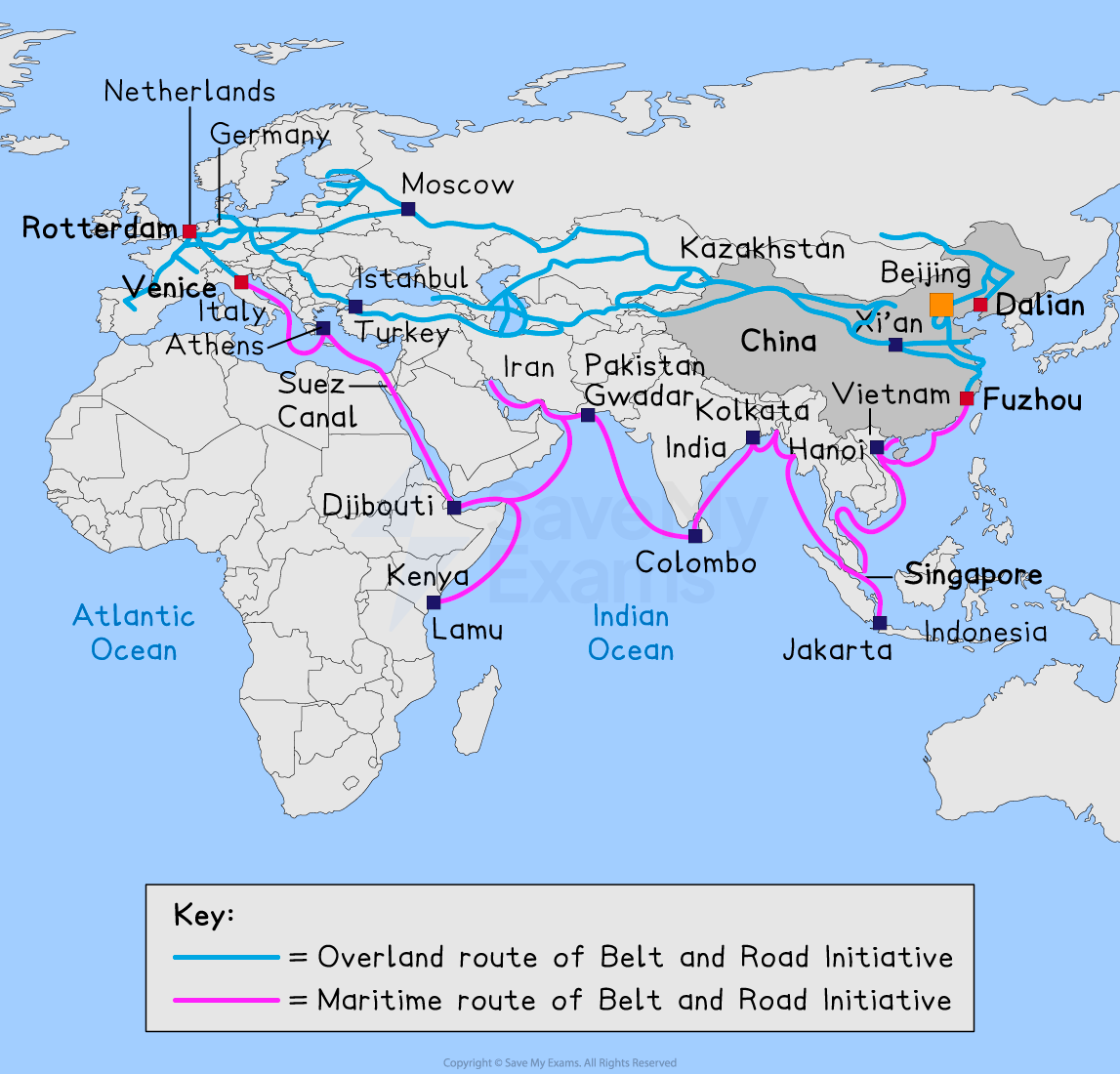
Smart power in action
China offers loans and investment to help less economically developed countries build infrastructure that they might otherwise struggle to afford
For many states, this financial support is attractive because it can help improve trade, transport and economic development
At the same time, China strengthens its influence through diplomatic and cultural ties with participating countries
This includes educational exchanges, cultural programmes and increased diplomatic cooperation
Outcome
By combining economic incentives with cultural and diplomatic engagement, China has expanded its international influence
The Belt and Road Initiative is therefore often described as an example of smart power, using both economic resources and soft power to build global partnerships

Unlock more, it's free!
Join the 100,000+ Students that ❤️ Save My Exams
the (exam) results speak for themselves:

Was this revision note helpful?