Sustainable Development (DP IB Global Politics: SL): Revision Note

Sustainable environmental development
Sustainable development involves using natural resources responsibly to improve people’s needs today without harming the ability of future generations to meet their own needs
Traditionally, states and companies prioritise economic development at the expense of the environment, resulting in:
the depletion of natural resources
toxic land, air and water adversely affecting the health of people
climate change
A greater awareness and concern for environmental development have resulted in many positive changes over the past several decades
Growth of renewable energy
Many states have increased the use of solar, wind and hydropower, reducing reliance on fossil fuels
International agreements
Global cooperation, such as the Paris Agreement (2015) aims to limit climate change by reducing emissions
Environmental regulations
Governments have introduced laws to reduce air and water pollution, such as emissions standards for vehicles and industries
Conservation efforts
Protected areas like national parks and wildlife reserves help preserve ecosystems and biodiversity
Many believe that global governance institutions such as the United Nations, World Bank and International Monetary Fund have a responsibility to provide guidance to the global community to address this global political issue
United Nations Sustainable Development Goals
The United Nations' Sustainable Development Goals include a call to action from the global community to promote areas that will support sustainable environmental development
Ecological goals
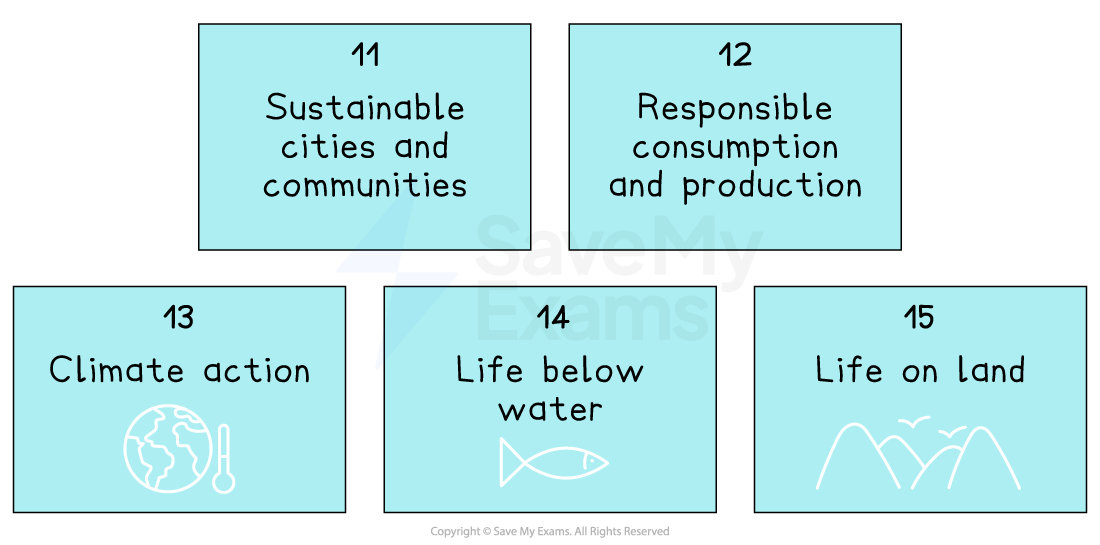
Goal 11 – Sustainable cities and communities
Aims to make cities safe, inclusive and environmentally sustainable, including better housing, transport and reduced pollution
Goal 12 – Responsible consumption and production
Focuses on reducing waste and ensuring resources are used efficiently and sustainably
Goal 13 – Climate action
Calls for urgent action to combat climate change and its impacts, including reducing greenhouse gas emissions
Goal 14 – Life below water
Aims to protect oceans and marine ecosystems, including reducing pollution and overfishing
Goal 15 – Life on land
Focuses on protecting forests, biodiversity and ecosystems, and preventing land degradation and species loss
Sustainable economic development
Sustainable economic development means achieving economic growth that increases wealth and power while meeting people’s needs today, and without harming the ability of future generations to meet their own needs
Improving the economy is the goal of most states
However, it requires careful planning and consideration so that future generations do not suffer
Many argue that we live in a world where past generations prioritised unsustainable economic growth and we are now facing the consequences, including:
depleted natural resources
environmental degradation
profits prioritised over the health and well-being of workers
wealth inequality
Sustainable economic development can support social, environmental and political development and provide the foundation for many positive changes
It enables states to generate the resources to build infrastructure, schools and hospitals which will benefit future generations
It can lead to an increase in jobs and thus reduce poverty
It enables states to invest in technology which can positively impact well-being and the environment
It can lead to social stability as more people enjoy a better quality of life
Sustainable social development
Sustainable social development means improving access to resources and opportunities for all members of society while meeting people’s needs today, and without harming the ability of future generations to meet their own needs
Key elements of sustainable social development include:
clean water
nutritious food
a sense of security
justice
free choices and opportunities
Many IGOs and NGOs argue that the key to sustainable social development lies in ensuring that women and girls have equal access to education, political participation and opportunities for employment
Sustainable social development can support economic, environmental and political development
United Nations Sustainable Development Goals
The United Nations Sustainable Development Goals include a call to action from the global community to promote areas that support social development
Social goals
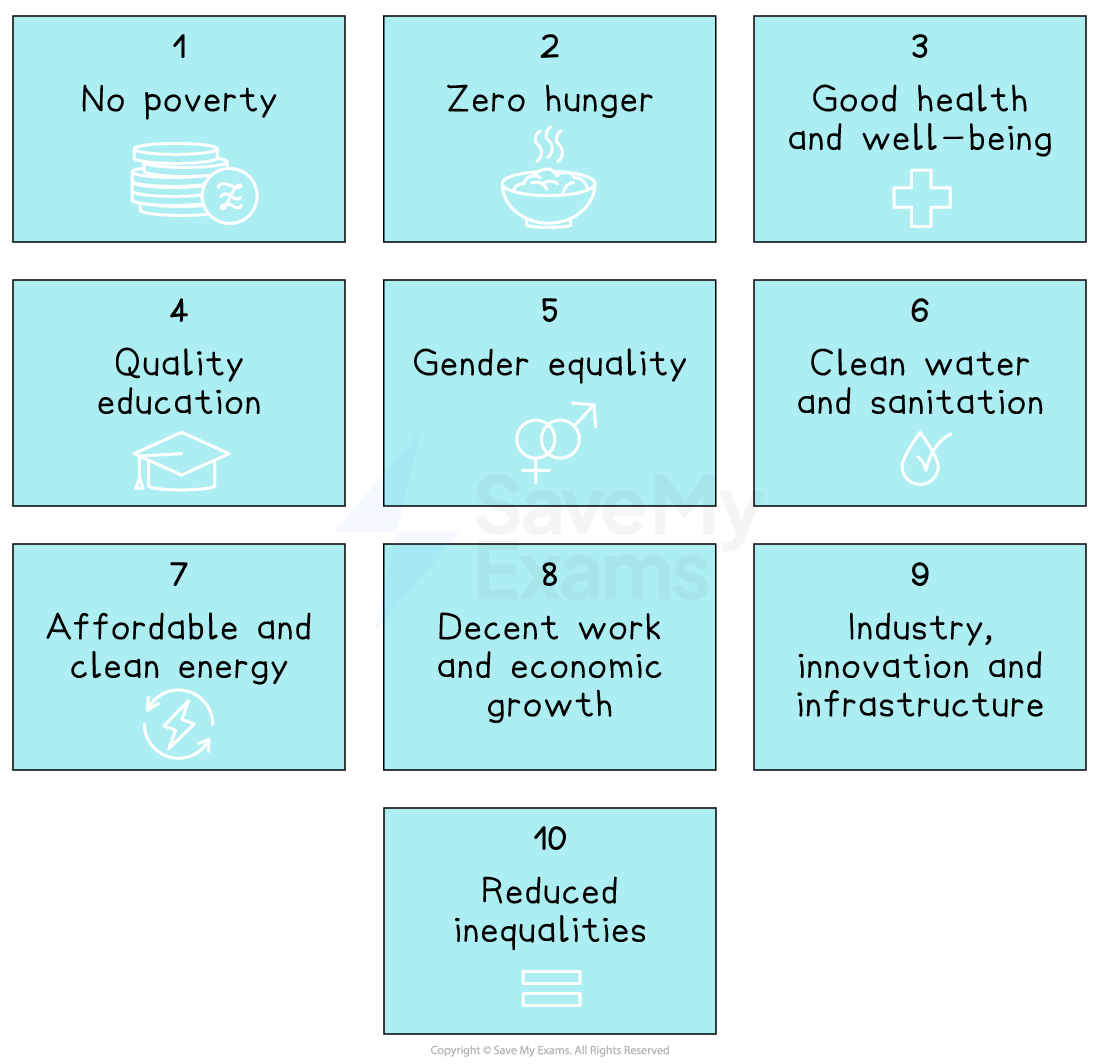
Goal 1 – No poverty
Aims to end extreme poverty and ensure all people have access to basic resources and support
Goal 2 – Zero hunger
Seeks to eliminate hunger and ensure access to safe, nutritious food for everyone
Goal 3 – Good health and wellbeing
Focuses on improving healthcare and life expectancy and reducing disease
Goal 4 – Quality education
Aims to provide inclusive and equitable education for all
Goal 5 – Gender equality
Seeks to achieve equal rights and opportunities for women and girls
Goal 6 – Clean water and sanitation
Ensures access to safe drinking water and proper sanitation
Goal 7 – Affordable and clean energy
Promotes access to reliable, sustainable and modern energy
Goal 8 – Decent work and economic growth
Encourages economic growth and fair employment opportunities
Goal 9 – Industry, innovation and infrastructure
Focuses on building resilient infrastructure and promoting innovation
Goal 10 – Reduced inequalities
Aims to reduce inequality within and between countries
Sustainable political and institutional development
Sustainable political development means improving the efficiency, honesty, and effectiveness of political institutions while meeting people’s needs today, without harming the ability of future generations to meet their own needs
If political parties, their leaders and/or the institutions they manage are corrupt or inefficient social, economic and environmental development will be negatively impacted
Case Study
IMF assessment of governance in Pakistan
In 2025, the government of Pakistan requested support from the International Monetary Fund (IMF) to assess and address ongoing political and institutional challenges
This example highlights how weak governance can limit sustainable development
Key findings
The IMF reported that Pakistan faces persistent corruption, enabled by weak government institutions
It also identified widespread money laundering, including links to criminal and terrorist organisations
The report noted that laws are often not enforced effectively, allowing powerful actors to act with impunity
In addition, state institutions were found to lack accountability, reducing public trust and effectiveness
Impact on development
These issues limit the state’s ability to manage resources effectively, reducing investment in infrastructure, healthcare and education
As a result, Pakistan struggles to achieve sustainable economic, social and political development
Government response
By approaching the IMF, Pakistan’s government signalled a willingness to address corruption and strengthen institutions
IMF support is often linked to reforms aimed at improving governance and accountability

Unlock more, it's free!
Join the 100,000+ Students that ❤️ Save My Exams
the (exam) results speak for themselves:

Was this revision note helpful?
