Poverty (DP IB Global Politics: SL): Revision Note

Access to resources
Poverty is often thought of as a lack of money or material goods
It can also include the inability to get the necessities needed to live
Relative poverty
Relative poverty is when people have less income and fewer resources compared to others in the same society, limiting their standard of living
Its measurement involves comparison and is dependent on context
According to the European Union, if household income is less than 50% of the state's national average, it is living in relative poverty
In daily life:
some struggle to buy groceries while others eat out at expensive restaurants
some lack homes and rely on shelters, while others may live in mansions
Marginalised and vulnerable people are more likely to suffer from relative poverty
It may appear that relative poverty is just a normal part of life
However, the injustice of relative poverty can cause social divisions that threaten social stability and sustainable development
Social movements and relative poverty
The Occupy Movement | Black Lives Matter |
|---|---|
|
|
Absolute poverty
Absolute poverty, also known as extreme poverty, is defined by the World Bank as anyone who lives on less than US$2.15 a day
Those in absolute poverty are unable to afford the most essential material goods needed to live, including food, clothing and shelter
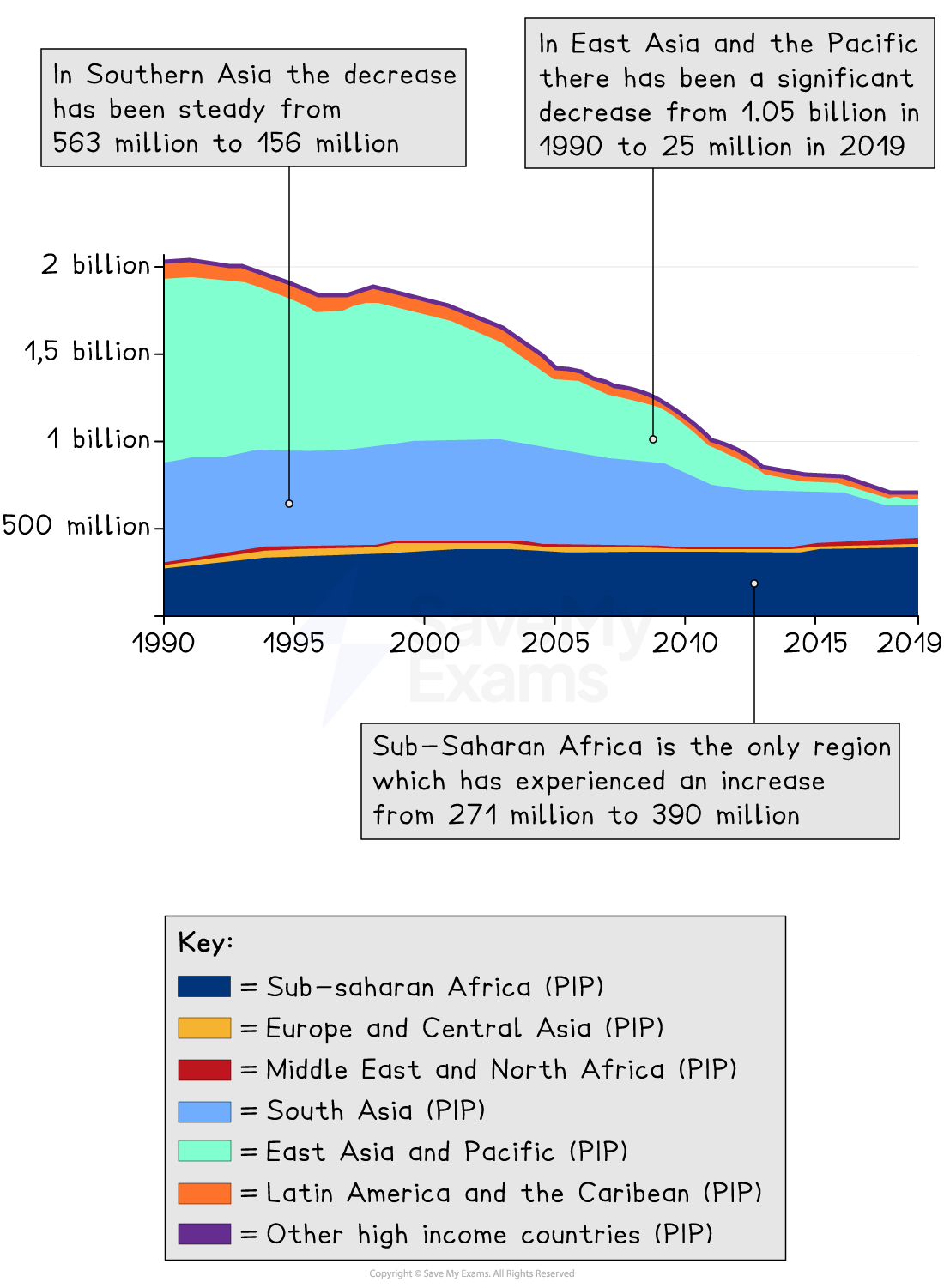
The World Bank estimates by 2030 approximately 479 million people will live in absolute poverty globally
Sub-Saharan Africa is the continent most impacted by absolute poverty
Absolute poverty had steadily declined until 2020
The COVID-19 Pandemic has slowed progress
Global poverty trends since 1990
Access to opportunities
Poverty is often measured in terms of wealth, but those with limited chances to improve their lives can also be living in poverty
Marginalised people, including women, often have less access to opportunities
Measuring this lack of opportunity is challenging
The Multidimensional Poverty Index attempts to do this by evaluating a range of measures
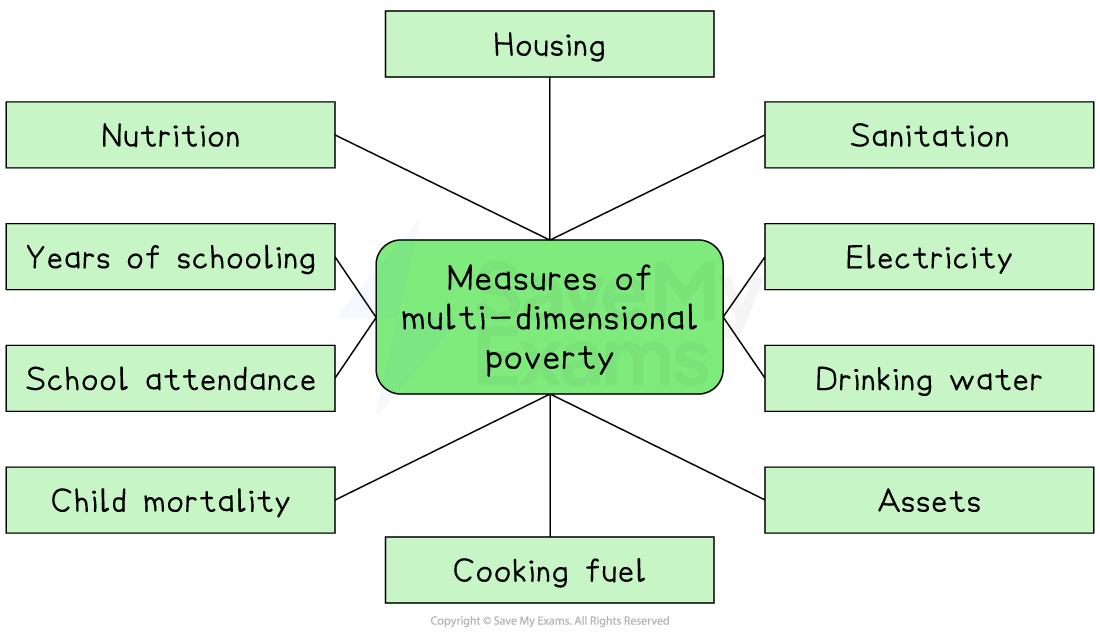
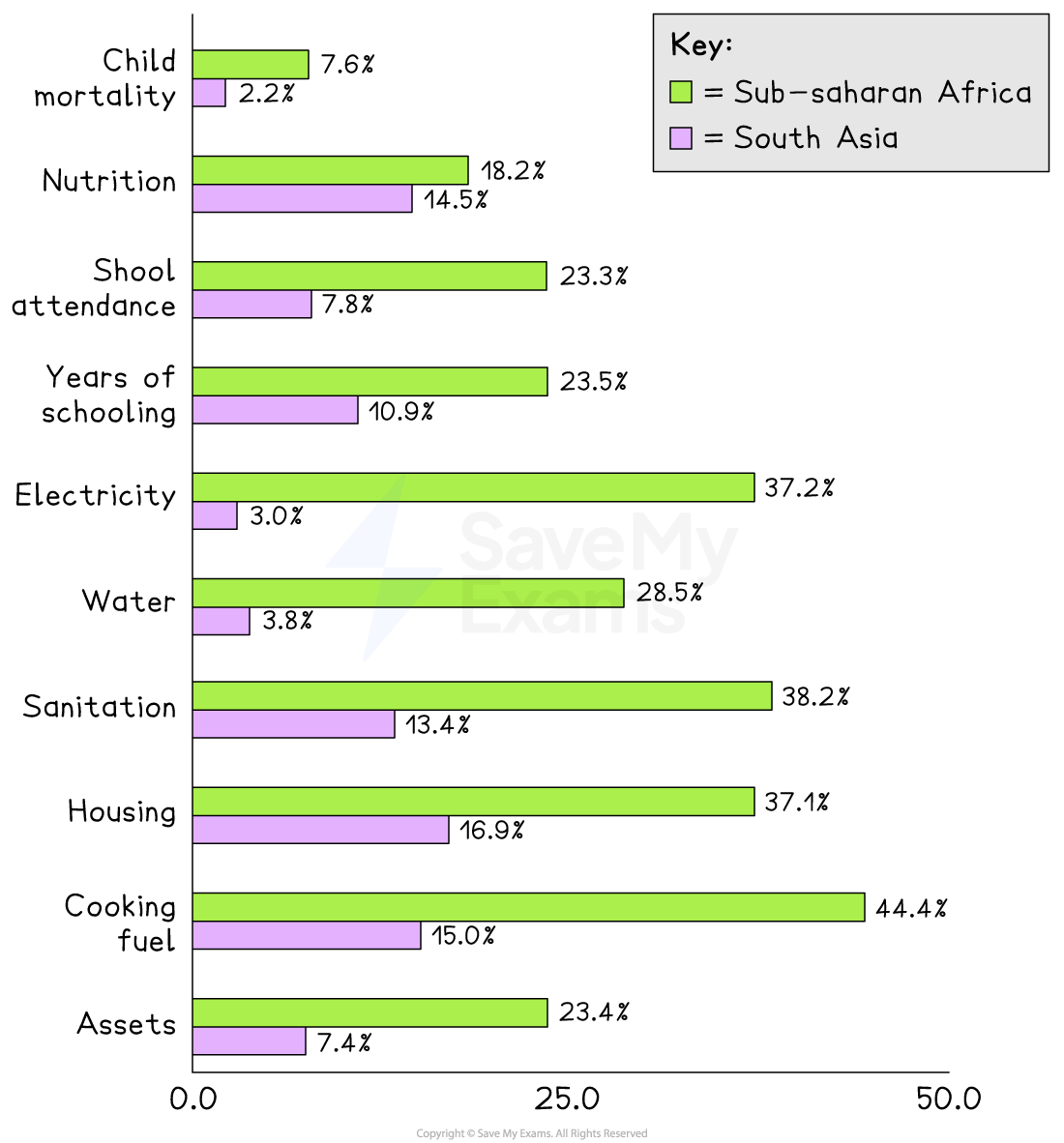
Exposure to climate hazards, such as extreme heat, flooding, drought and air pollution, exacerbate these problems in some parts of the world
In Sub-Saharan Africa and South Asia, multi-dimensional poverty and climate hazards are closely linked
Multidimensional poverty and climate hazards in Sub-Saharan Africa and South Asia
Amartya Sen's Capability Theory
Sen argues that development should not simply be measured in terms of income or wealth
Instead, he states it should be measured in terms of the capabilities and freedoms possessed by people
The poverty trap
Once a person is living in poverty, it is difficult for them to improve their position
Children of people living in poverty are likely to also live in poverty
Mechanisms that cause poverty reinforce poverty
Higher education is seen as a way out of poverty but young people who have grown up in poverty cannot afford to pay the tuition fees
A lack of nutritious food may prevent a person from working long hours, which may mean they lose their income
Discrimination because of race, gender or sexuality can make it even more difficult to escape the cycle of poverty
The cycle of poverty
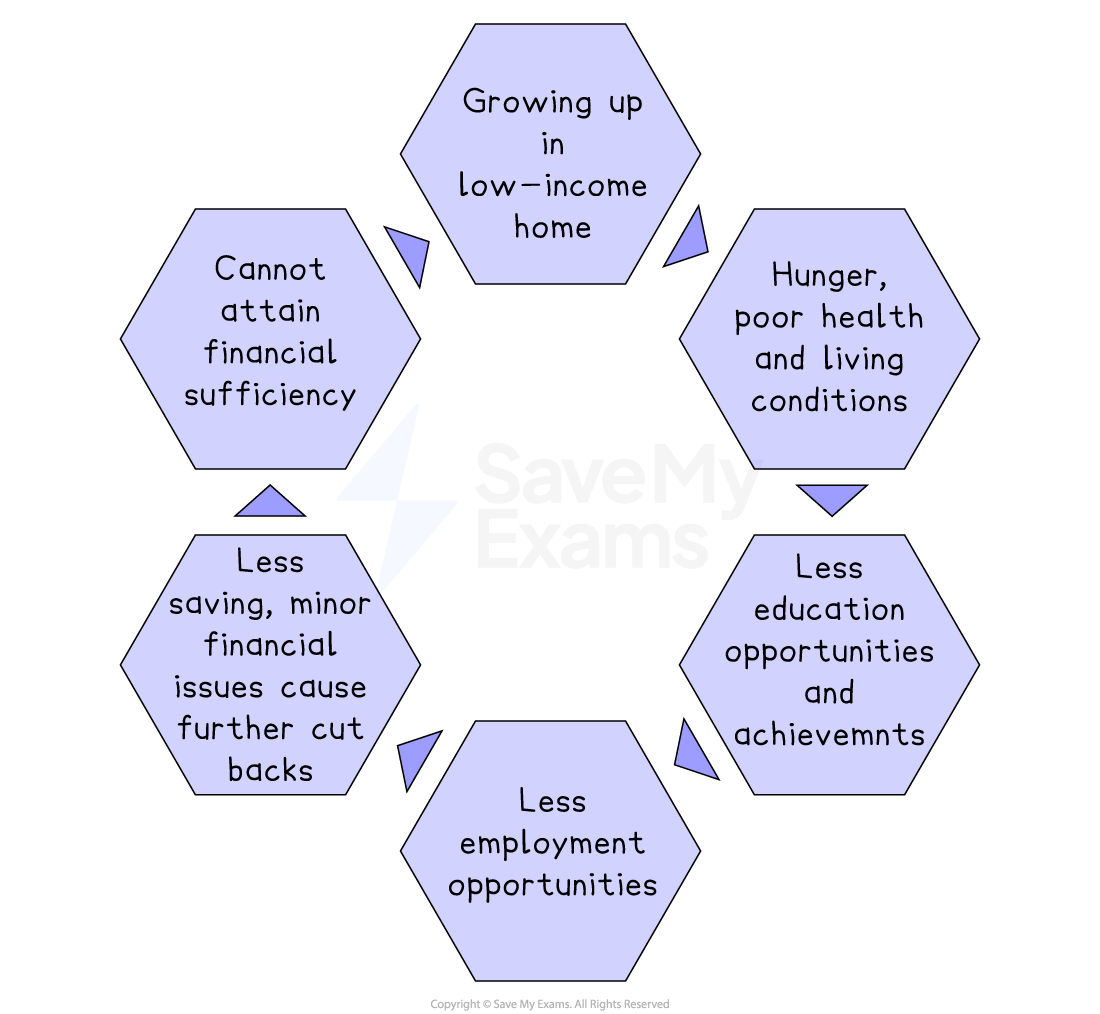
Breaking the cycle of poverty is the goal of multiple states, IGOs and NGOs
Many believe the key to this is free and accessible education
Power asymmetries and the poverty trap
Power asymmetries are unequal distributions of power between individuals, groups and states that play a significant role in keeping people trapped in poverty
Differences in economic power
Wealthier individuals, companies and states can shape economic systems in ways that benefit themselves
This makes it harder for those with fewer resources to compete or accumulate wealth
Differences in political power
Marginalised and poorer groups often have less influence over the policies and laws that affect their lives
This means their interests may be overlooked or actively suppressed
Differences in social power
Including inequalities based on race, gender, caste and class
These can restrict access to education, employment and social networks, reinforcing the barriers that keep people in poverty
Together, these asymmetries mean that the conditions which create poverty are often maintained by those who benefit from existing power structures
Case Study
The cycle of poverty in India
India provides a clear example of how the cycle of poverty can persist across generations
Despite economic growth, many families remain trapped in poverty due to structural barriers
How the cycle operates
Children born into poor families often have limited access to quality education, meaning they are less likely to gain well-paid employment
As a result, they may remain in low-income jobs, and their own children are likely to experience similar conditions
Poverty also affects health and nutrition, with some individuals unable to afford sufficient food
This can reduce their ability to work long hours or consistently, limiting income and reinforcing their economic position
Barriers to escaping poverty
Although higher education is often seen as a route out of poverty, many young people cannot afford tuition fees or related costs
In addition, discrimination based on caste, gender or religion can further restrict opportunities and social mobility
Attempts to break the cycle
The Indian government and NGOs have introduced policies to improve access to free education, such as the Right to Education Act, as well as welfare programmes aimed at supporting poorer families

Unlock more, it's free!
Join the 100,000+ Students that ❤️ Save My Exams
the (exam) results speak for themselves:

Was this revision note helpful?
