Syllabus Edition

First teaching 2025

First exams 2027

Culture: Health & Wellbeing (DP IB Psychology: HL): Exam Questions

1 hour8 questions
1
3 marks

Source 1

A public health researcher investigated the distribution of Body Mass Index (BMI) scores among individuals aged 18–45 from two cultural contexts: individualistic cultures and collectivist cultures.

Participants’ BMI was calculated using height and weight measurements taken during school health checks. Obesity was defined as a BMI of 30 or above.

Figure 1: Frequency distribution of BMI scores for adults aged 18-45 from individualistic and collectivist cultures.
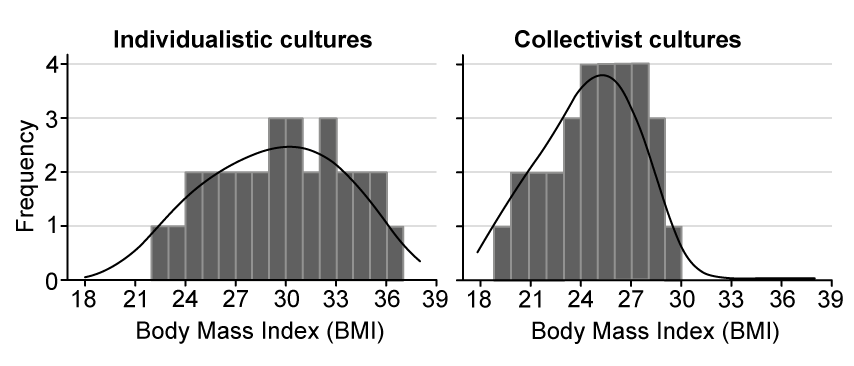
Two histograms comparing BMI distribution in individualistic vs collectivist cultures, with normal distribution curves overlaid.

Explain one issue that limits the interpretation of the data in source 1.

2
6 marks

Source 2

A sample of 60 adults aged 18–45 from two different cultural contexts took part in a study examining the relationship between culture and obesity-related wellbeing. There were 30 participants in each group.

Participants completed a health and wellbeing questionnaire designed to measure physical and psychological wellbeing related to lifestyle and weight management. The maximum possible score was 40, with higher scores indicating better wellbeing.

At the end of the study, wellbeing scores were compared between the two cultural groups.

The table shows mean wellbeing scores in relation to cultural context.

Table 1: Health and wellbeing scores by cultural context

Cultural context

Mean

Median

SD

Min

Max

Individualistic

22.8

23

5.6

12

35

Collectivist

28.9

29

4.2

18

38

Analyse the findings from source 2 and state a conclusion linked to the claim that culture influences health and wellbeing.

3
6 marks

Source 3

A researcher conducted focus groups with adults from individualistic and collectivist backgrounds to explore attitudes toward diet, body weight, and obesity.

The focus groups were analysed using thematic analysis. The following themes were identified:

  • Food choices were often described as individual responsibility in individualistic cultures

  • Shared meals and family expectations influenced eating behaviour in collectivist cultures

  • Participants from collectivist cultures reported greater social pressure to conform to group eating norms

  • Some participants felt it was difficult to challenge unhealthy traditional food practices

Discuss the extent to which the findings from source 3 may be transferable to other populations or contexts.

4
15 marks

To what extent can we conclude that culture plays a key role in health and wellbeing? In your answer, use your own knowledge and at least three of sources 2–5 (opens in a new tab).

5
3 marks

Source 1

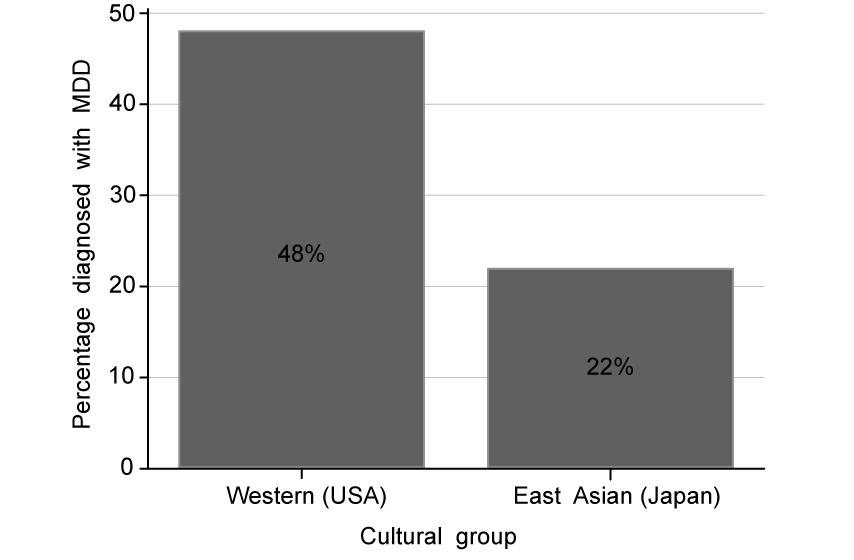
Figure 1 shows the percentage of patients diagnosed with major depressive disorder (MDD) in two cultural groups following an initial clinical assessment. Diagnoses were made using DSM-5 criteria by clinicians trained in Western psychiatric diagnostic frameworks.

Figure 1: Percentage of patients diagnosed with MDD by cultural group

Bar chart comparing MDD diagnosis rates: 48% in Western (USA) and 22% in East Asian (Japan) cultural groups.

Explain one issue that limits the interpretation of the data in source 1.

6
6 marks

Source 2

A study was conducted comparing self-reported depressive symptoms and clinical diagnosis rates among university students in two countries. Fifty students from each country completed the same standardised depression questionnaire. Scores ranged from 0 to 30, with higher scores indicating more severe depressive symptoms.

The table shows depression questionnaire scores in relation to clinical diagnosis rates of MDD.

Table 1: Depression questionnaire scores and clinical diagnosis rates

Measure

USA

Japan

Mean questionnaire score

18.2

17.5

Standard deviation

4.1

4.3

Percentage clinically diagnosed with MDD

46%

19%

Analyse the findings from source 2 and state a conclusion linked to the claim that cultural factors influence the diagnosis of MDD.

7
6 marks

Source 3

A researcher conducted focus group interviews with mental health professionals from four different cultural backgrounds to explore how depression is recognised and diagnosed. A thematic analysis identified the following themes:

  • Emotional symptoms such as sadness and hopelessness were prioritised in Western diagnostic contexts

  • Physical symptoms (e.g. fatigue, headaches, sleep problems) were more frequently emphasised in non-Western clinical settings

  • Clinicians reported concern that Western diagnostic criteria may not adequately capture culturally specific expressions of distress

  • Some clinicians noted stigma surrounding mental illness influenced patients’ willingness to report emotional symptoms

Discuss how the researcher could improve the credibility of the findings in source 3.

8
15 marks

To what extent can we claim that cultural bias influences the diagnosis of major depressive disorder? In your answer, use your own knowledge and at least three of sources 2-5 (opens in a new tab).