Technology: Health & Wellbeing (DP IB Psychology: HL): Exam Questions

Syllabus Edition

First teaching 2025

First exams 2027

1 hour8 questions
1
3 marks

Source 1

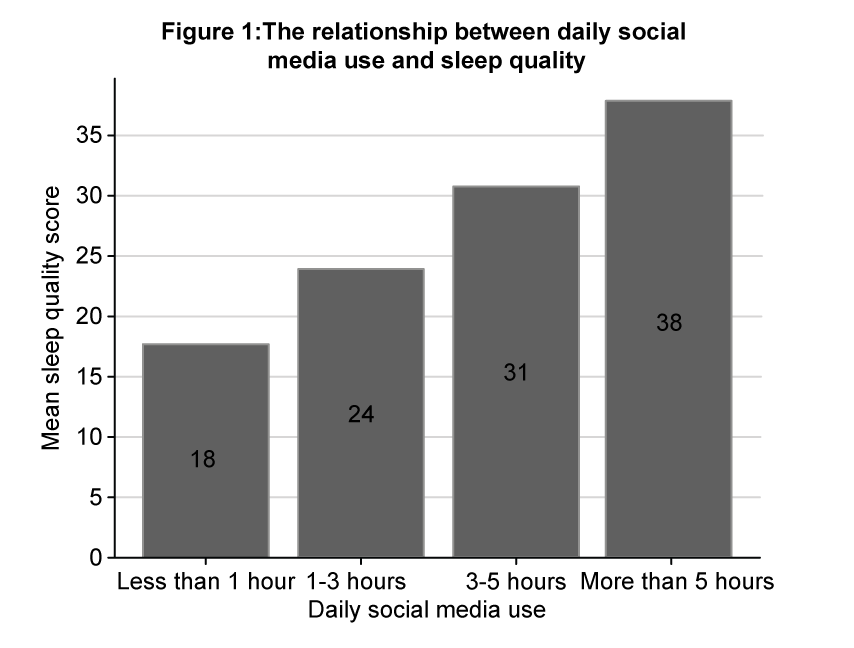
Figure 1 shows the relationship between daily social media use and self-reported sleep quality among adolescents aged 15–18 years. Sleep quality was measured using a standardised self-report scale, with higher scores indicating poorer sleep quality. Social media use was categorised based on average daily time spent on social networking platforms.

Bar chart illustrating mean sleep quality scores by daily social media use: less than 1 hour (18), 1-3 hours (24), 3-5 hours (31), over 5 hours (38).

Explain one issue that limits the interpretation of the data in source 1.

2
6 marks

Source 2

A study was conducted to investigate the effect of prolonged technology use during school hours on physical health indicators in students aged 14–18 years. A sample of 60 students was divided into two groups. One group was required to complete schoolwork using digital devices for up to six hours per day, while the other group completed the same tasks using non-digital materials. There were 30 students in each group.

At the end of the school day, all students completed a physical health checklist measuring eye strain, headaches, musculoskeletal discomfort, and fatigue. Higher scores indicate poorer physical health.

Table 1: Mean physical health scores by technology use condition

Physical health measure

High technology use

Low technology use

Eye strain

7.8

4.2

Headaches

6.9

3.8

Musculoskeletal discomfort

8.1

4.6

Fatigue

7.5

4.1

Analyse the findings from source 2 and state a conclusion linked to the claim that the use of technology may have a negative effect on the physical health of students.
3
6 marks

Source 3

A researcher analysed reflective digital diaries written by students from five secondary schools to explore their experiences of technology use and physical health. Over a two-week period, students recorded daily reflections on their screen use during and after school, including any physical effects they experienced.

The researcher conducted a thematic analysis of the diary entries and identified the following themes:

  • Extended screen use was linked to eye strain, headaches, and difficulty sleeping

  • Students reported poor posture when using laptops or smartphones for long periods

  • Some students described feeling physically tired or inactive during days with heavy technology use

  • Several students reported that school expectations made it difficult to take regular breaks from screens

Discuss how the researcher could avoid bias in source 3.

4
15 marks

To what extent can we claim that the use of technology may have a negative effect on the physical health of students? In your answer, use your own knowledge and at least three of sources 2-5 (opens in a new tab).

5
3 marks

Source 1

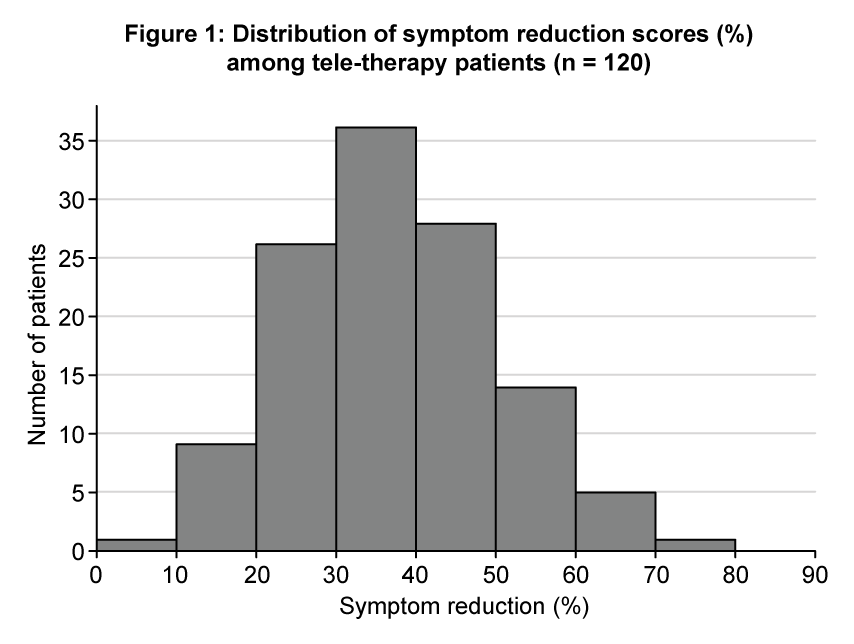
A researcher was interested to see if there was a relationship between the number of tele-therapy sessions attended and symptom reduction among patients with anxiety or depressive disorders.

Histogram showing the distribution of symptom reduction scores (%) among 120 tele-therapy patients, peaking at 35-40% with up to 35 patients.

Explain one issue that limits the interpretation of the data in source 1.

6
6 marks

Source 2

A study was conducted to investigate whether tele-therapy is as effective as face-to-face therapy in reducing symptoms of depression. 80 adults aged 20–45 diagnosed with moderate depression were randomly assigned to one of two conditions (40 per condition): tele-therapy (CBT delivered via video call) or face-to-face therapy (CBT delivered in a clinic). Both groups received 10 weekly sessions.

Depression was measured using the Patient Health Questionnaire (PHQ-9), scored from 0 to 27, with higher scores indicating greater severity. Mean scores and standard deviations were calculated before and after the intervention. The findings are shown in Table 1 and Figure 2.

Table 1: Mean depression scores (PHQ-9) before and after treatment by therapy mode

Therapy mode

Pre-treatment mean

Pre-treatment SD

Post-treatment mean

Post-treatment SD

Tele-therapy

16.8

3.4

9.2

3.1

Face-to-face

17.1

3.6

8.5

2.9

Analyse the findings from source 2 and state a conclusion linked to the claim that tele-therapy is effective in the treatment of mental health disorders.

7
6 marks

Source 3

A researcher conducted unstructured interviews with adults to explore their experiences of receiving tele-therapy for anxiety and depression. 15 participants aged 22–48, who had completed at least eight sessions of CBT via a video-conferencing platform, took part in the study. 

Thematic analysis identified the following themes: 

  • Several participants described tele-therapy as convenient and accessible, removing barriers such as travel and childcare

  • Many reported feeling comfortable disclosing personal information from home, finding the familiar environment less intimidating than a clinical setting

  • Some noted that technical difficulties, such as poor connection and audio delays, disrupted sessions and weakened the sense of connection with the therapist

  • Others felt tele-therapy lacked the warmth of face-to-face interaction, with non-verbal cues harder to read on screen

Discuss the extent to which the findings from source 3 may be transferable to other populations or contexts.

8
15 marks

To what extent can we conclude that tele-therapy is effective in the treatment of mental health disorders? In your answer, use your own knowledge and at least three of sources 2–5 (opens in a new tab).