Carbon Cycle in an Ecosystem (Cambridge (CIE) IGCSE Environmental Management): Revision Note
Exam code: 0680

Carbon cycle in an ecosystem
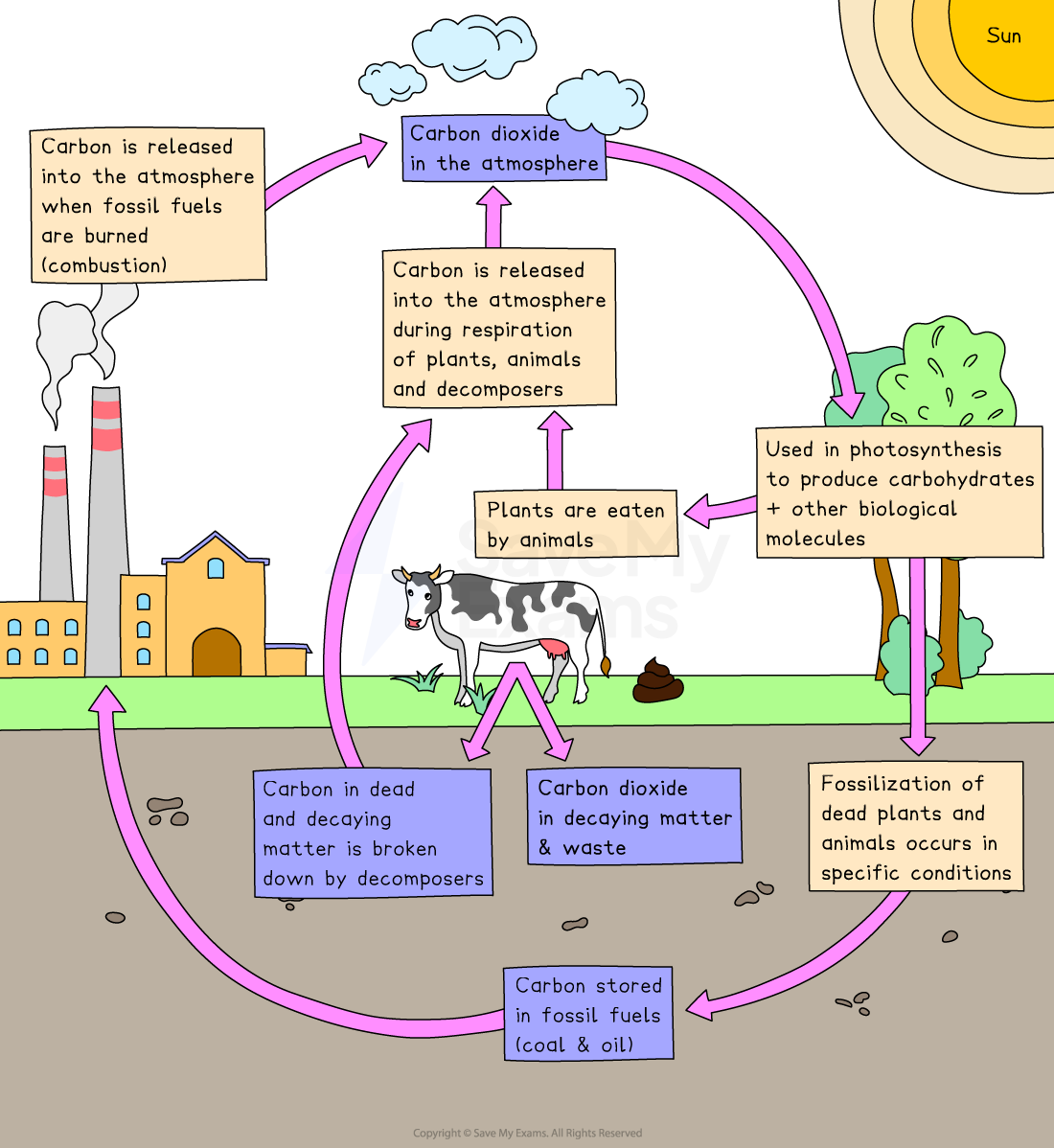
The carbon cycle is the continuous movement of carbon between the atmosphere, living organisms, oceans, and the Earth’s crust
Carbon is stored in:
the atmosphere as carbon dioxide
plants and animals as biomass
fossil fuels underground
oceans and marine life
soils and decaying matter
The cycle ensures carbon is always recycled, which keeps:
ecosystems supplied with the carbon plants need
the climate stable
nutrients flowing between organisms
Without the carbon cycle, life would quickly run out of the carbon needed to build cells and release energy
Key processes in the carbon cycle
1. Photosynthesis
Plants remove carbon dioxide from the air
They use it to make glucose during photosynthesis
This locks carbon into plant tissues such as leaves, stems and roots
2. Feeding
When animals eat plants or other animals, the carbon in their food moves into their bodies
This passes carbon along food chains and food webs
3. Respiration
Plants, animals and microorganisms release carbon dioxide back into the atmosphere when they respire
This happens day and night
Respiration is a major way carbon returns to the air
4. Decomposition
When organisms die, decomposers such as fungi and bacteria break them down
Carbon from dead bodies is released back into:
the soil
the atmosphere
the ocean
Decomposition keeps nutrients flowing and prevents dead matter from building up
5. Formation of fossil fuels
Over millions of years, buried dead organisms can turn into:
coal
oil
natural gas
This traps large amounts of carbon underground
6. Combustion
Burning fossil fuels or wood releases stored carbon dioxide into the atmosphere
This speeds up the carbon cycle dramatically and adds extra carbon to the air
How human actions affect the carbon cycle
Humans are changing the carbon cycle faster than nature can cope with
Key impacts include:
Deforestation reduces the amount of carbon removed by photosynthesis
Burning fossil fuels releases carbon dioxide more quickly than it is absorbed
Agriculture adds carbon through soil disturbance and methane release
Climate change increases the amount of carbon released from melting permafrost
These changes strengthen the enhanced greenhouse effect and contribute to global warming
Why the carbon cycle matters for ecosystems
The carbon cycle:
Provides plants with carbon for photosynthesis
Keeps atmospheric carbon dioxide at stable levels
Supports food chains and energy transfers
Allows decomposers to recycle nutrients
Links photosynthesis and respiration into one continuous loop
Disrupting the carbon cycle can damage ecosystems and reduce biodiversity
Examiner Tips and Tricks
Always link photosynthesis, feeding, respiration and decomposition.
Use simple arrows to show the cycle when explaining it.
Mention human impacts such as combustion and deforestation in higher-mark answers.
Remember that carbon never disappears; it just moves between stores.
Think of the carbon cycle as the glue that holds the atmosphere and ecosystems together.

Unlock more, it's free!
Join the 100,000+ Students that ❤️ Save My Exams
the (exam) results speak for themselves:

Was this revision note helpful?