Population Pyramids (Cambridge (CIE) IGCSE Environmental Management): Revision Note
Exam code: 0680

Population structure
Population structure describes the composition of a population by age and sex
It shows how many males and females are in different age groups
Population structure affects the demand for services such as schools, hospitals and pensions
Governments use population structure data to plan for the future
Age groups within a population
Young dependants are people aged 0–14 who rely on adults for food, housing and education
Working population includes people aged 15–64 who are economically active and support the economy
Elderly dependants are people aged 65 and over who may require healthcare and pensions
The ratio of the female and male population
One of the main tools used to show population structure is a population pyramid
Interpreting population pyramids
What is a population pyramid
A population pyramid (also known as an age structure graph) is used to display the gender and age structure of a given population
Age groups are shown on the vertical axis, usually in five-year bands
Males are shown on the left and females on the right
The width of each bar represents the size of the population in that age group
As countries develop, the shape of the population pyramid changes

Types of population pyramid
Expansive population pyramids
Expansive pyramids have a wide base and a narrow top
They show high birth rates and a large young population
Death rates may be high and life expectancy is often lower
Common in many low-income or developing countries
These countries may face pressure on schools, healthcare and employment in the future
Examples include Nepal and Niger


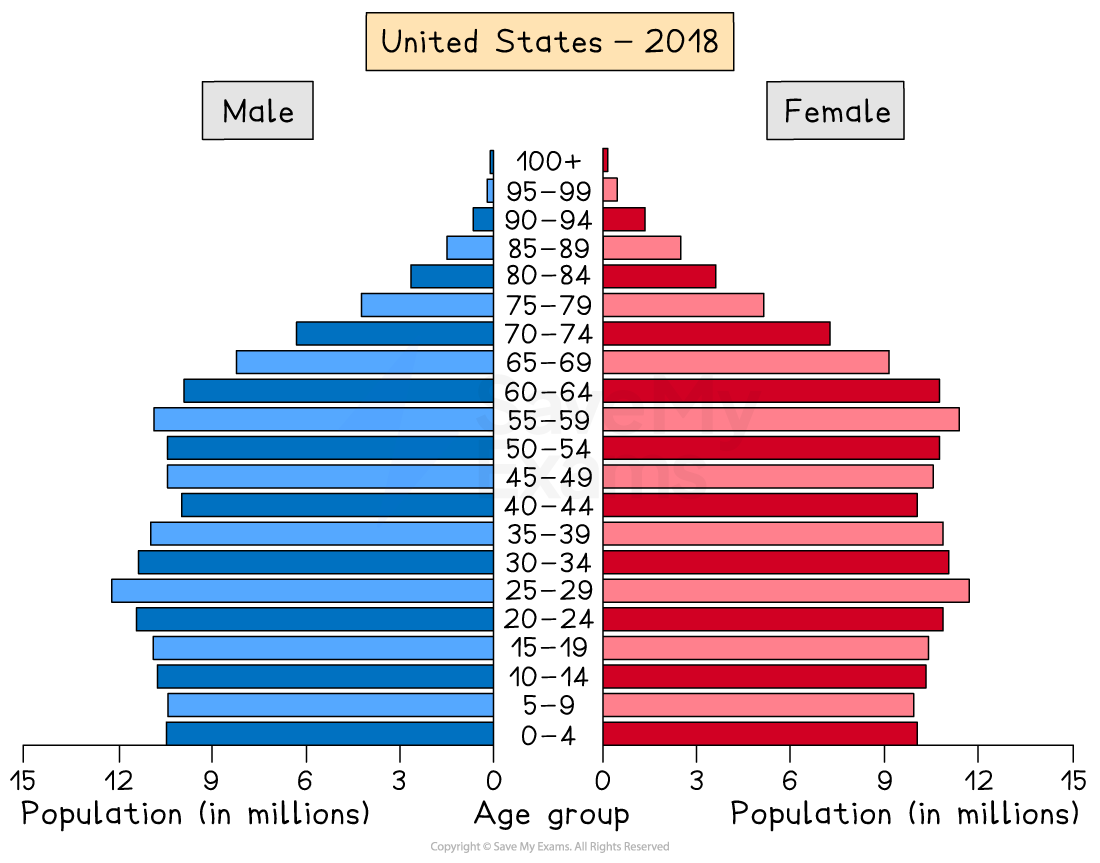
Stationary population pyramids
Stationary pyramids have a more even, rectangular or bell shape
Birth rates and death rates are both low
The population grows slowly or remains stable
Common in more developed countries with good healthcare and education
Examples include Italy and the USA

Constrictive population pyramids
Constrictive pyramids have a narrow base and wider middle or upper sections
They show low birth rates and an ageing population
Life expectancy is high
These countries may face labour shortages and increased pressure on healthcare and pensions
A good example is Japan with its ageing population

Migration population pyramids
In some countries, migration can lead to an imbalance in the population structure
The UAE has significantly more males than females
Approximately 29% of the population are males between the ages of 25 and 39, whereas only 10.5% of the population are women between 25 and 39
This is the result of the migration of males to the UAE to work in the oil, gas and construction industries

Why population pyramids are useful
They help identify future population growth or decline
They show the size of the future workforce
They highlight dependency ratios
They help governments plan for education, housing and healthcare
Worked Example
Define population structure.
[2 marks]
Answer
Population structure refers to the age and sex composition of a population [1] and shows how many males and females are in different age groups. [1]
Mark allocation
1 mark [1] for reference to age and sex.
1 mark [1] for explanation of population composition.
Examiner tips
Do not confuse population structure with population distribution.

Unlock more, it's free!
Join the 100,000+ Students that ❤️ Save My Exams
the (exam) results speak for themselves:

Was this revision note helpful?