Soil Erosion Management Strategies (Cambridge (CIE) IGCSE Environmental Management): Revision Note
Exam code: 0680

Strategies to reduce soil erosion
Farmers use a range of strategies to reduce and manage soil erosion. These involve:
Slowing down water flow
Reducing wind speed
Protecting soil structure
These strategies help maintain soil fertility and keep land productive for future farming
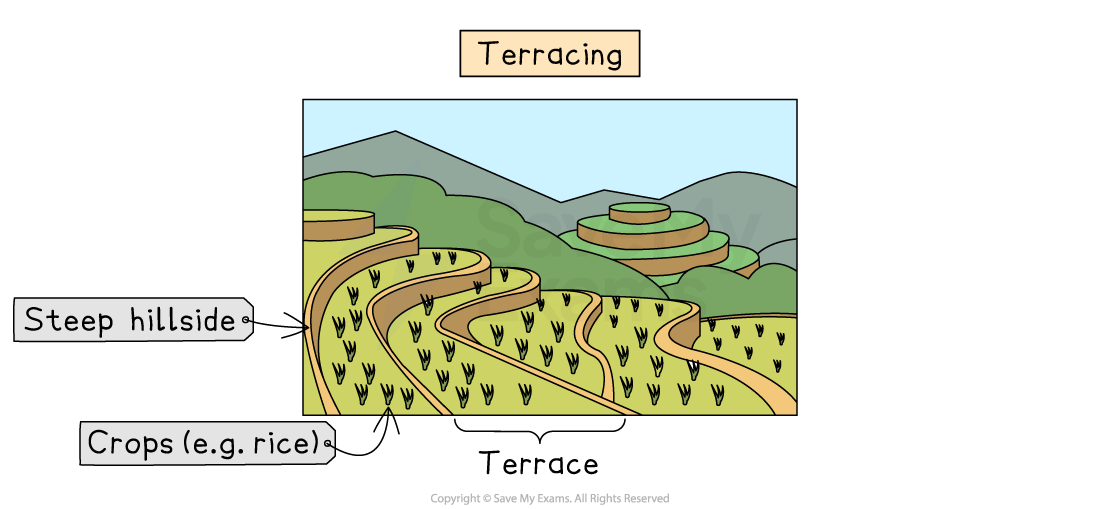
Terracing
Terracing involves cutting the hillside into flat steps
Each step slows the movement of water downhill
This reduces surface run-off, giving water more time to soak into the soil
Prevents large amounts of soil being washed away on steep slopes
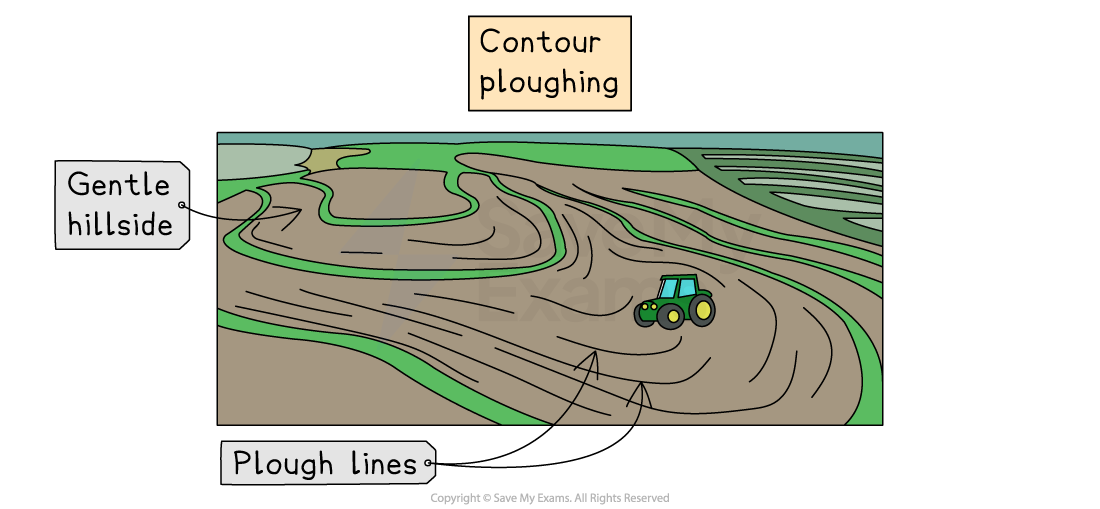
Contour ploughing
Contour ploughing is ploughing across a slope, following the natural shape of the land
This creates small ridges that slow down water
Reduces surface run-off, which helps prevent soil from being carried downhill
Increases the amount of water that soaks into the ground
Bunds
Bunds are small embankments or raised barriers built along field edges
They help trap water and reduce run-off
They also reduce wind speed, offering protection from wind erosion
They can help collect water for crops, improving soil moisture
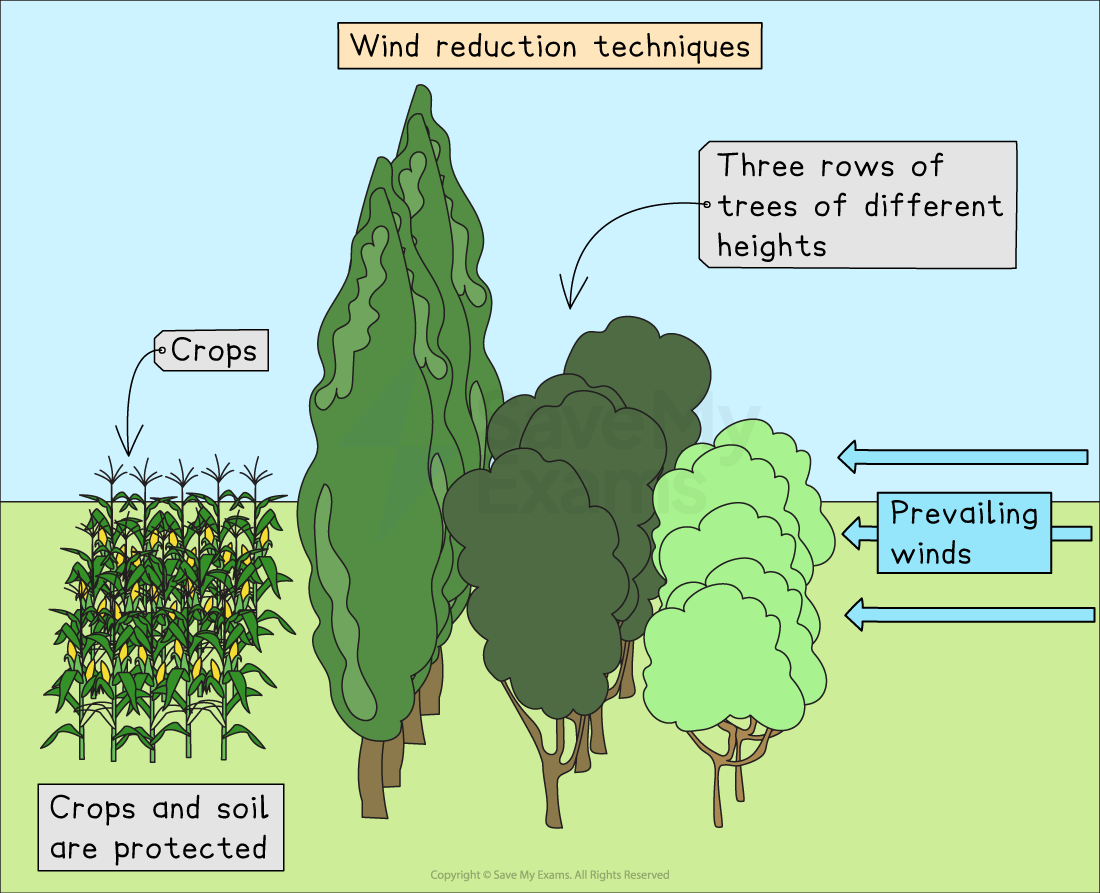
Windbreaks
Windbreaks are rows of trees, shrubs or fences planted to block strong winds
They reduce wind speed, preventing soil from being blown away
They protect crops from wind damage
They also create sheltered areas that help the soil to retain moisture
Maintaining vegetation cover
Vegetation protects soil by reducing the impact of raindrops
Plant roots bind the soil, holding it firmly in place
This makes soil less likely to be washed or blown away
Vegetation slows surface run-off and absorbs water, reducing erosion
Leaving fields covered with plants or crop residues after harvesting prevents soil from being left bare
Addition of organic matter
Adding organic matter, such as compost or manure, improves soil structure
This helps stabilise soil, making it less likely to break apart
Organic matter also:
Increases the soil’s ability to absorb and hold water
Supports soil organisms like earthworms, which improve the soil’s aeration and drainage
Examiner Tips and Tricks
Students often confuse terracing with contour ploughing because both are used on slopes. Remember: terracing involves cutting the hillside into flat, step-like platforms that physically hold soil in place, while contour ploughing simply means ploughing across the slope to slow water flow.
Similarly, don't confuse bunds and windbreaks. Remember: bunds are low barriers on the ground, while windbreaks are tall structures like trees or fences.

Unlock more, it's free!
Join the 100,000+ Students that ❤️ Save My Exams
the (exam) results speak for themselves:

Was this revision note helpful?