Strategies for the Management of Energy Resources (Cambridge (CIE) IGCSE Environmental Management): Revision Note
Exam code: 0680

What strategies are used to manage energy resources?
Reducing consumption
Using less electricity and fuel helps conserve energy resources
Turning off lights and appliances when not in use
Choosing to walk, cycle or use public transport reduces fuel demand
Reducing consumption lowers energy bills and greenhouse gas emissions
Insulation
Insulating materials can be added to buildings to reduce heat loss or heat gain
Insulating walls, roofs and floors keeps warm air inside in winter
Good insulation keeps hot air out in summer, reducing cooling needs
Homes need less heating and air conditioning, lowering energy use
Cavity wall insulation
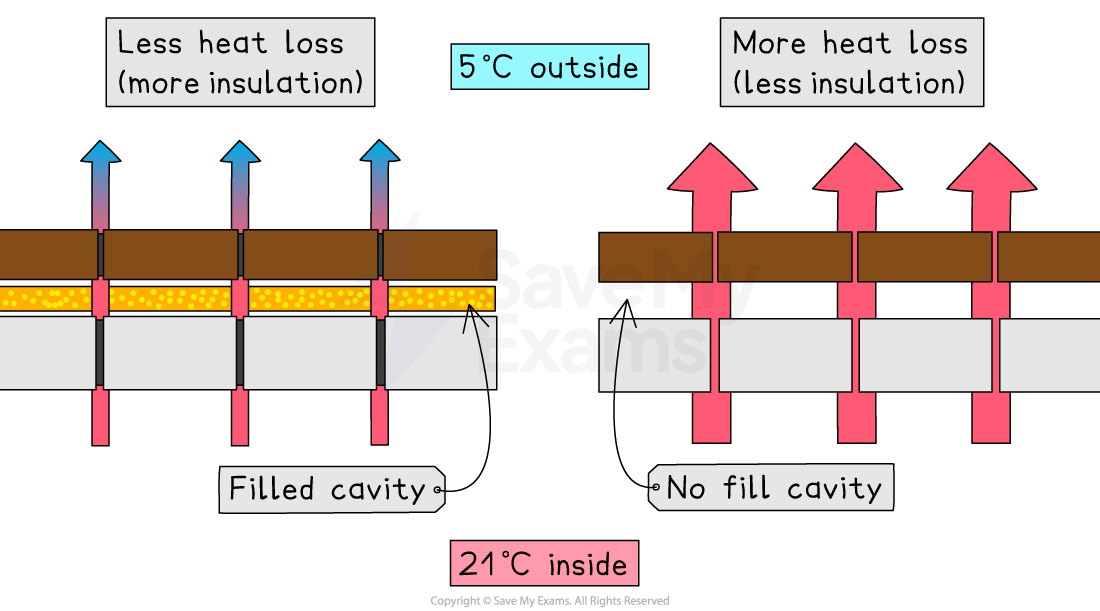
The gaps or cavities between external walls are often filled with insulation
This is called cavity wall insulation
This is often done by drilling a hole through the external wall to reach the cavity and filling it with a special type of foam which is made from blown mineral fibre filled with gas
This lowers the transfer of heat through the walls from the inside to the outside
Double and triple glazing
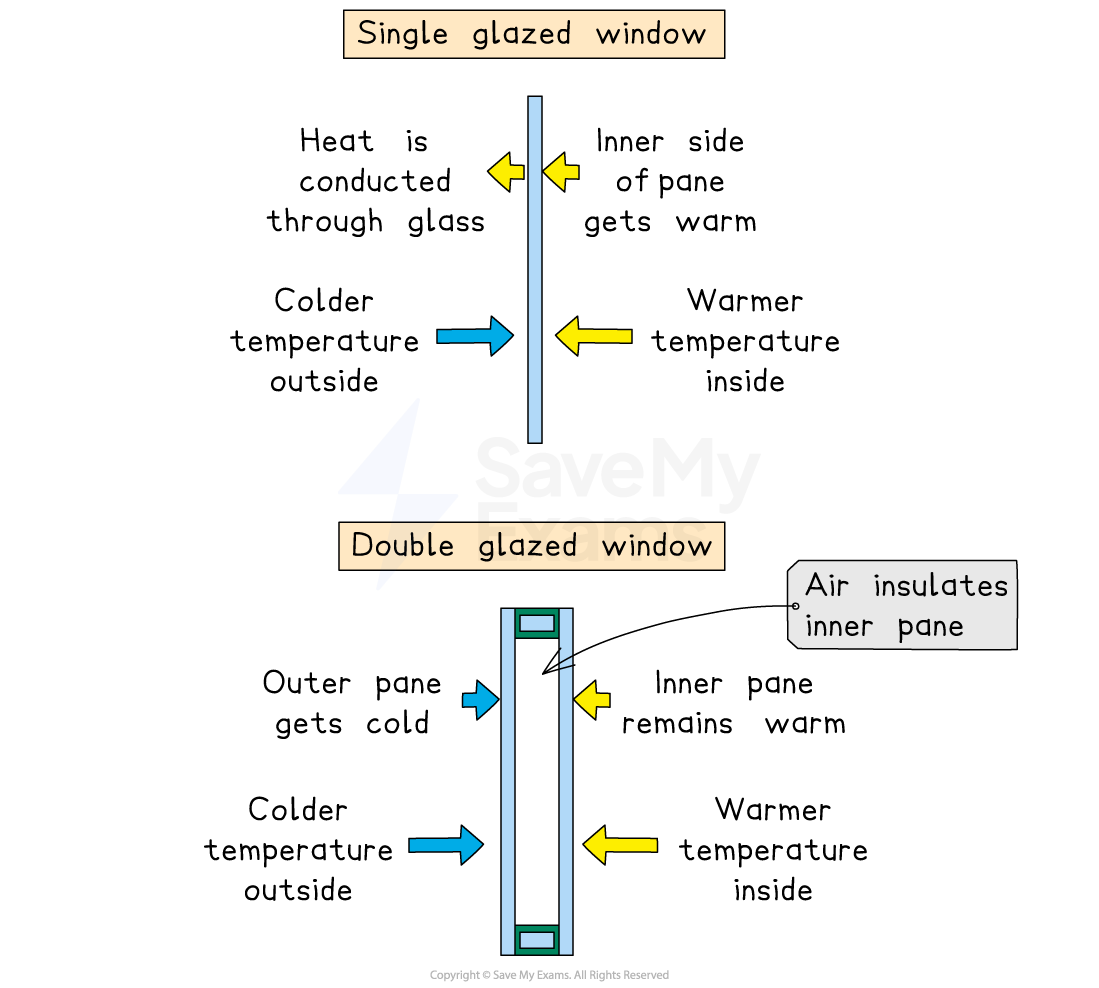
Windows are an area of significant heat loss in houses
Double or triple glazing in windows is an efficient way to reduce heat loss
Double-glazed windows consist of two panes of glass with air trapped between them
Triple-glazed windows have three panes
The trapped air acts as an insulator, preventing heat loss
Energy-efficient devices, including vehicles and electrically propelled vehicles
Energy-efficient devices include appliances designed to use less electricity. For example:
LED lights use far less electricity than traditional bulbs
Energy-efficient fridges and washing machines use less power
Vehicles have become much more fuel-efficient, using less petrol or diesel per kilometre
Electrically propelled vehicles (electric cars, scooters, buses) use electricity instead of fossil fuels
Produce no exhaust emissions during use
Help reduce overall fuel consumption
Exploiting existing energy resources
Using local energy resources reduces dependence on imports
Countries may expand solar, wind or hydropower where conditions are suitable
Improving existing power stations to increase their efficiency
Upgrading electricity grids reduces energy lost during transmission
Education on energy conservation
Teaching people why saving energy matters encourages long-term behaviour change
Schools and governments can promote switching off unused appliances
Public campaigns explain how efficient devices and transport choices reduce energy demand
Transport policies
Governments can introduce policies to reduce fuel use
Improving public transport encourages people to drive less
Creating cycle lanes and pedestrian zones reduces car use
Congestion charges can discourage driving in busy city centres
Encouraging electric vehicles through subsidies or increasing availability of charging stations reduces fossil fuel demand
Battery storage
Battery storage systems store electricity for later use
Helps balance supply and demand, especially for intermittent renewables like wind and solar
Stored energy can be used during power cuts or peak demand, reducing pressure on the grid
Large battery systems support the shift towards cleaner energy sources
Development of new energy resources
Research into next-generation renewables, such as improved solar panels or advanced wind turbines
Developing hydrogen fuel as an alternative to fossil fuels
Exploring geothermal and tidal energy in new locations
Innovation helps reduce dependence on finite resources and increases energy security
Examiner Tips and Tricks
When describing strategies, always link them to how they reduce energy use. For example, insulation works because it “reduces heat loss”, not just because it “saves energy”. Instead of saying “public transport saves energy”, say why, such as “more people sharing one vehicle reduces fuel use per person”. Examiners reward clear explanations.
Many students forget to mention a behavioural change in energy management. Adding a point about education or awareness shows you understand that energy conservation isn’t only about new technologies.

Unlock more, it's free!
Join the 100,000+ Students that ❤️ Save My Exams
the (exam) results speak for themselves:

Was this revision note helpful?