Energy Resources & Energy Generation (Cambridge (CIE) IGCSE Environmental Management): Revision Note
Exam code: 0680

Renewable & non-renewable energy
Renewable (non-finite) energy resources
Renewable resources—energy sources that can be replenished naturally in a relatively short time
They are non-finite, meaning they will not run out on a human timescale
Examples of renewable energy sources:
Biofuels—fuels made from living or recently living material, such as crops or waste
Includes bioethanol, biogas, biomass, and wood
Geothermal power: uses heat from rocks deep underground
Hydroelectric power: uses moving water from rivers or dams
Tidal power: uses the rise and fall of sea levels
Wave power: uses the movement of waves at the ocean surface
Solar power: uses energy from sunlight
Wind power: uses moving air to turn turbines
Non-renewable (finite) energy resources
Non-renewable resources—energy sources that exist in limited amounts and cannot be replaced quickly
They are finite, meaning once used, they will eventually run out
Examples of non-renewable energy sources:
Fossil fuels—coal, oil, and natural gas formed from ancient organisms
Nuclear power—produced by splitting uranium atoms to release heat energy
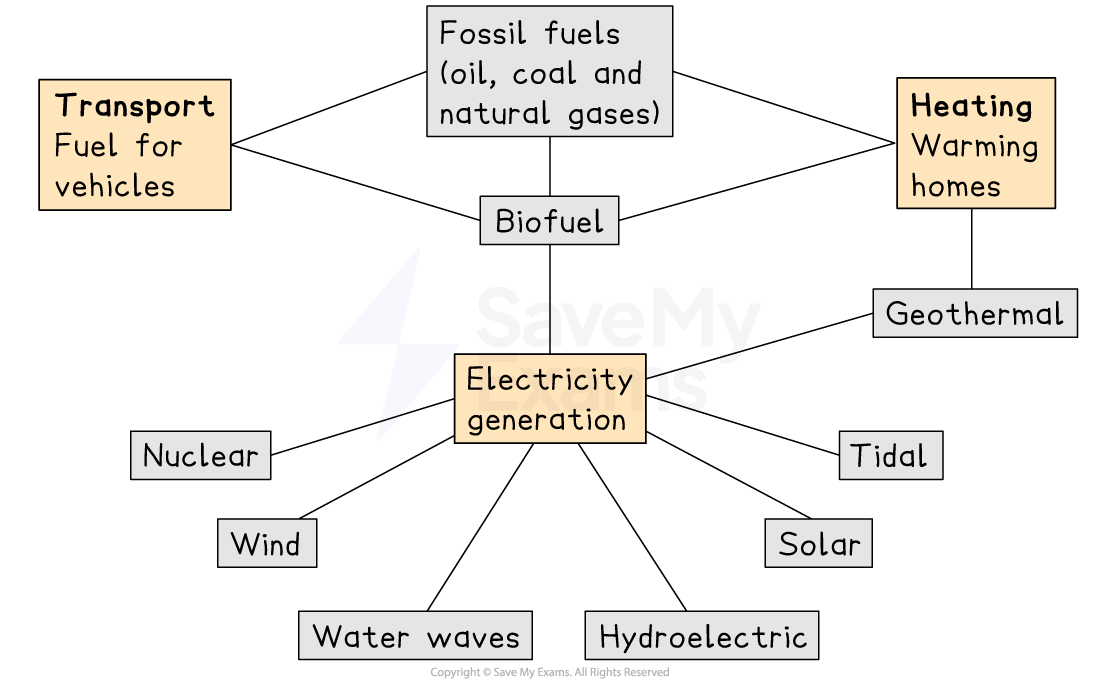
Generation of electricity by renewable energy sources
Biofuels (bioethanol, biomass, biogas, wood)
Biomass—plant or animal material burned as fuel
Burned in a boiler to heat water
Water turns into steam, which spins turbines
Turbines turn generators to produce electricity
Biogas—gas (mainly methane) from rotting organic waste
Collected and burned in a power station
Heat is used to make steam that drives turbines and generators
Bioethanol—alcohol fuel made by fermenting crops such as sugarcane or maize
Burned in power stations or engines to provide heat or movement
Can be used to turn generators and make electricity
Wood—logs or wood pellets burned as fuel
Heat from burning wood boils water
Steam turns turbines connected to generators
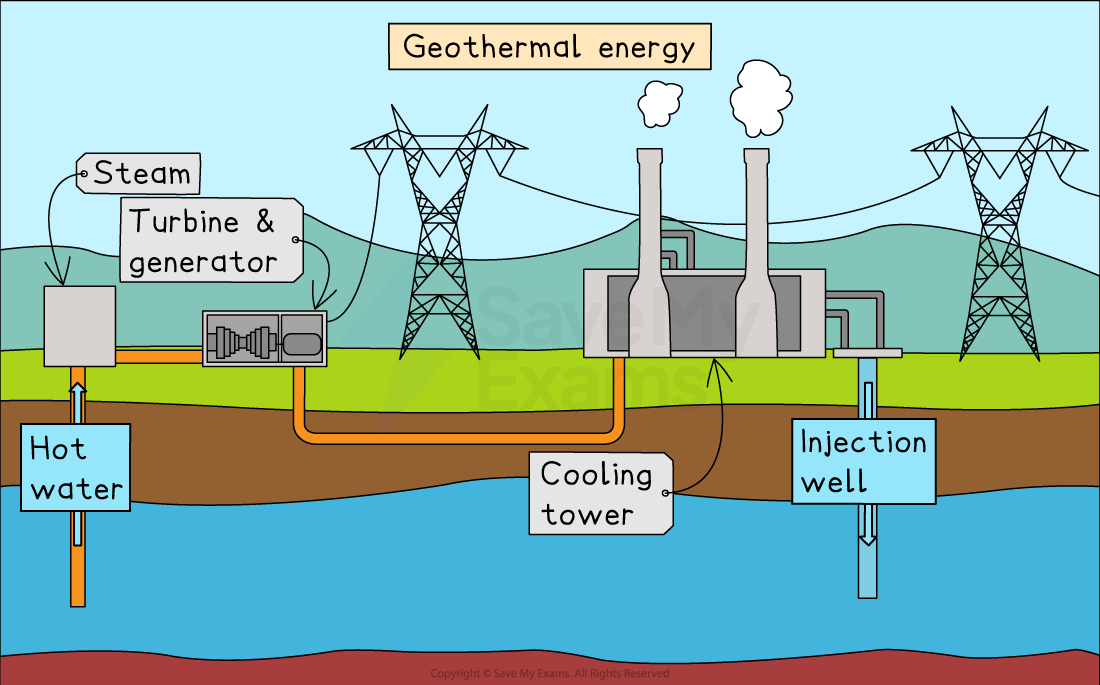
Geothermal power
Cold water is pumped down into hot rocks underground
Rocks heat the water so it turns into steam
Steam rises and turns turbines at the surface
Turbines drive generators to produce electricity
Hydro-electric power
A dam is built across a river to form a reservoir
Water is released from the reservoir and flows through pipes
Fast-moving water turns turbines at the base of the dam
Turbines spin generators to produce electricity

Tidal power
A barrage is built across an estuary or bay
As the tide rises and falls, water flows through turbines
Moving water spins the turbines
Turbines turn generators to produce electricity

Wave power
Floating devices or wave machines are placed on the sea surface
Waves move the devices up and down
This motion drives pistons or turbines inside the device
Turbines turn generators to produce electricity
Solar power
Solar panels (photovoltaic cells) are placed on roofs or in solar farms
Photovoltaic (PV) cells—panels that change light energy directly into electrical energy
Sunlight hits the cells and electrons move, creating an electric current

Solar thermal systems can also be used
Mirrors focus sunlight onto water-filled pipes or a central water tank
Water is heated to make steam
Steam turns turbines and generators
Wind power
Wind turbines have large blades mounted on a tall tower
Wind pushes the blades, making them spin
The blades turn a shaft connected to a generator
The generator produces electricity as the shaft spins
Wind turbines can be located on-shore (on land) or off-shore (in the sea)

Generation of electricity by non-renewable energy sources
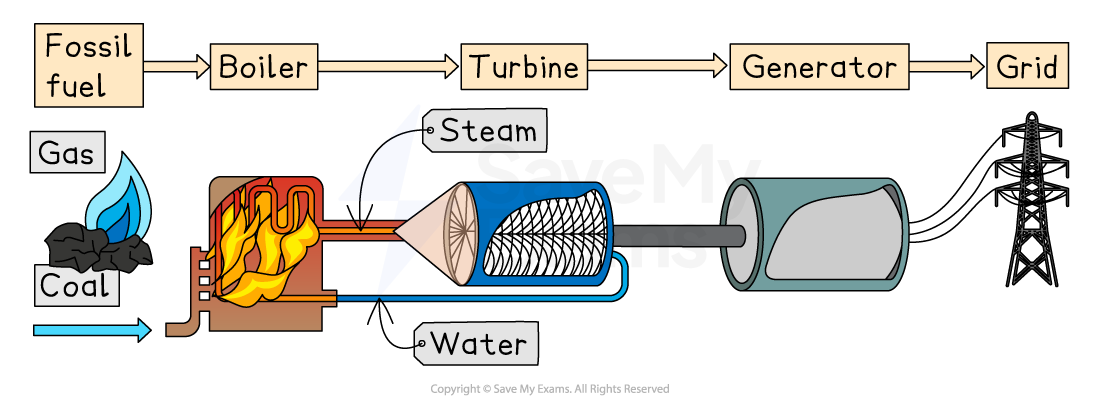
Fossil fuels (coal, oil, natural gas)
Fossil fuels are burned in a furnace in the power station
Heat from burning fuel boils water in pipes or a boiler
Water turns into high-pressure steam
Steam is directed onto turbine blades, making the turbines spin
Turbines drive generators, which produce electricity
Steam is cooled back into water and reused in a closed loop
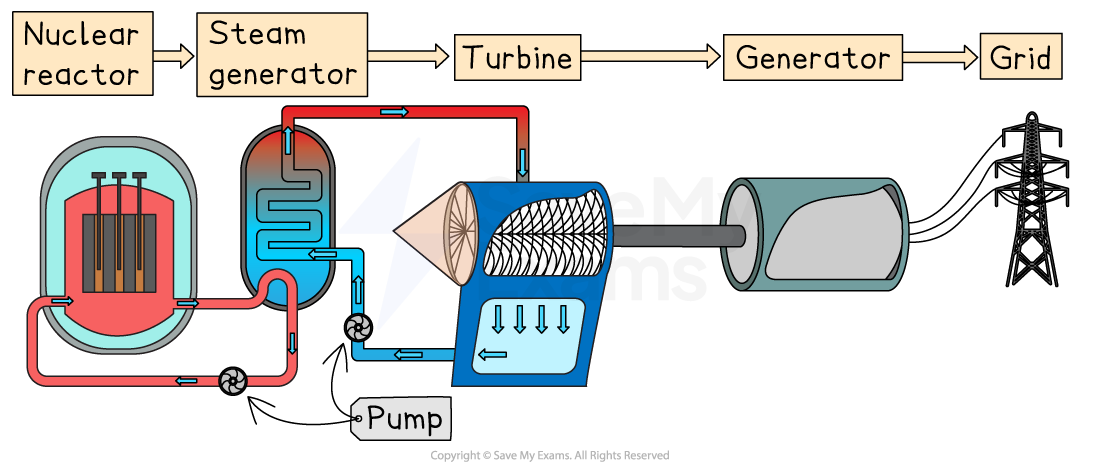
Nuclear power (uranium)
Uranium fuel rods are placed in a nuclear reactor
Nuclear fission occurs
Uranium atoms split, releasing large amounts of heat
Heat from the reactor core is used to heat water
Water turns into steam in a separate loop
Steam spins turbines, which then turn generators
Electricity is carried away by power lines to homes and industries
Examiner Tips and Tricks
When describing how electricity is generated, always follow the chain: fuel → heat → steam → turbine → generator → electricity wherever it applies. Examiners love this clear sequence because it shows you understand the whole process, not just one part.
But remember—photovoltaic panels change light directly into electricity, with no turbines or steam involved.

Unlock more, it's free!
Join the 100,000+ Students that ❤️ Save My Exams
the (exam) results speak for themselves:

Was this revision note helpful?