How are Fossil Fuels Formed? (Cambridge (CIE) IGCSE Environmental Management): Revision Note
Exam code: 0680

Coal formation
Fossil fuels include:
Coal
Natural gas (mostly methane), which is used in domestic boilers and cookers
Crude oil, which is refined into petrol, diesel, and other fuels
Fossil fuels are formed from the remains of plants and animals
Chemical energy stored in fossil fuels originally came from sunlight
Energy from the sun was transferred to chemical energy stores within plants through photosynthesis (plants use energy from sunlight to make food)
Animals ate the plants and the energy was then transferred to their chemical stores
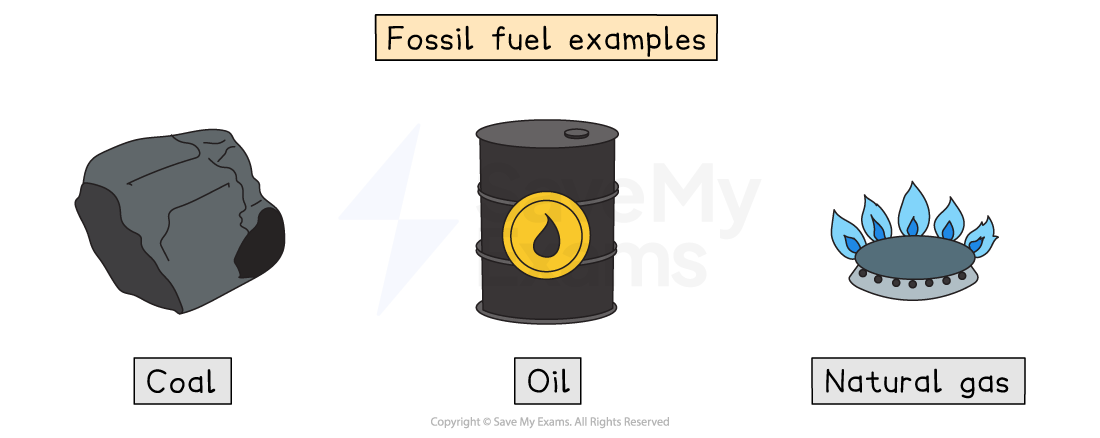
Coal is a solid fossil fuel formed from the remains of ancient plants
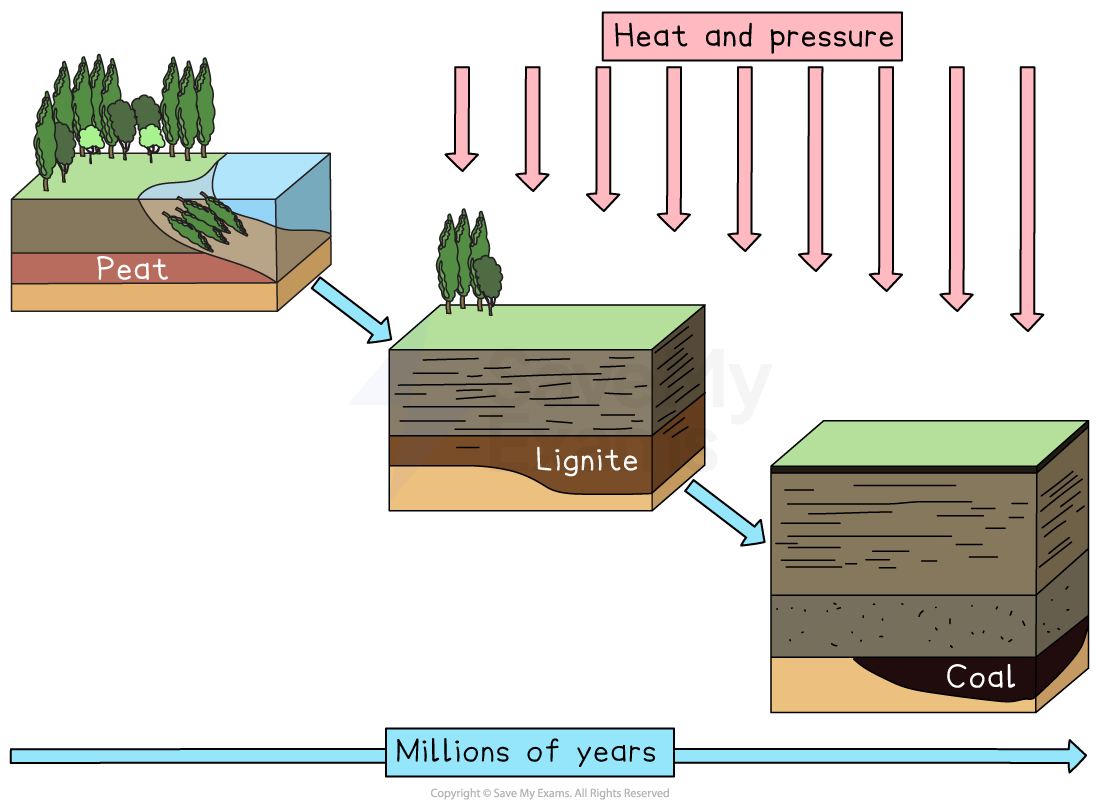
Stages of coal formation
Stage 1: Plant accumulation—millions of years ago, dense forests grew in swampy areas
When plants died, they fell into waterlogged ground
The absence of oxygen slowed their decay
Stage 2: Peat formation—dead plants built up and slowly changed into peat
Peat—a soft, brown, spongy material made of partly decayed plant matter
Stage 3: Burial and compression—layers of sediment built up over the peat
The weight of these layers compressed the peat and forced out water and gases
Stage 4: Heat and pressure—as heat and pressure increased, peat gradually turned into different types of coal
First into lignite—a soft, brown coal with low carbon content and lots of moisture
Then into bituminous coal—harder, darker, and containing more carbon, producing more energy when burned
Finally, into anthracite—the hardest and purest form, with the highest carbon content and energy value
The whole process took millions of years underground
Coal is mainly made of carbon and is burned to produce energy in power stations
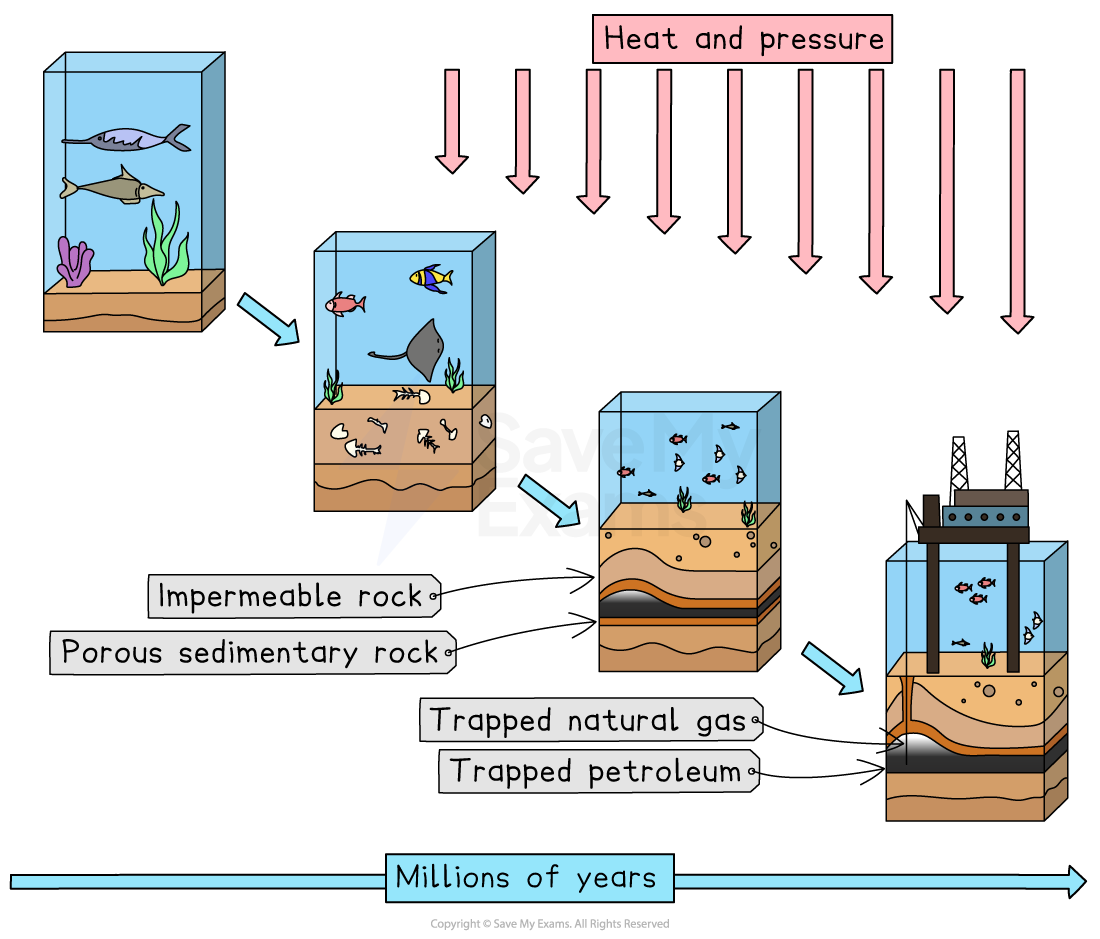
Petroleum (oil) and natural gas (methane) formation
Petroleum (crude oil)—a liquid fossil fuel formed from the remains of marine organisms
Natural gas—a gaseous fossil fuel made mainly of methane
Stages of petroleum and natural gas formation
Stage 1: Organic matter—tiny plants and animals (plankton) lived in ancient seas
When they died, their remains settled on the sea floor
Stage 2: Burial—layers of mud and sand covered the remains
Lack of oxygen slowed decay, so the organic matter was preserved
Stage 3: Heat and pressure—as sediments built up, temperature and pressure increased
Over millions of years, this changed the remains into oil and natural gas
Stage 4: Migration and trapping—oil and gas moved through porous rocks until trapped under impermeable rock layers
These traps form oil and gas reservoirs
Natural gas is often formed alongside oil from the same marine deposits
Examiner Tips and Tricks
Be careful—many students think all fossil fuel forms come from the same source material and are formed in the same way. Remember: coal forms on land from plants, while oil and gas form under the sea from plankton.

Unlock more, it's free!
Join the 100,000+ Students that ❤️ Save My Exams
the (exam) results speak for themselves:

Was this revision note helpful?