How are Rocks, Ores & Minerals Extracted from Mines? (Cambridge (CIE) IGCSE Environmental Management): Revision Note
Exam code: 0680

What is an ore?
Ore is a type of rock that contains minerals and metals
The metal or mineral can be extracted and used for human purposes
Metallic ores provide us with metals and alloys that we need to make everyday products like laptops, smartphones, cars, and batteries
Examples of metallic ores include:
Iron ore for iron
Bauxite for aluminium
Copper ore for copper
There are three main methods for extracting rocks, ores, and minerals from mines:
Surface extraction
Subsurface extraction
Biological extraction
Surface extraction
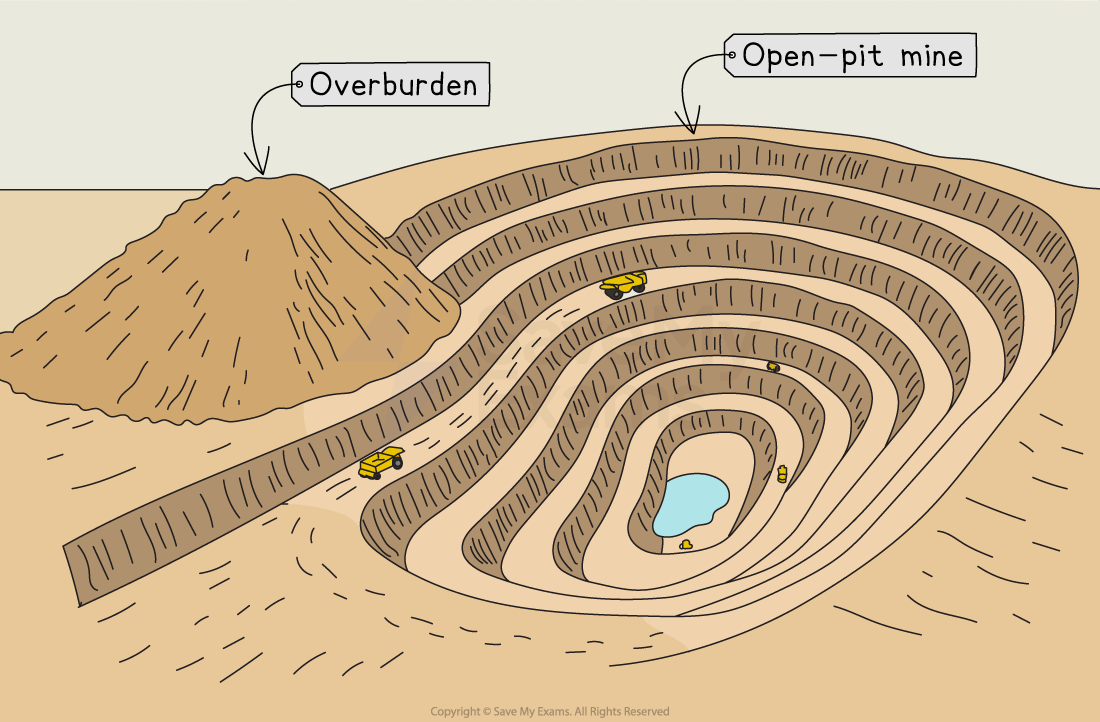
Surface extraction is when rocks, ores, and minerals are removed from close to the Earth’s surface
It is also known as open mining
Common methods include:
Opencast mining:
Also known as open-pit or open-cut mining
Large sections of worthless rock and soil (known as the overburden) are removed to reach the valuable material beneath
Surface extraction is often cheaper and safer than underground mining
However, it can cause large-scale damage to the landscape and habitats
Subsurface extraction
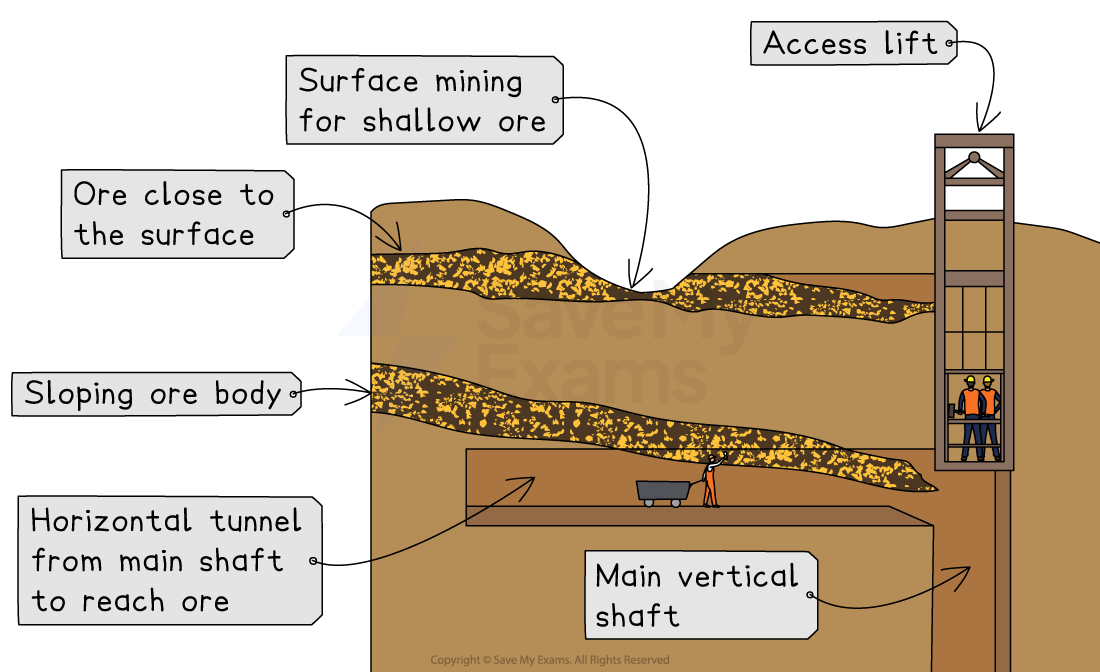
Subsurface extraction is when rocks, ores, and minerals are taken from deep below the Earth’s surface
It is used when the mineral deposits are too deep for surface mining
Common methods include:
Deep mining—tunnels are dug to reach the deposit, and workers remove the rock from below
Shaft mining—vertical shafts are dug down to access the mineral layers, with lifts or hoists to bring materials to the surface
Subsurface extraction is expensive and dangerous
Risks include cave-ins, gas leaks, and poor air quality
It also requires ventilation, drainage systems, and strong supports to make it safe
Examiner Tips and Tricks
Make sure you link each method to the depth of the resource—surface mining for shallow deposits, subsurface for deeper ones.
Biological extraction
Biological extraction uses living organisms to extract metals from ores
This process is more environmentally friendly and less energy-intensive than traditional mining
Two main methods are:
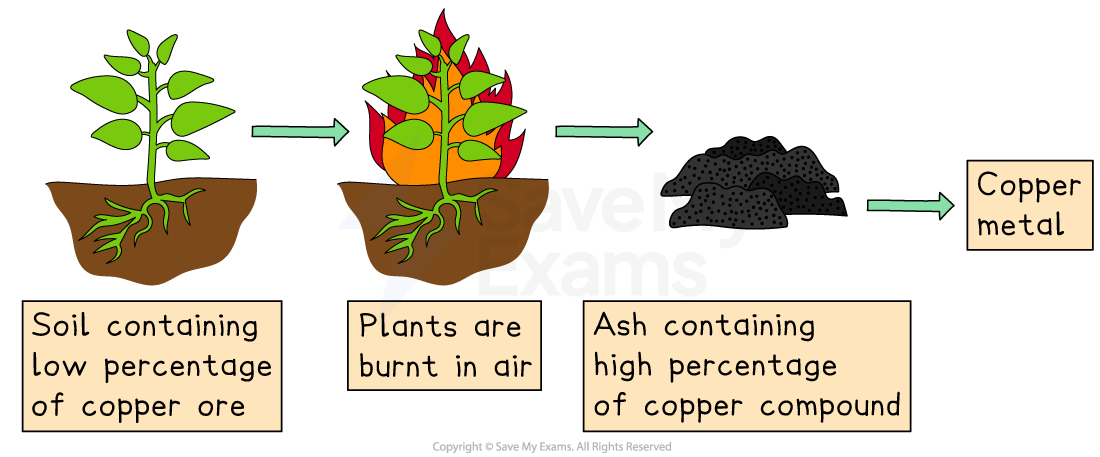
Phytomining—plants absorb metal ions from the soil through their roots
The plants are harvested and burned
The ash contains concentrated metal compounds that can be processed to obtain the metal
Bioleaching—bacteria feed on the minerals in the ore and produce a solution containing the metal ions
The solution is collected and processed to extract the metal
Biological extraction is a slow process but it reduces pollution and can use low-grade ores that would otherwise be wasted

Unlock more, it's free!
Join the 100,000+ Students that ❤️ Save My Exams
the (exam) results speak for themselves:

Was this revision note helpful?